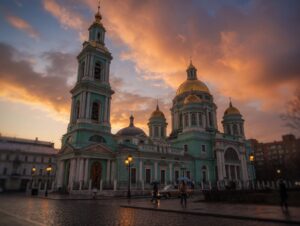
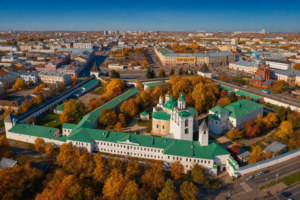
In Kostroma, on a quiet street near the Volga coast, there is a temple like a frozen fairy tale. There is no museum silence and strict solemnity — instead of them a riot of stone patterns, the warm light of irrigation tiles and the feeling that the building is not built, but skillfully carved of white stone and brick. This Resurrection Church on Debre is the only surviving Posad temple of the XVII century, in which the soul of the old craft city is revealed with amazing generosity.
According to legend, the beginning of this story was laid by the prince-hunter. Vasily Yaroslavich, nicknamed Kvashnya, the youngest son of the Grand Duke, loved to chase the beast in the coastal thickets — in the wilds, as they said then. It was there that he built the first wooden church. Centuries passed, the posad grew, the swampy lowlands were inhabited by skilled people. By the XVII century, Lower Debra became a tannery area, and lived here very well. It is not surprising that the new stone temple, which replaced the old wooden church, came out as a masterpiece.
And the impetus for the construction was an event worthy of the pen of a novelist. The local merchant Kirill Isakov traded leathers with England. In the next batch of goods among barrels with paint suddenly found a barrel filled with gold. A man of deep faith, Isakov did not replenish capital. The treasure that fell from heaven, he literally put in heaven, deciding to build a church, the equal of which has not yet been seen. So in 1652, a stone hero rose, whose appearance makes you remember the Trinity Cathedral of the Ipatiev Monastery, and the best examples of Russian patchwork.
The temple is fascinating at first sight. Five powerful bulbous chapters are placed on high light drums, and the walls are crushed by elegant twin semi-columns. But the magic is in the details. Apses are painted with diamond rust — stone checkers that create the illusion of volume. In brick niches hide reliefs with mythical animals, birds and outlandish flowers. This folklore, almost pagan worldview breaks through the rigor of church canons. It is impossible not to mention the three tent Holy Gate — a small architectural performance, where faceted tents rest on low arches with canopy columns, giving rise to a lively play of light and shadow.
Once inside, you feel like you’re in a precious box. In the Tri-Saintial chapel survived a carved five-tiered iconostasis – the most subtle, almost Renaissance work. Its royal gates with a semicircular top and double columns are covered with weightless gilded carvings: vines, outlandish fruits, birds of paradise are woven into the anthem of life. And on the vaults and walls under the layers of later records, restorers opened frescoes painted under Tsar Alexei Mikhailovich. Particularly noteworthy are the paintings in the gallery — scenes of the Apocalypse, full of expression, and the famous frescoes of Guri Nikitin in the aisle, created by the artel of masters eighteen years later than the main volume.
The twentieth century was a severe test for the temple. In the 1930s, a granary was built here. Broke down icons, knocked out windows, removed floors. But the energy of the place and the perseverance of people did the impossible: after the war, the church was not just opened, but made a cathedral, where the main shrine of the city was transferred — Theodorovsk Icon of the Mother of God. Here, they say, in 1913 came Emperor Nicholas II with his daughters; climbed to the neighboring bell tower to look at the Volga expanse.
Today the Resurrection Temple is breathing again. In the laid arches of the former open gallery, coziness is read, the western porch with a complex tent and widths resembles a separate miniature temple, and the tiles still shine in the sun. Coming here, you feel not only the power of history, but also the same merchant scale, which turned into an unexpected beauty of the gift. The treasure of the English barrel turned into a treasure for everyone.
Charity FundHoly Land.
Russian Temples and Monasteries