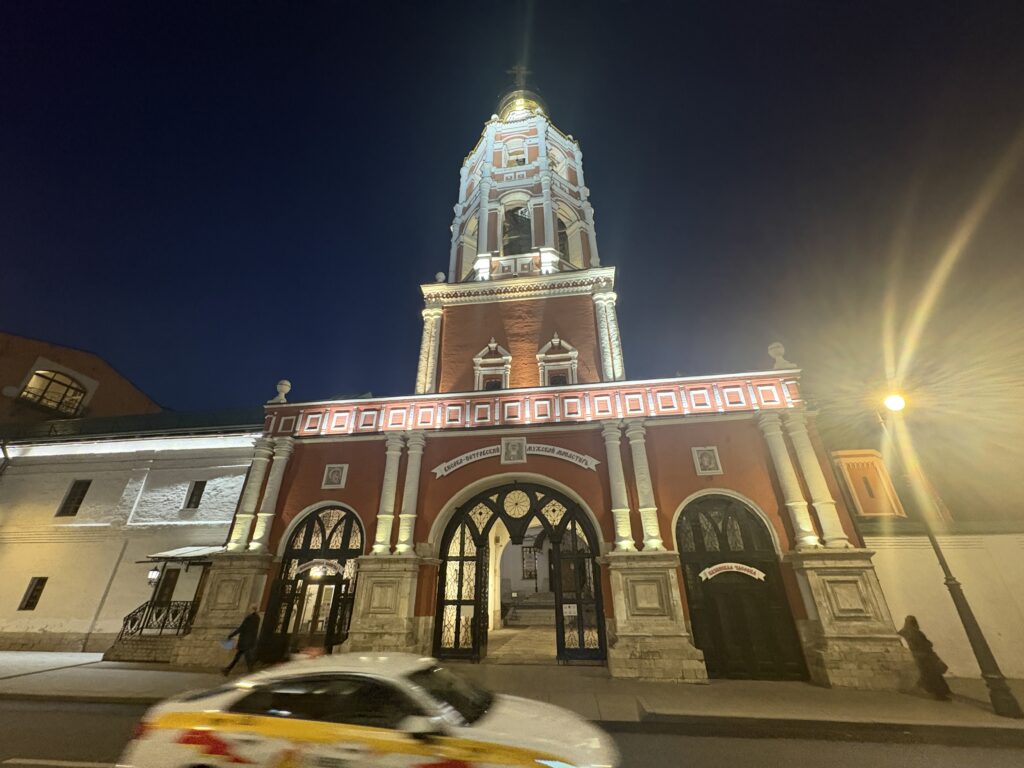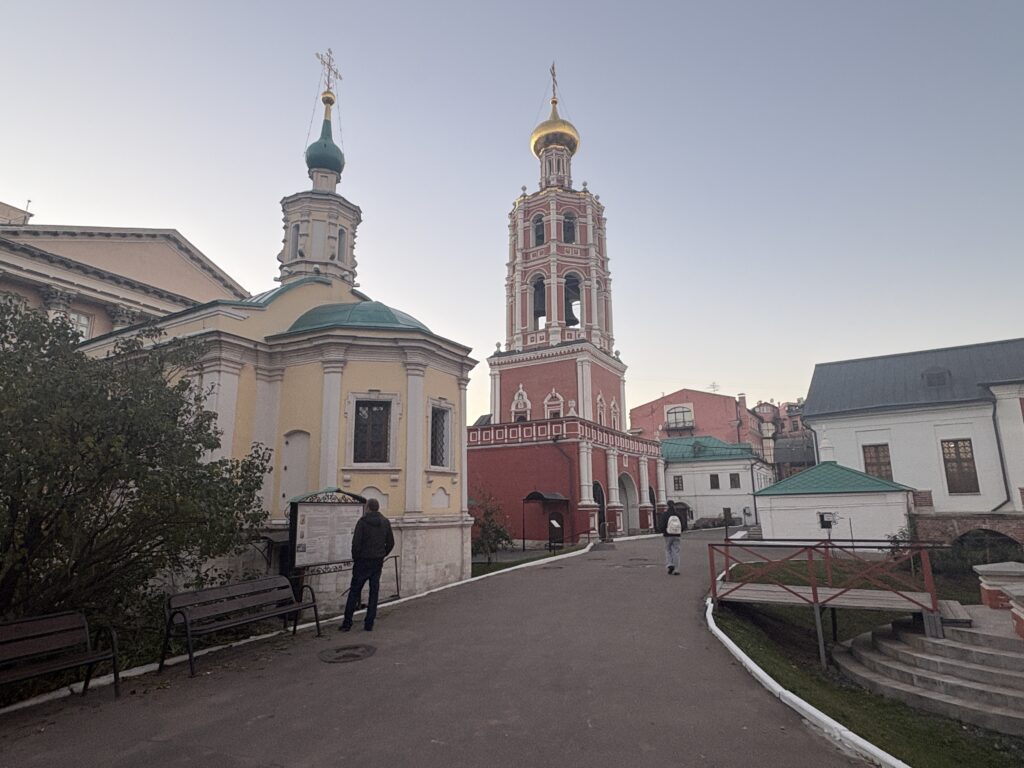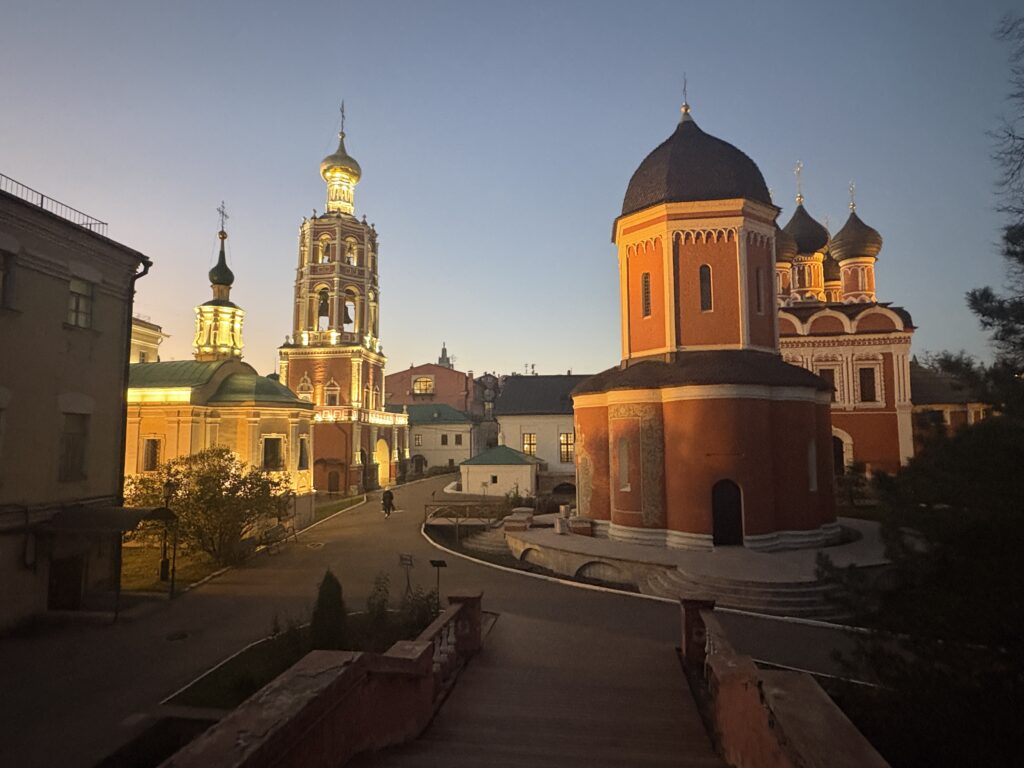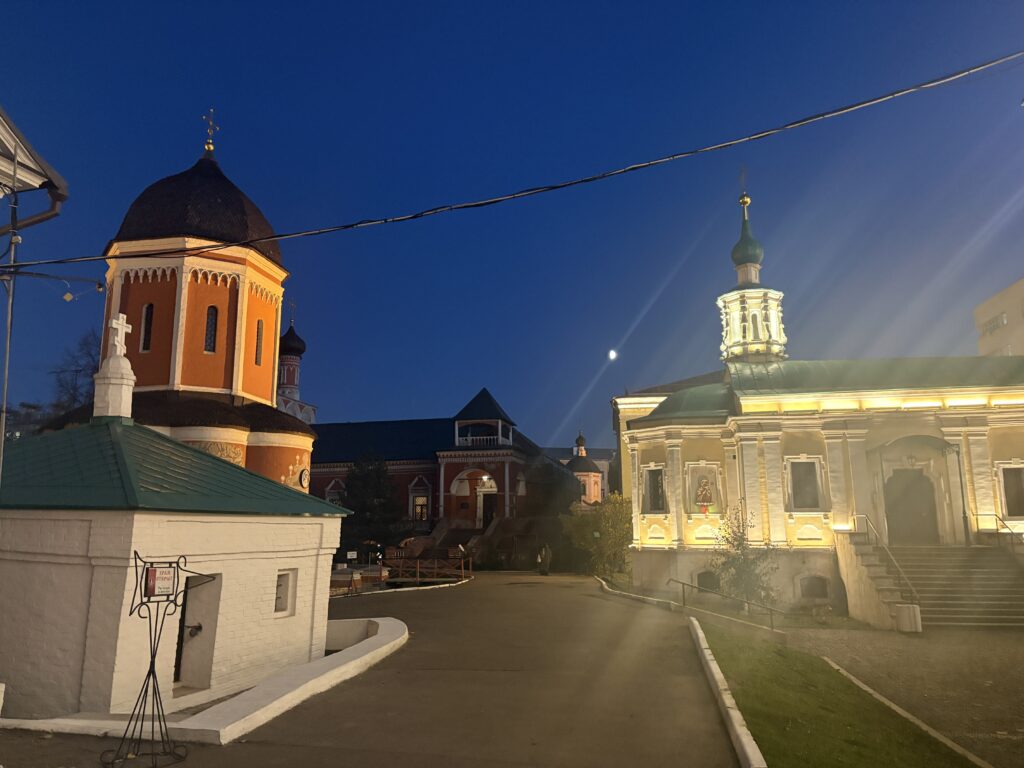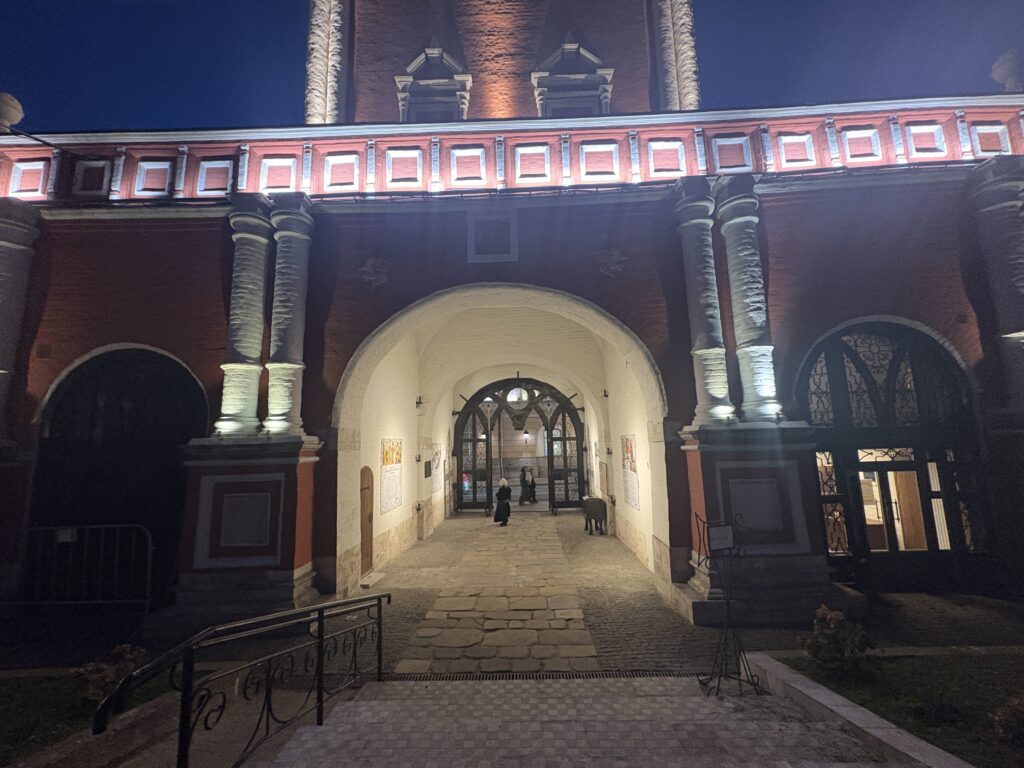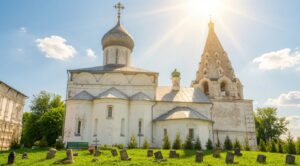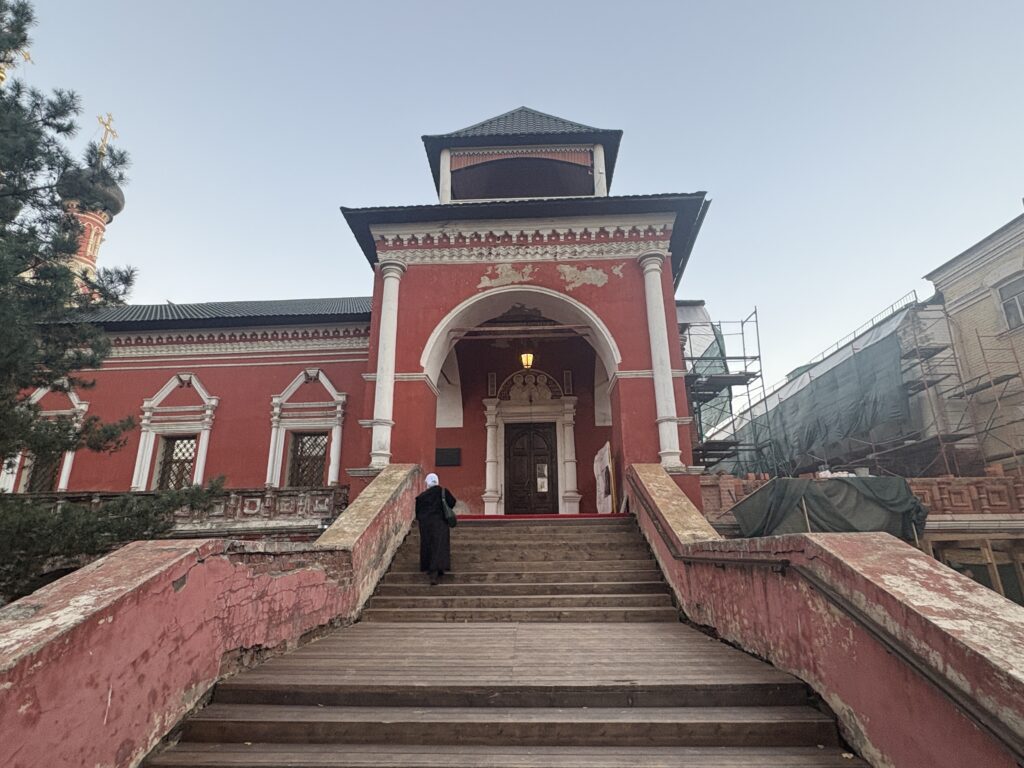
If you walk around Petrovka, the look involuntarily lingers on the ensemble of ancient buildings behind a low fence — this is the Vysoko-Petrovsky Stavropegial male monastery. It does not cry for itself, does not stretch upwards like ceremonial cathedrals, but in its quiet severity one feels a special depth: as if each stone here remembers the steps of the people who built, prayed, defended and brought this monastery back to life.
How did it all start?
Historians still argue about the exact date of the monastery’s foundation, and there is a truth to this: when it comes to spiritual centers, exact chronology often gives way to tradition. According to one of the most respected versions, the beginning of the monastery is associated with the name of St. Peter, Metropolitan of Kiev and All Russia, who at the beginning of the XIV century founded a small monastery here. It was thanks to him that church life gradually strengthened in Moscow, and the city itself became the spiritual center of Russia.
There are other traditions. Some chronicles say that the monastery was built by Ivan Kalita after a miraculous vision: he saw a high mountain covered with snow, which then melted. The prince took it as a sign and built a temple. Other sources link the strengthening of the monastery with Dmitry Donskoy: after the Battle of Kulikovo and the heavy ruin of Moscow by Khan Tokhtamysh, the monastery was rebuilt again, returning her life.
The first documentary mention of the monastery dates back to 1379: in the Rogoga chronicler it is said that Archimandrite John of the Vysoko-Petrovsky monastery accompanied an important church embassy to Constantinople. At that time, the monastery had great weight and trust.
Stone pages of history
The turning point for the monastery was a fire in 1493, which destroyed wooden buildings. In their place, by decree of Grand Duke Vasily III, stone buildings began to be erected. So there was a temple in the name of St. Peter Metropolitan — the first stone temple of the monastery. It was built by the famous architect Aleviz Fryazin, the one who left his mark in the image of the Moscow Kremlin. The consecration of the temple in 1517 became a new milestone: since that time, the monastery was increasingly called Vysoko-Petrovskaya, emphasizing its height — both literally (on the high bank of the Neglinnaya) and spiritually.
In the following centuries, the monastery was repeatedly in the center of stormy events. In the Time of Troubles it suffered from the interventionists, and after the liberation of Moscow it was restored and strengthened with a stone fence. At the end of the XVII century, the Bogolyubsky temple appeared in the monastery — it became the tomb of the Naryshkin family, relatives of Peter I. Thus, the history of the royal family intertwined with the history of the monastery, adding new names and destinies to its chronicle.
Not bypassed the monastery and trials of the XVIII-XIX centuries. The secularization of church lands in 1764 changed its status: it became stavropegial, that is, directly subordinate to the Patriarch. This saved the monastery from complete decline and allowed to preserve spiritual significance. And in 1812, when Moscow was under the rule of the French, the monastery experienced a new shock: cavalrymen were placed within its walls, temples were desecrated, and the complex itself was badly damaged. But even in such difficult times, the faith and care of parishioners helped bring the monastery back to life.
Trials of the XX century and the return
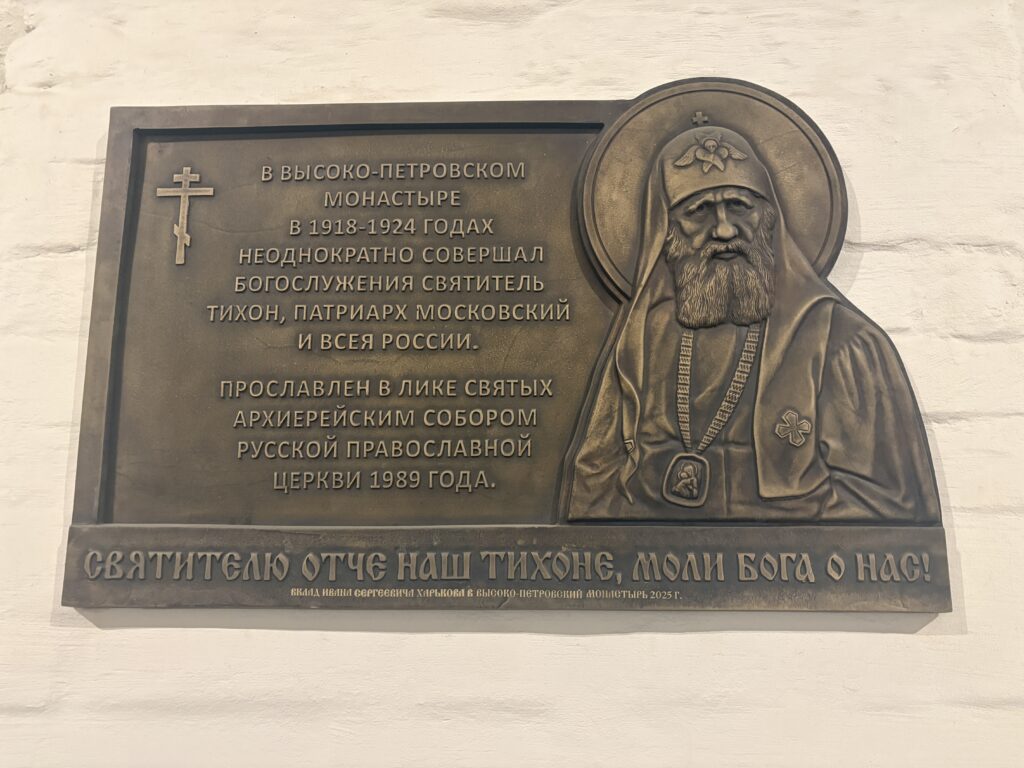
After the revolution of 1917, the fate of the monastery was not easy. In 1918 it was officially closed, the property was nationalized. But, oddly enough, it was during these years that the real monastic community secretly continued to live within the walls of the monastery. People gathered, served, and had their hair cut, preserving their statutes and traditions despite all prohibitions. This hidden life became a kind of feat: not loud, not ceremonial, but very important for the preservation of spiritual continuity.
The last temple was closed in 1929, and for many decades the monastery turned into a space where church life was replaced by other tasks. But his memory hasn’t gone away. In 1992, the complex was returned to the Russian Orthodox Church, and a gradual revival began. First, the services resumed, then the monastic life returned step by step. An important milestone was the decision of the Holy Synod in 2009 to restore the monastic community. And in 2015, the monastery celebrated the 700th anniversary of its foundation – a holiday that became not only a tribute to the past, but also a testimony that the history of the monastery continues.
Today’s day.
Now the Vyso-Petrovsky Monastery is not just an architectural monument, but a living, functioning center of spiritual life. Divine services are regularly held here, educational work is carried out, people meet who need to feel connected with tradition. The ensemble of the monastery is a rare example of how different eras left their mark in one place: the strict lines of ancient temples coexist with later buildings, and all together form a single image.
Walking through the territory, you can see how the rhythm of the city changes: the noise of Petrovka seems to be muffled, giving way to silence, in which you can hear not only the steps, but also the breath of history. There’s no rush here. It is enough just to stand, look at the old walls, think about how many generations have prayed in these walls, how many fates were connected with this place.
Vyso-Petrovsky Monastery reminds us that history is not only dates and events, but also people, their faith, work and ability to preserve light even in the darkest times. And today that light still burns, quietly but surely.
Shrines of the High-Petrovsky Monastery
In the Vyso-Petrovsky Monastery, shrines are carefully preserved, to which people go for consolation and support. Here are the most revered of them:
Icon of St. Peter with a particle of his relics.This is one of the main shrines of the monastery: every morning the brethren make a general rule, and then read a prayer service. The image seems to connect the present time with the era of the saint himself – with those days when he laid the first temple here and set the spiritual tone of the entire monastery.
The Kazan icon of the Mother of God.Although it was written already in the XXI century, it quickly became native to parishioners. Every day at 15:00, an akathist is read in front of her, and in these words a simple, sincere request for help and intercession is heard.
Tolga Icon of the Mother of God (list of the XVIII century).An ancient image made from the original from the Tolga monastery near Yaroslavl. It has a special silence and maternal warmth – people come to it when it is hard on the soul and you want to feel that you are understood.
Icon of the Mother of God (1701).One of the rare lists of the ancient Byzantine image. In the very history of this icon is the connection of times and distant lands, and therefore it seems especially precious.
A part of the life-giving tree of the cross of God.Great shrine, transferred to the monastery in 2013. Before her, you just want to stand in silence — without unnecessary words, alone with your thoughts.
The boot of St. Spyridon of Trimifunt.It was brought from the island of Corfu, where the relics of the saint rest. This small but significant relic reminds us how far the thread of Orthodox memory stretches from the Mediterranean to the center of Moscow.
Diveyevo Ark with a particle of relics and personal belongings of St. Seraphim of Sarov.It stores not just the memory of the saint, but as if a particle of the very silence of the Sarov forests, where he prayed.
Reliquary with fragments of relics of the relics of other gods.In these small arks are collected fragments of the relics of many saints — and each of them is like a quiet voice from the past, which says: You are not alone, they pray for you.
Charity FundHoly Land.
Russian Temples and Monasteries