The main reformer of the church in Rus’, Patriarch Nikon, had many visions. One of them is to create a monastery in Rus’ in the image and likeness of the Iveron monastic monastery on the Holy Mountain.
The construction and even the vestments of the monks were supposed to be done according to Greek models. In 1653, Nikon chose a place on Valdai Island. He immediately renamed the village Bogoroditskoye and the lake Svyatoye. Therefore, the monastery was named Bogoroditsky and Syatoozersky. But folk traditions are strong. Even after 350 years, the name “Valdai” is used much more often. And after the famous icon the monastery is called Iveron. In order not to be confused, official sources use all 4 names: Valdai Iveron Mother of God Svyatoozersky.
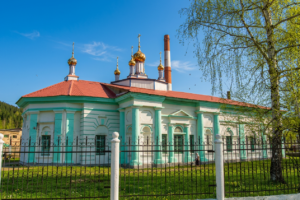
2 temples were immediately built in the monastery: a warm church in the name of St. Philip and a cathedral church, which was dedicated to the Iveron Icon of the Mother of God.

In 1654, stone churches were laid. Under the patronage of the patriarch, the monastery grew rapidly. 2 events helped in this:
1. By order of Nikon, the relics of Jacob Borovichi were transported to the monastery
2. Monks moved to the monastery, who were under strong pressure from the Uniate Church in Belarus.
The relics of the saint attracted pilgrims, and the skills of the Belarusian monks made it possible to organize book printing. This was the second printing house in Russia. The first was in Moscow. The settlers were skilled in publishing books, binding, wood carving, and icon painting. The monastery blossomed before our eyes.

In 1656, the first stone church was consecrated: the Assumption Cathedral. Metropolitans, archbishops and other representatives of the clergy gathered for the celebration. The Patriarch has arrived. He brought with him a bell, cast by his order and at his expense. But the main treasure was a copy of the Iveron Mother of God icon, which was kept on Athos, in the monastery of the same name. The icon was painted by a painter who kept a strict fast, while the brethren served the liturgy and all-night vigils. The result was a list that was no different from the original. He was taken to Moscow, where he was decorated with a rich salary and taken to Valdai.
Alas, after 10 years Nikon was convicted and defrocked, and the monastery, which he so patronized, fell into decay. It was closed and the brethren were resettled. But Our Lady of Iveron took care of her servants. A year later the monastery was opened, the brethren and abbot were returned.

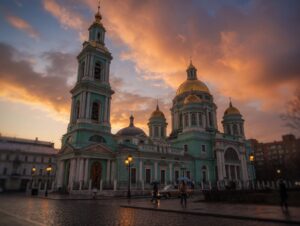
The Assumption Cathedral is the main church of the monastery. It is simple but majestic. The inside was painted with scenes from the lives of saints, stories of the appearance of the monastery and the Iveron Icon. The original frescoes were damaged by fire and renovation work. Only fragments of the 19th century painting have reached us.
After the revolution, an agricultural artel was organized on the basis of the monastery. It flourished for quite a long time, but in 1927 it was closed and the brethren were dispersed. The Iveron Icon was lost. The buildings were used both as a museum and as a sanatorium. Finally, in 1994, the monastery was returned to the Novgorod diocese.
Over these years, a total reconstruction of the monastery buildings was carried out. The frescoes were restored and the domes were gilded. Services are held in all churches, church sacraments are performed.
The monastery has a pilgrimage center, a library, and a church shop.
Charitable Foundation Holy Land
Temples and Monasteries of Russia