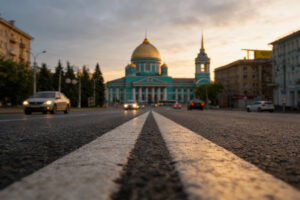
The silence here is deceptive. Now government development plans have turned the former monastic stronghold into a battleground for history, but through the hum of bulldozers breaking down centuries-old cell walls, the echo of strict prayer chants is still heard. This place, which diocesan missionaries once bitterly called “Jerusalem of the schismatics”, for a century attracted thousands of pilgrims from all over the Volga region.
The monastery owes its birth to two outstanding people: Cossack ataman Osip Goncharov, who received the highest permit for the construction of the Assumption Cathedral, and Archimandrite Serapion (Abachin) — an ascetic whose name is shrouded in legends of incessant prayerful deeds. The land under the holy monastery in the 1870s was donated by the merchant A.D. Vekhov, and the official voice was given to Cheremshan only after the tsarist manifesto of 1905. From that moment began to flourish: here, away from the bustle, raised icon painters, taught the iconic singing and prepared future pastors for the whole country. In the crypt behind the altar rested the main shrine — the incorruptible relics of Father Serapion himself. The body of the ascetic, acquired ten years after his death completely untouched by corruption, the faithful put on a par with the images, keeping his photographs at the icons.
Magnificent, though devoid of a dome in imperial times, the Assumption Cathedral remembers everything. Its powerful walls, laid down in 1881, survived the transformation into a sanatorium dining room, the lost crypt of the founder and the cynical alteration of the altar part into an outbuilding. But the worst wounds have been inflicted today. Two monastic buildings that survived atheistic hardship and received the status of monuments of religious architecture in 1995 have already been wiped off the face of the earth for the reconstruction of the Monk’s Cave center.
A terrible monument of oblivion was the old monastic cemetery. Where the ataman Goncharov, who accepted the schema with the name Joasaph, rests, once arranged a dance floor. Now on the bones of the ascetics plan to lay a cycling course and a ski track. The monastery pond, remembering the quiet creak of the water mill, is still intact, but the shadow of destruction has covered these slopes. Cheremshan survived under the onslaught of revolutions and militant godlessness, but can he resist the indifference of those who see in the holy walls only a dilapidated barrier to commercial recovery? The answer drowned in the noise of construction.
Charity FundHoly Land.
Russian Temples and Monasteries