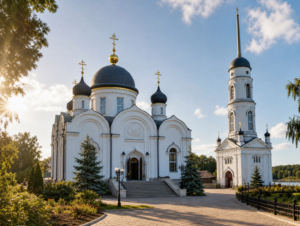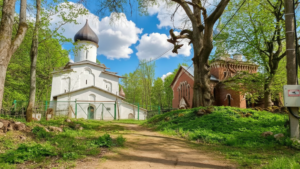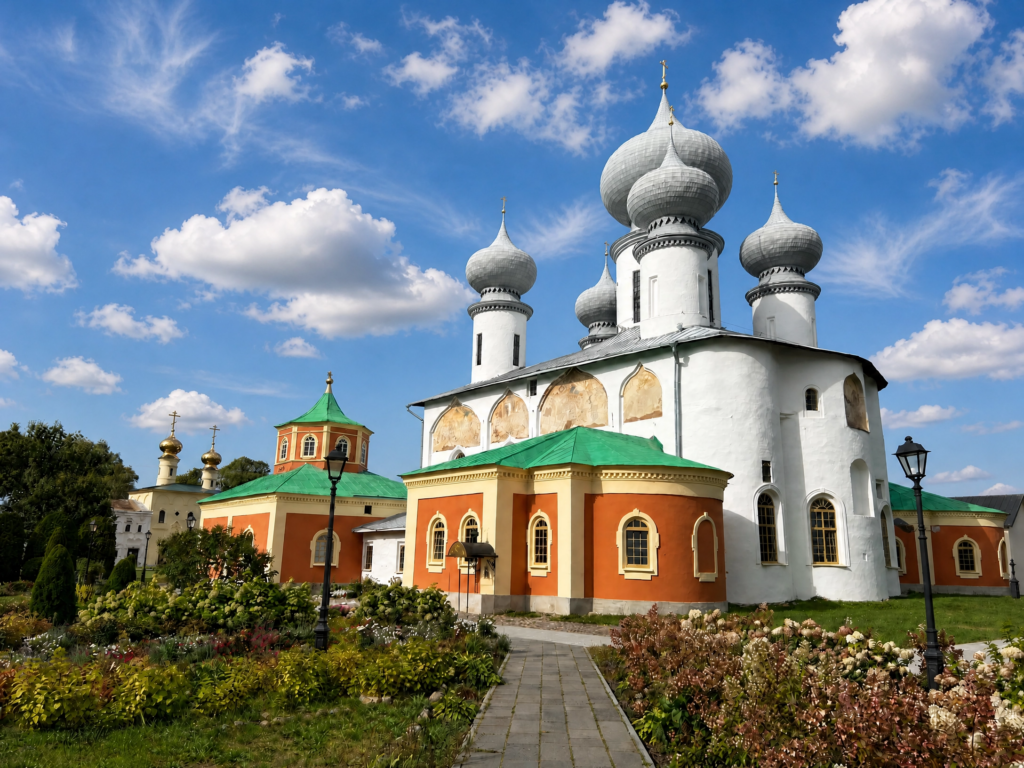
In the rays of the northern sun, reflected from the calm waters of Tikhvinka, an event once occurred that forever changed the fate of these lands. Legend says that at the end of the XIV century over the Ladoga appeared the shining face of the Virgin. It is unknown where the icon descended directly to the bank of the river, and the locals on the same day began to cut a wooden log for it. Around this shrine, like a mighty oak of acorn, grew the majestic Tikhvin monastery.
The official date of the founding of the monastery is 1560, when Ivan the Terrible ordered the Novgorod bishop Pimen to establish a monastic center here. However, the spiritual heart of the monastery — the Assumption Cathedral — was laid even earlier by Vasily III, who wished to create an exact copy of the main Kremlin church. Wealth and strategic position quickly turned a quiet backwater into an impregnable stronghold, which in the chronicles was even called the Virgin Lavra.
During the Troubles, these gray walls were stained with blood. The Swedish army led by Delagardi surrounded the monastery with a tight ring. Prince Prozorowski and a handful of defenders were desperate. When the forces were running out, the monks came to the parapet with a miraculous image, and the invaders saw a huge Russian army. Blinded by the vision, the enemies trembled and fled.
Decades passed, and the architectural ensemble grew, absorbing the spirit of different eras. The famous belfry, generously donated by Boris Godunov, became a symbol not only of the monastery, but of the whole city. No less amazing is the church with the affectionate name “Wing”. Once in its place stood the gate tower with a huge fresco of the Virgin, to which led a steep staircase of twenty-four steps. After the miraculous healing of a local resident, architect Benois hid the shrine in an elegant stone extension, turning the icon into an altarpiece of the new temple.
The most dramatic pages of the history of the monastery unfolded in the last century. After the revolution, the gates of the monastery slammed shut, and the miraculous image turned into an ordinary museum exhibit. In the fire of the Great Patriotic War, the shrine experienced an incredible journey: from the occupied region it was taken to Pskov, then to the Baltic States, and later across Europe to Chicago. The guardian of the image, Bishop John, before his death left a strict covenant: to return the shrine home only when the monastery is fully reborn. And that miracle happened. In the early 1990s, the monastery was handed over to believers, and ten years later, the icon was solemnly brought under the restored vaults of the Assumption Cathedral.
Today, walking along cobblestone paths, you can touch rough stones that remember the ringing of Swedish swords. This monastery is living proof that true faith can travel through time, wars and oceans, and one day be sure to return to where it is expected.
Charity FundHoly Land.
Russian Temples and Monasteries