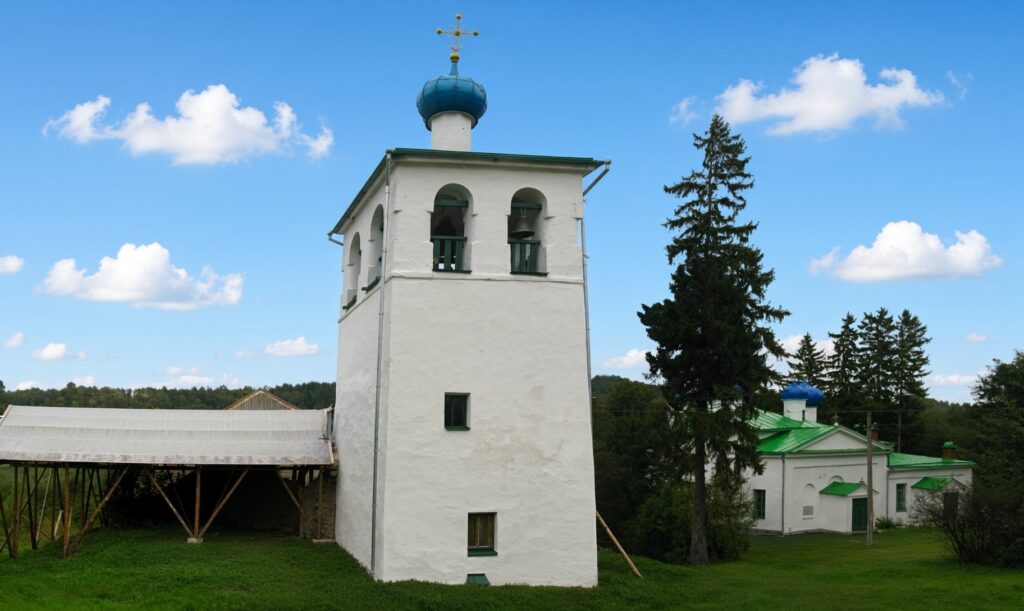
On the quiet shore of the Malsky Lake lurked a monastery similar to a faded epic. The water serenely washes the ancient stones, and from under the altar a source hidden from view breaks out. This is the Spaso-Onufrievsky hermitage, where time seems to freeze.
The Monk Onufry founded the desert here in the fifteenth century. The life of the first inhabitants was extremely modest: up to fifteen monks, their own cow farm and garden near the water. But the wilderness did not save the edge from storms.
The monastery was twice wiped off the face of the earth — first the detachments of Stefan Batory, then the Swedes. It lay in ruins and was revived by royal decrees, until Catherine II finally abolished the monastery.
The heart of the hermitage remained the Savior-Christmas Church. In its harsh Pskov lines, the influence of Moscow architecture is felt — a simple cube is crowned by five chapters. The main secret is hidden at the bottom: the temple stands directly above the holy spring from under the altar.
In 2000, the ruins were transferred to the Pskov-Pechersk Monastery. Today, 18 km from Pechora, among the restored belfry, prayers are heard again. When you come here, you understand the main thing: there is no inspection of the architecture. Here they drink ice water from under the altar and listen to the silence that has survived entire epochs.
Charity FundHoly Land.
Russian Temples and Monasteries