Historians still argue about the exact date of the monastery’s foundation — some call 1605, others — 1622. However, it is known for certain that by the early 1630s, the confluence of Kyrgyzstan in Tom was already warmed by prayer. It was the first monastery in the harsh Siberian expanses, but it did not last long.
Nature and people united against hermits: fire burned wooden cells, and water washed away the foundations. The surviving brothers left the lowland and climbed the Yurtoknaya mountain, hiding closer to the walls of the Tomsk fortress. By 1663, a new church in the name of Saint Alexis had risen on top. The monastery gained a second wind and a new name — Theotokos-Alekseevsky monastery.
From that moment began a rapid flourishing. The monastery became a real giant: he ruled eight neighboring monasteries, the only one in the province kept about four hundred serfs on his land and owned huge lands. Not only were they praying, but they were healing and enlightening. In the XVIII century, the monastery opened the first school in the city, and later the seminary with a huge library. The spiritual center also served as a place of quiet exile for guilty monks and undesirable secular persons.
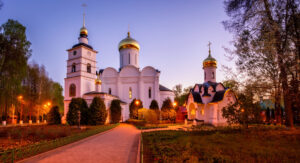
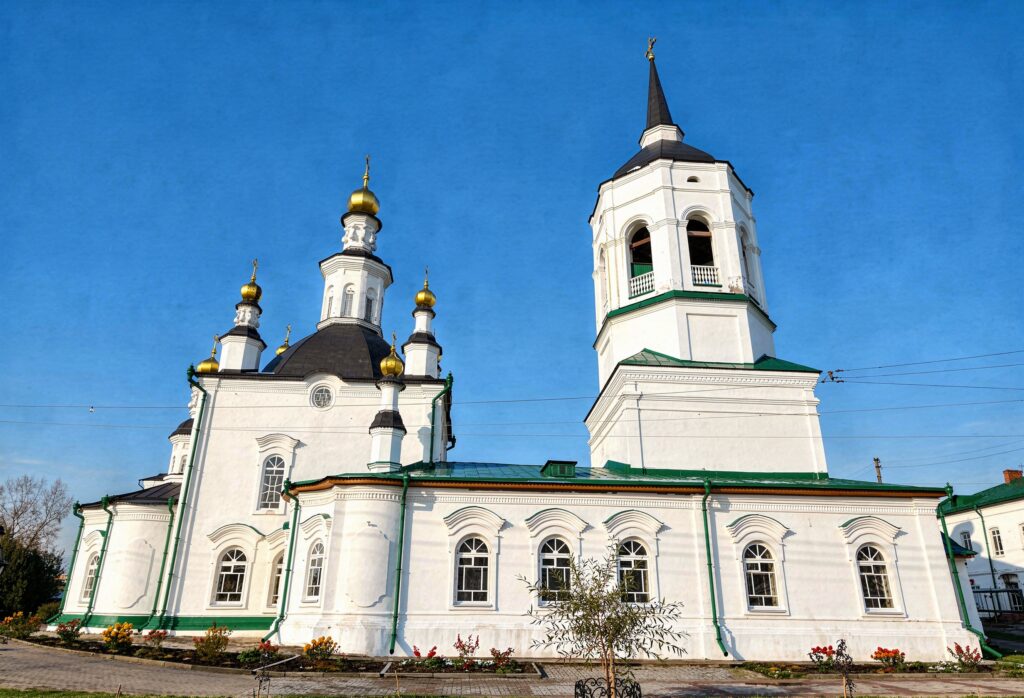
The shape of the mountain also changed. A stone replaced the chopped walls. At the end of the XVIII century, the Kazan Church rose — a real pearl of the Siberian Baroque. Half a century later, the architect Karl Tursky surrounded the territory with powerful walls with chapel towers. Behind the impregnable facade there is a monastery garden with a lake, summer cells and a parish. The main decoration of the temple was the image of the Virgin “Inextinguishable Kupin”, before which
The tragedy befell the shrine in the twenties of the last century. The monastery was closed, and the monks, together with the abbot, were waiting for a terrible end — the shooting on Mount Kashtak. In the empty walls, the institute was located, the domes were leveled to the ground.
But the stones remember theirs. Revival began in the 1990s. The real shock was the summer of 1995: in the cesspool of the destroyed chapel found the incorrupt relics of Elder Fyodor Kuzmich. According to a stable legend, under this name was hidden Emperor Alexander I, who faked his death for the sake of humble wandering. Today, the relics of the righteous are the main relic of the restored monastery, and a golden dome shines again over the place of their acquisition.
Charity FundHoly Land.
Russian Temples and Monasteries