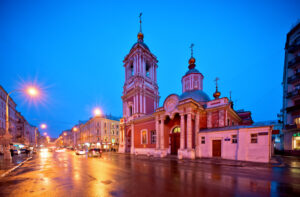
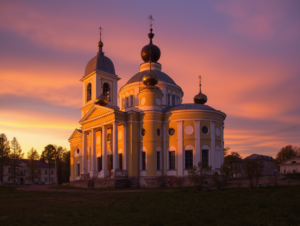
A strange feeling covers the village of Syrkovo, when you see how from the thick grass emerges the five-head. It is alien to this humid Baltic plain — too ceremonial, too Moscow. It seems as if an expensive carved casket was put in the middle of a modest northern field. The skeleton of the cathedral, dated 1554, is the same box, only it opens with the story of oath, betrayal and posthumous rest.
Breathe in the damp river air. Somewhere here in the middle of the XVI century, the deacon Fyodor Syrkov took a vow. The road was dangerous — the embassy in Livonian Kolyvan. He promised to build a house if he returned alive. Back. The word was kept with a sweep, received the good from the terrible. The irony is that years later, the sovereign personally dealt with the former envoy during the bloody Novgorod campaign. The property was executed, and then suddenly returned — and it went to the construction of a female monastery, which became a crypt for Fedor.
But the Syrkov family knew how to build for a long time. Half a century before these events, in 1510, the father of the deacon, Ivan, left the city a much more elegant mystery — the temple of the Myrrhbearers. Imagine: the beginning of a wet winter, the ceremony of consecration in the presence of Grand Duke Ivan III, and inside — the first in Novgorod heat from the ovens. The Syrkovs thought practical: they waterproofed the basements so that the soil dampness receded, and forged bars were hung on the windows and double doors. In fact, they built a fortress for the soul and capital, decorating the facades with brick tiles and tiles, like a wedding towel.
In the temple of the Myrrhbearing Women, the earth went underfoot not only figuratively. The floor in the altar was laid out with brick over pots of sand — excellent acoustics came out. The sound of footsteps and prayers became deaf and solemn. Near the family yard homoned, but by the XIX century all this greatness impoverished. The deserted church was transferred as a baton: first to the Yuriev monastery, and in 1832 it was attributed to the Syrkov female.
Now it’s all mixed up. The refectory of 1690 is not impressive, and the ancient vaults closed in silence in 1920. Part of the masonry was dismantled, new buildings grew on the bones of old foundations. But look at the ruins of Vladimir Cathedral: the harsh Novgorod masonry sees through the Moscow splendor of the facades. This place still keeps the hum of the oprich axe and the quiet ringing of mica windows, behind which once for the first time in the city became homely warm.
Charity FundHoly Land.
Russian Temples and Monasteries