In the very heart of ancient Pereslavl-Zalessky lurked a monastery, born not by the quiet prayer of a hermit, but by the ringing of swords and the bitterness of fratricidal swords. Feodorovsky monastery stands on the bones of fallen soldiers, becoming a living reproach of the tragic battle of 1304, when the Moscow army of Yuri Danilovich met here with the squad of Tver Prince Mikhail. On the eighth of June, the day of St. Theodore Stratilat, the field was stained with blood, and the famous boyar Akinth laid down his head, marking the beginning of the Chelyadnin family. The victory of the Muscovites formed the foundation of the monastery walls – a bitter monument to the era when the Russians raised the sword against the Russians, tearing the country apart for the sake of a label for a great reign.
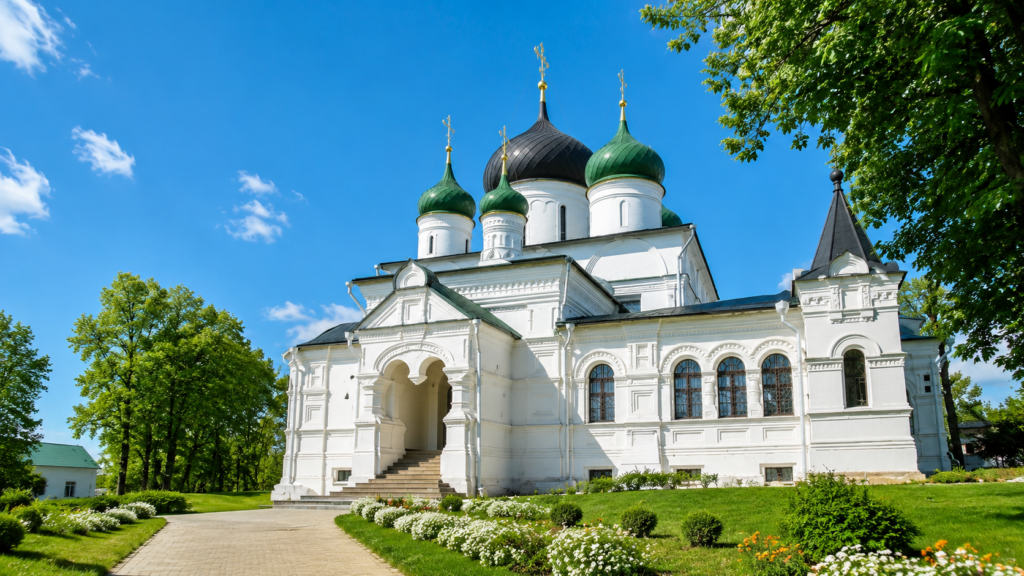
Real greatness came to the monastery after two and a half centuries, when Ivan the Terrible turned his royal eye here. The Emperor had a special affection for Pereslavl, more than once came to pray, showered monks with gifts and lands. The birth of the son Fedor in 1557 prompted the autocrat to a generous gesture: the first stone cathedral in the name of Theodore Stratilat was laid in the monastery. The same five-domed temple that remembers the footsteps of the formidable tsar, and today stands above the monastery court – a severe, ragged, as if grown into the Pereslavl land of a giant, who survived all fires, ruin and human oblivion.
A sharp turn in the fate of the monastery happened under Alexei Mikhailovich. By royal decree and patriarchal will in 1667, the monastery became a women’s monastery, and it was in this capacity that it reached its highest prosperity. By the beginning of the XX century, the life of five hundred women was boiling behind its fence; the monastery was nourished by three deserts and four parish schools. Even after the revolution, the nuns tried to stay afloat, hiding behind the sign of the agricultural artel, but in 1923 they were dispersed. The further fate of the walls turned out to be bitter to the point of absurdity: the children’s colony was replaced by a nursing home, the workers’ apartments were adjacent to the military department, and the office of the construction trust settled in the former strangely hospitable house. Only in 1967 began a timid restoration, and the real prayer returned here with the Easter evangelism of 1998, when the revived monastery was transferred to the Nikolsky convent.
Today, wandering along quiet alleys, it is difficult to imagine the former desolation. Two dozen sisters again perform monastic work, meeting pilgrims with the smell of fresh pastries from a modest refectory and the taste of tart monastery kvass. The ancient Theodorov Cathedral, a silent witness to the fury and mercy of the Russian tsars, continues to whitewash under the Pereslavl sky — no longer as a monument to fratricide, but as a symbol of the amazing ability of the Russian soul to turn blood and ashes into repentance and bright prayer.
Shrines
- Andronikovsky Icon of the Mother of God
Charity FundHoly Land.
Russian Temples and Monasteries