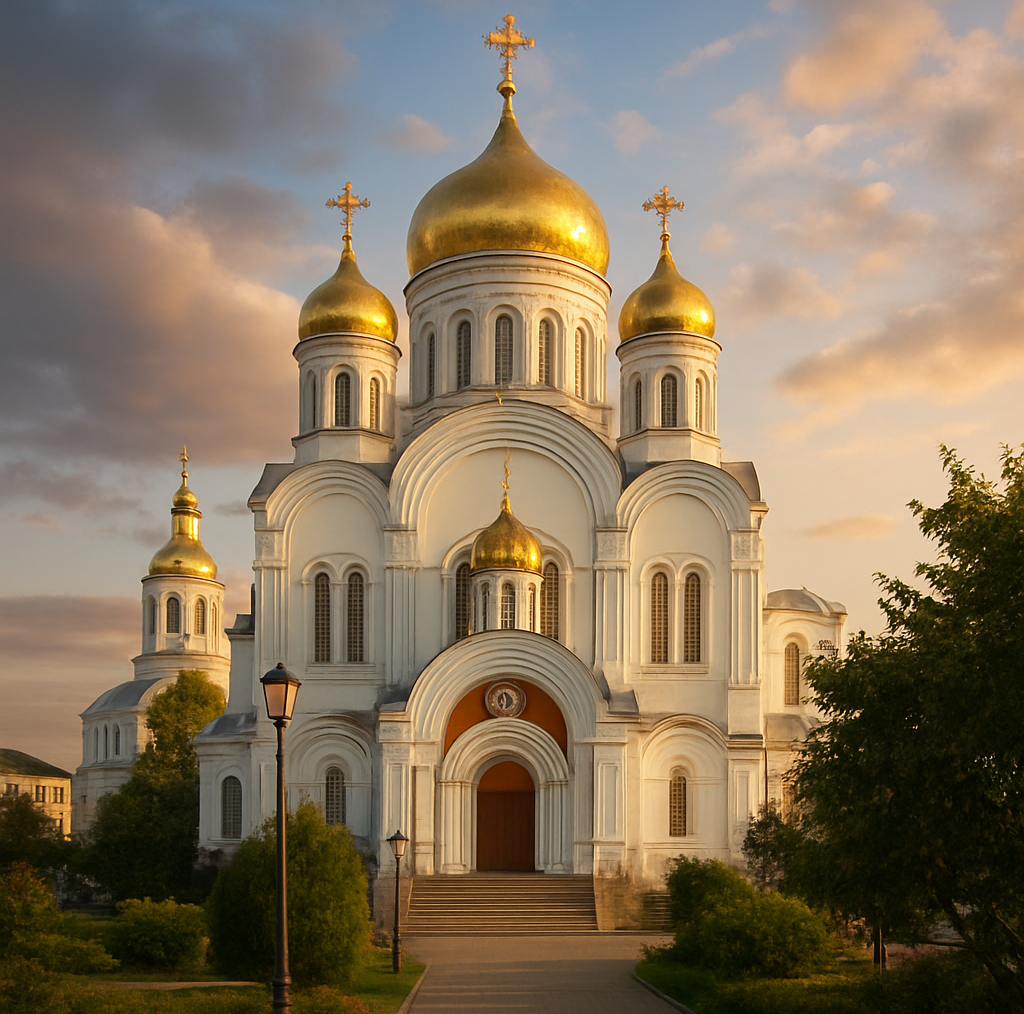
Christian architecture came to Rus’ from Byzantium, but quickly transformed and acquired its own unique style.
In Byzantium, churches were crowned with one, large dome. In Rus’, the number of domes varied and had a symbolic meaning:
3 — symbolized the Holy Trinity. This is an architectural symbol of faith that repeats the one that we proclaim in the church: “I believe in one God, the father…Jesus Christ, the son of God…and in the Holy Spirit…”
5 – Christ and the holy apostles-evangelists: Luke, Mark, Matthew and John
7 — 7 virtues, the same number of Ecumenical Councils,
7 Sacraments
13 — Christ and the 12 apostles who accompanied him on his earthly journey
But, if this quantity seemed not enough, the Russian architects added more without skimping. At the Church of the Transfiguration of the Lord in Kizhi
there are 22 chapters.
Helmet
Helmet
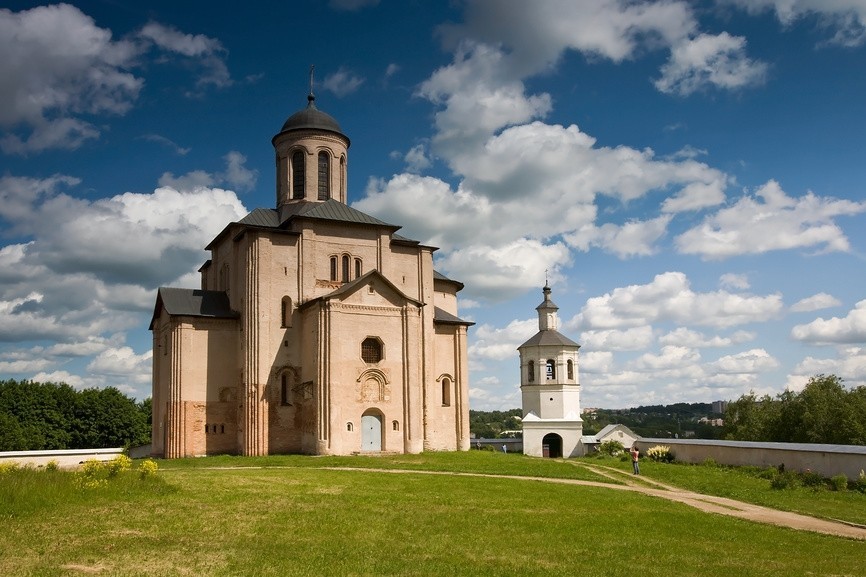
Initially, churches were crowned with domes in the shape of a Russian warrior’s helmet. Therefore, the older the temple, the more likely it is that it will be covered with a helmet-shaped dome.
Hagia Sophia Cathedral in Novgorod, church Dmitry of Thessalonica in Vladimir, temple Michael the Archangel in Smolensk — most stone churches of the pre-Mongol era demonstrate exactly this form of dome.
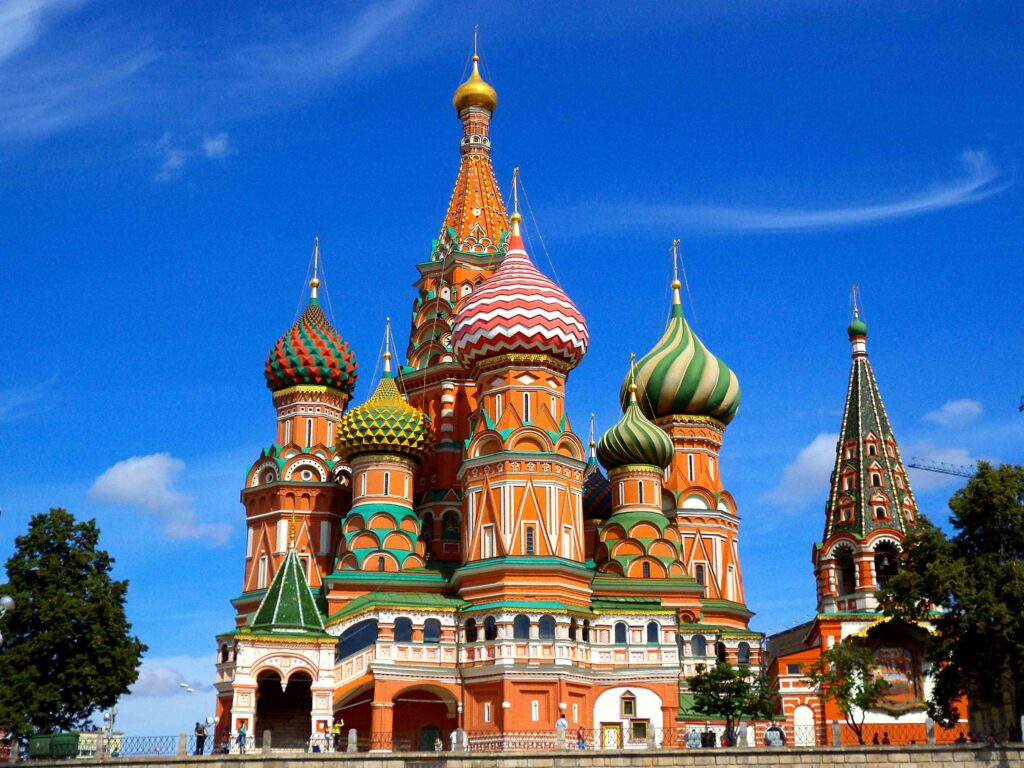
Lukovka
It is this form that has become the hallmark of Russian churches. The onion symbolizes a candle, a fire directed into the heavens. It is crowned with the Cross of Salvation. Such a dome is installed on a cylindrical base, which is smaller in volume. In the old days, such a dome was called a “poppy tree.” It’s difficult to understand when the helmets changed to bows. They appear on icons from the 13
century, but the first churches with such a roof have not survived.
Why the replacement took place, we do not know. Like onions are more practical — the snow doesn’t lie there. It seems like it’s easier to make a bow out of wood than a helmet. Maybe someone just liked this architectural technique and others picked it up. The onion temples that we see today were built in the 16th century and later.
To see an onion temple, just walk down the street of any Russian city. The most famous are St. Basil’s Cathedral, Savior on Spilled Blood in St. Petersburg, , Nativity of the Virgin Mary in Suzdal.
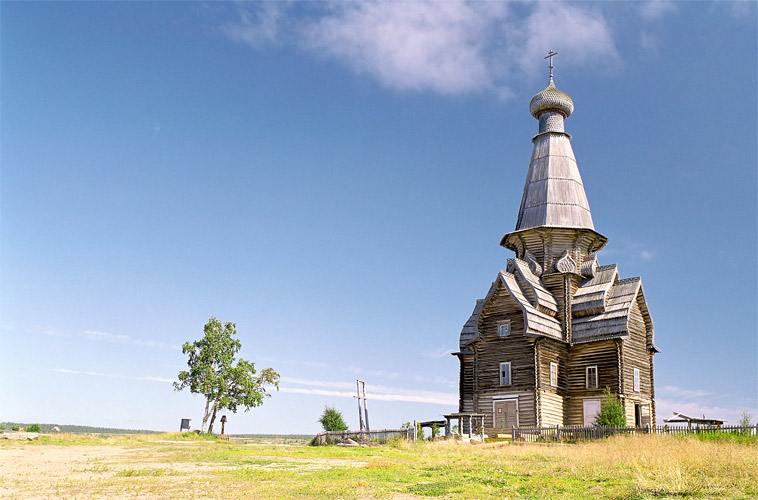
Tent
In the 16th and 17th centuries, the dome began to be made in the shape of a multifaceted pyramid, which was crowned with an onion.
Such the domes were called tent domes.
This form was very popular in the north — the snow slid off the tent without accumulating and it was easier to process the wood under a tent dome. Later, the hipped dome began to be used in stone churches, but not for long. Patriarch Nikon, famous for his reforms, banned tent churches. But who in Rus’ listened to the authorities. At the height of Nikon’s reforms, they built the Church of the Assumption in Varzuga, the Church of the Dormition of the Blessed Virgin Mary, in the Alexander Kushtsky Monastery, the Church of Savvaty and Zosima in the Trinity-Sergius Lavra. What can I say, the central chapel of St. Basil’s Cathedral is also tented. Then a tradition arose to crown bell towers with a tent, so this type of dome is no less widespread than onions. Earth
Investment in the Soul!