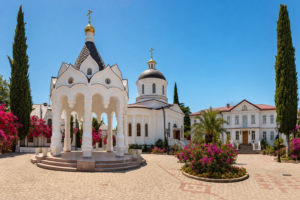
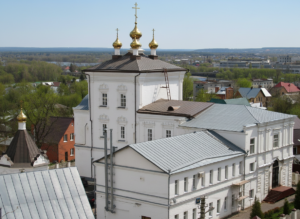
The Volga water, which for centuries undermined the coast, long ago hid the Yellow Lake. But the memory of him remained in the name of the monastery, the white walls of which now look directly into the river space. The fate of this monastery is like the Volga itself: with steep curves, sudden storms and amazing turns.
Its founder, the Monk Macarius, passed a path worthy of an ancient legend. Having built the first wooden monastery, he was on the way of the Horde raid. In 1439, the army of Khan Ulu-Muhammed razed the monastery from the face of the earth. The abbot himself was taken captive, but the khan, amazed by the stories of the gentleness of the elder — «he did no harm to anyone by word or deed» — not only released him, but also allowed the release of four hundred other prisoners. This moment became a turning point: returning with the liberated people, Macarius chose a place on the high bank of the Unzhi River for a new solitude.
Founded there Makaryovo-Unzhensky monastery became the last earthly pier of the saint, but his heart remembered the Volga. The main miracle happened later. In 1620, the monk Abraham came to the ashes of the XV century and revived the Zheltovodsk monastery. And then a successful bend of the river turned a quiet abode into an economic center. Right at the monastery gates, the Makariev Fair was noisy, whose scope thundered throughout Europe. The ringing of coins was replaced by the ringing of bells: for fair fees, the monastery dressed in stone, acquired powerful walls and the Trinity Cathedral.
The architectural ensemble seems to grow out of the earth, reflected in the water. Powerful fortress walls remember not only merchant wagons, but also schismatic secrets — nearby, along the Kerzhenets river, hid hermitages. A remarkable detail: over the grave of Abraham, who revived the monastery, stands an elegant civory-rotunda, like a transparent bridge between the two births of the monastery.
History knows here dramatic pauses: after the transfer of the fair to Nizhny came desolation, fire, closure. In the XX century, cattle were kept in temples, a hospital was placed. But today, reborn as a female abode, the monastery is again filled with prayer. Looking at its powerful walls, you feel an incredible silence – the one that is stronger than any historical storm.
Charity FundHoly Land.
Russian Temples and Monasteries