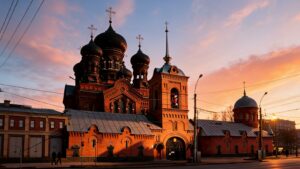
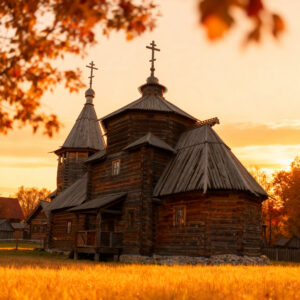
In the photos, the church looks majestic, but in fact the temple of John the Baptist is small. Enthusiasts like to call it the oldest temple in Russia. However, scientists cannot come to a clear conclusion. The fact is that a church was built on the site of the old basilica.
The famous column with an inscription made in the 8th century may be from there. But the architectural style, construction technique is more like the 10th century. The oldest or simply ancient temple of John the Baptist is undoubtedly an outstanding monument of Byzantine architecture. Built from alternating rows of white marble and red brick, it draws attention from afar. The cross-domed scheme of the temple is a classic example of church construction of the early Middle Ages. The many columns inside the temple give the traditions of Greek culture. For several centuries it was a parish church of the local Greek community, but when the Tatars seized the Crimea, they turned it into a mosque.

We do not know what the church was called in ancient times. When Kerch became a Russian city (1773), the temple was re-consecrated. They dedicated it to the beheading of the head of John the Forerunner.
Russian settlers began to stay in the Crimea and by the beginning of the 19th century the building could no longer accommodate all parishioners. In 1803, a western extension was made to the church with choirs and a bell tower. In 1835, the extension was built in the northern part. In the middle of the 19th century, the old bell tower was replaced by a new, two-tiered one.
It should be noted that all later reconstructions did not affect the ancient part of the temple, only extensions were rebuilt.

After the revolution, the building was confiscated and a warehouse was opened there. But in 1938 it was decided to repair it. Fixed the roof, installed drains. Plastered the walls. The war prevented further work. Surprisingly, the temple survived all the attacks and shelling. However, it quickly deteriorated after the war. In 1972, a large-scale restoration began. Alas, it wasn’t really finished. The church was repeatedly tried to demolish, but then the Union collapsed and the building was returned to the faithful.
During the repair work, under 2 layers of plaster found the remains of medieval frescoes. Dating them to the 15th century, painted the walls, no doubt, the artist of the Byzantine school. At one time it was even thought that Theophan the Greek, but later this idea was abandoned.

Before the revolution, ancient shrines were kept in the church, among which there are mentions of the manuscript gospel and the Apostle, medieval icons with the image of Christ, John the Baptist, and the Mother of God. Traces of relics are lost. What did not disappear during requisition, died during the war. Now the church is the cathedral of the Feodosia diocese, it holds regular services.
Charitable Foundation Holy Land
Russian Temples and Monasteries