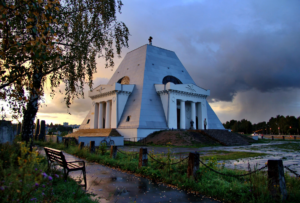
The Vologda land knows a few monasteries, whose history is also imbued with prayer, fire and rebirth. Spaso-Prilutsky Monastery is not just an architectural ensemble on the bend of the river. This is a place where through the thickness of centuries the voice of its founder is still heard – a man who turned the remote northern forests into the center of the spiritual power of Russia.
The bend of fate: the disciple of Sergius and the prince’s godchild
The story began with a wet marshland and a glance toward the sky. Monok Demetrius, a native of Pereslavl lands and the closest associate of Sergius of Radonezh, sought not fame, but silence. One day, stopping at the bend of the river Vologda, he realized that here will be a home for those who seek God. The wooden temple, consecrated in honor of the All-Merciful Savior, grew rapidly, as if the earth itself breathed it out of the bowels.
Amazing fact: to build the monastery helped Dmitry Donskoy. But not only gold and patrimony expressed this connection. Saint Demetrius became the godfather of princely children. It is difficult to imagine a more durable bridge between the forest hermitage and the Moscow throne. It was here, to the harsh north, that Dimitri transferred the strict social charter of the Trinity Lavra. For the first time, the cold Russian North heard not the scattered ringing of individual bells, but the unified rhythm of monastic brotherhood.
Stone, flame and echo of Trouble
As time passed, modest cells gave way to powerful stone hromadas. In the XVI century, the majestic Spasska Cathedral rose above the river, replacing the burned tree. And by the middle of the XVII century, the monastery was surrounded by high fortress walls with harsh towers — not so much for beauty as for survival. The place was strategic: a tasty piece at the crossroads of trade routes to the White Sea, salt jams and fur fisheries. Wealth attracted not only pilgrims.
The worst day in the history of the monastery is December 18, 1619. A detachment of Lithuanians and “Russian thieves” broke into the monastery, cutting and burning everything in the way. The refectory, packed with people, flashed a torch. On that day about two hundred people were martyred, including almost sixty monks. The archives died in smoke, the treasury was empty. But the monastery stood as if the walls held not only bricks, but also the prayers of the sufferers buried under them.
Jewels of the Kremlin under the vaults of the North
In the fires the monastery burned more than once. The catastrophe of 1811, which happened, according to legend, because of the forgotten penny candle, almost destroyed the Spasskaya Cathedral from the inside. But the most amazing thing happened a year later. When Napoleon stood at the gates of Moscow, the jewels of the patriarchal sacristy, the shrines of the Kremlin, the Trinity-Sergius Lavra and the Novodevichy Monastery were secretly transported here. Imagine: gold salaries strewn with gems, chastises and ancient icons hid under charred vaults while Moscow lay in ruins. Modest Vologda monastery for a month became the secret heart of Orthodox Russia.
The Soviet years left rough scars on the walls. There was a disabled house, a cinema, and a transfer prison for the dekulaks, who were transferred to the Gulag. In the monastery towers kept explosives. It seems the air itself has been soaked in pain. But in the late fifties came restorers, and in 1991 — monks. The return to life began with the gate church, as if from a small spark, from which the flame of faith rekindled.
Today, the measured step of seminarians sounds again here, and the bell ringing is reflected in the calm water of Vologda. It is worth coming here to freeze at the entrance, breathe in the smell of age-old stone and feel how time loses its power. The house is not only beautiful — it is really alive.
Charity FundHoly Land.
Russian Temples and Monasteries