At the end of the summer of 1591, Moscow was preparing for the worst. The Crimean Khan Kazy-Girey stood under the walls, and it seemed that no force could save the capital. But Tsar Theodore Ioannovich’s night prayer in front of the modest image of the Mother of God was noticed not only by those close to him. In the morning, the enemy fled, gripped by panic: through the fog he saw a countless Russian army.
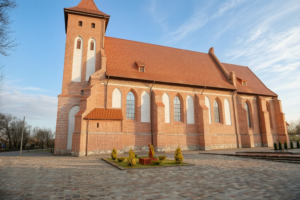
So, on the site of a field tent with a camp church of Sergius of Radonezh, a victorious monastery grew up. The first stones were laid in honor of the Don Icon — the same one with which Dmitry Donskoy walked to the Kulikovo Field.
The fate of the monastery from the very beginning was uneven, like the breath of a frightened city. The cathedral was erected quickly and amazingly beautifully. But the monastery had to live from hand to mouth. And when the Troubles broke out, they completely forgot about him. The Poles burned Moscow, and the newborn monastery turned into one of many silent ashes. Books, icons, utensils — everything disappeared. Only what they managed to carry in their hands was saved.
A new breath came with the Romanovs. Tsar Michael, as if healing an old wound, donated printed Menaions to the monastery — at that time this meant giving a beggar his last shirt. Alexey Mikhailovich no longer just helps, but prays here before every serious campaign.
The real breakthrough happened at the end of the 17th century. In just twenty years, the Don Monastery has turned from a poor relative into one of the largest landowners in the country. She was second only to Chudov and Simonov — and they were not much ahead of her.
And then the 18th century came with its horrors. In 1771, Moscow was struck by the plague. People sought salvation from icons, and when Archbishop Ambrose tried to remove the Bogolyubsky icon from the Varvarsky Gate to stop the crowd, the city went wild. Vladyka hid in the Donskoy Monastery. They found him, dragged him over the fence — they were afraid to desecrate the holy walls by murder — and tore him to pieces. The body of the murdered man lay on the ground for a day: the authorities were simply afraid to approach the place of massacre.
The French of 1812 behaved with the monastery in an almost civilized manner. They didn’t set it on fire — it was a bit far from the center. But everything that could burn in the cells was used for firewood. And the silver frame of the Don Icon was dragged away in a convoy.
Surprisingly, the warmest period in the history of the monastery occurred at the end of the 19th century. Philosophers, poets, and mathematicians in robes flocked here, as if to a quiet haven. Bishop Anthony, who lived here in retirement, gathered Blok, Solovyov, Florensky. Thousands came to his funeral in 1918 — then it was not just a farewell, but a hidden confession of faith.
Under Soviet rule, the monastery turned into a museum. First anti-religious, then architectural. Communal apartments lived in the towers — the holy walls heard children crying and kitchen quarrels. The monastery was returned to the Church only in 1991.
Today it is leisurely and strict here. Services, excursions to the famous necropolis, lectures. And also the headquarters of the Russian Cossacks. Ten Cossacks from each army live and work in the monastery for a month. They don’t guard — they pray and clean the yards. And so, in a circle, all year. Defense is different now.
Charity FoundationHoly Land
Temples and Monasteries of Russia