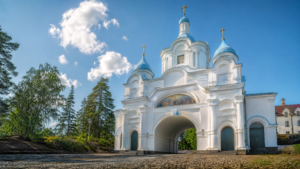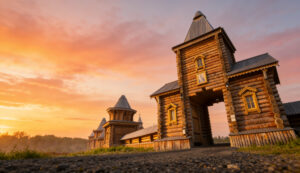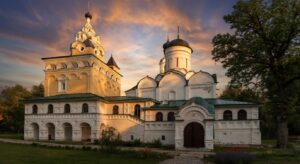
When we talk about Sergiev Posad, it is almost always associated with the Trinity-Sergius Lavra. But there are other interesting places in Posad. For example, the Chernigov monastery.
What is interesting about it?
Firstly, it is a monastery within a monastery. So, it’s a little confusing. The Lavra owns the Gethsemane monastery. Monks went there in search of silence and solitude. It was too noisy for them in the Lavra. They began to settle about three kilometers away, so as not to be distracted by worldly things. But for some, even life in the monastery seemed too lively. They moved to a grove nearby. The first was the famous Moscow holy fool Filippushka. He first lived in the Lavra, then in the Gethsemane monastery, and then went to Isaac’s Grove and asked permission to dig a cell for himself in the hill. Other hermits followed him. There were more and more caves and caves. By 1851 there were dozens of them. An underground temple of the Archangel Michael and other disembodied forces was also built. The upper part of the church protruded above the ground and was covered with a roof. And underground passages led down.
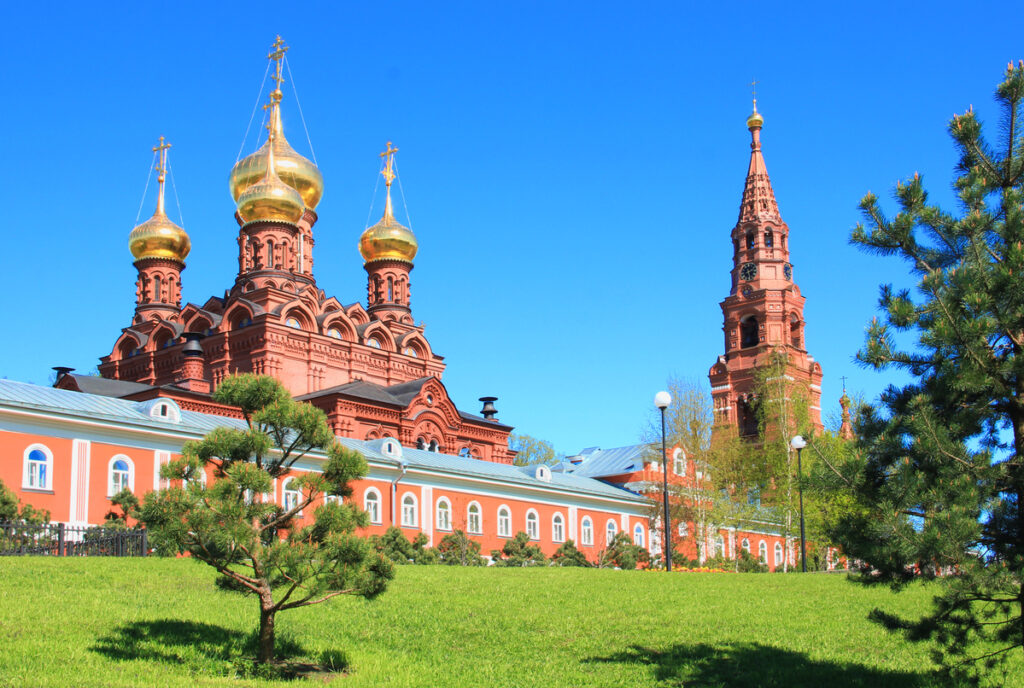
In 1852, the church was given a special icon — the Chernigov Mother of God. In 1869, the first miracle happened before her. A peasant woman whose legs gave out was healed. Since then, about 100 healings have been recorded.
The pilgrims came to venerate the icon and also talk with the local elder — the brothers Barnabas. He was famous for his wisdom; people came to him from afar for advice. In 1905, even the Tsar, Nicholas II, came. In 1995, Barnabas was canonized.
By the 20th century, the monastery no longer resembled a “secluded, abandoned place.” 400 monks lived there.
The underground church was expanded, then another one was built. Dedicated to Vasily and Theodosius of Pechersk.
The cave temple is the central place of the monastery. Hell, there is a Chernigov church with a large refectory. At the end of the 19th century, a new cell building was built. The bell tower, and the territory was surrounded by a fence.
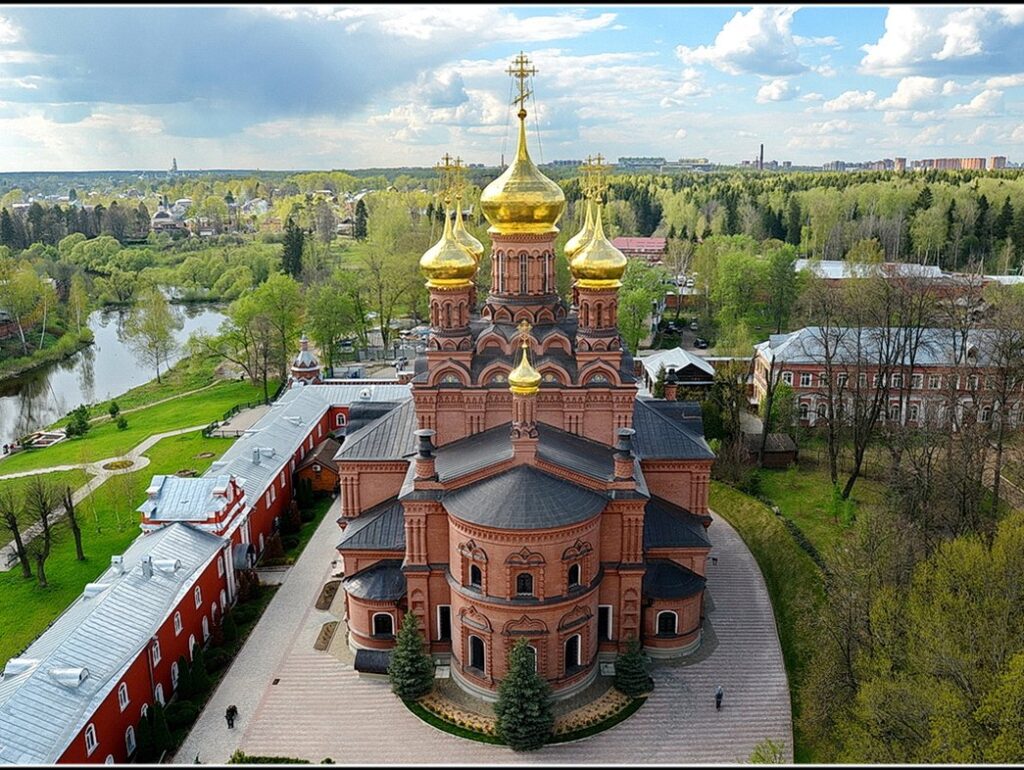
During the years of the revolution, the monastery was destroyed. The brethren moved to the Gethsemane monastery, but it was closed in 1924. The building was used as a prison and a home for the disabled.
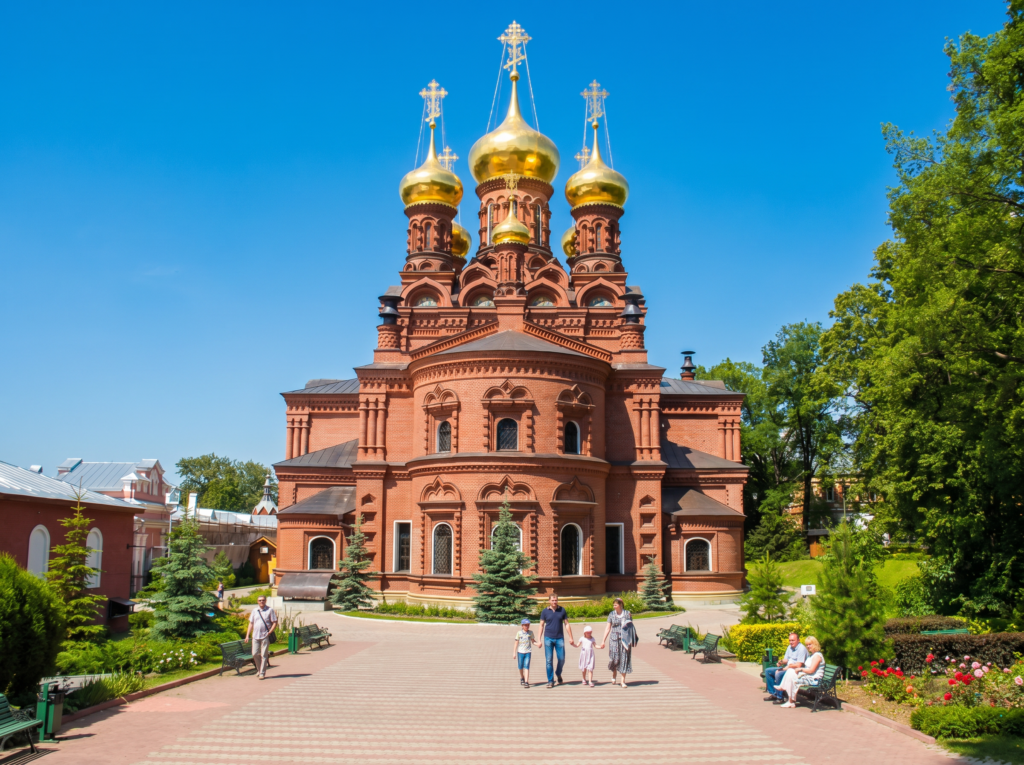
In 1990, the monastery was revived. Restoration took many years. Now 10 inhabitants live there, so the concept of a “monastery” as a secluded place is again true. All buildings are designed in the same style. The Chernigov temple is made of red brick, crowned with golden domes. The place is quiet and
secluded, not everyone comes here from the Lavra. But here is the Chernigov icon, and the grave of St. Barnabas, and the stone from the tomb of the Mother of God. And, according to pilgrims, the water here is holy. It helps well against illnesses and mental anguish.
Charitable Foundation Holy Land
Temples and Monasteries of Russia