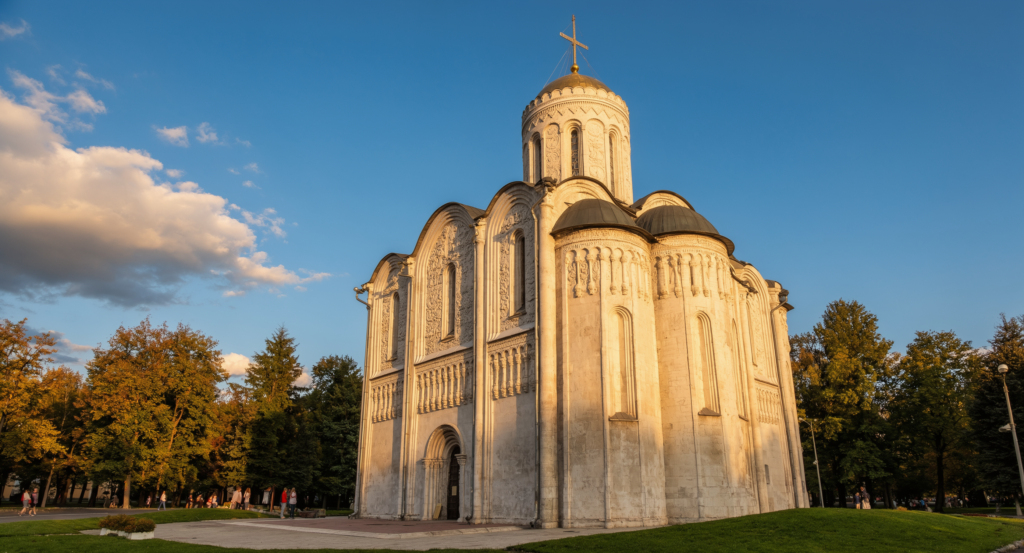
If we talk about the canons of Russian architecture of the pre-Mongol era, then there is no better example than the temple of Dmitry Solunsky in Vladimir. Built of white stone, a three-tiered temple with a head in the form of a heroic helmet is ideal for an example of the church style of Russia.
The temple was built by Prince Vsevolod the Big Nest as a house church. The temple was dedicated to Dmitry Solunsky. Scientists dispute the date of construction, but it happened not later than 1194. In the external decorations of the temple used elements of European, Balkan style, but the chronicle says that Prince Vsevolod (baptized Dmitry), masters from “other lands” did not call. 600 reliefs are carved on the walls of the cathedral. Images of saints, mythical and real animals, are well preserved. Only some of them were restored during restoration in the mid-19th century.
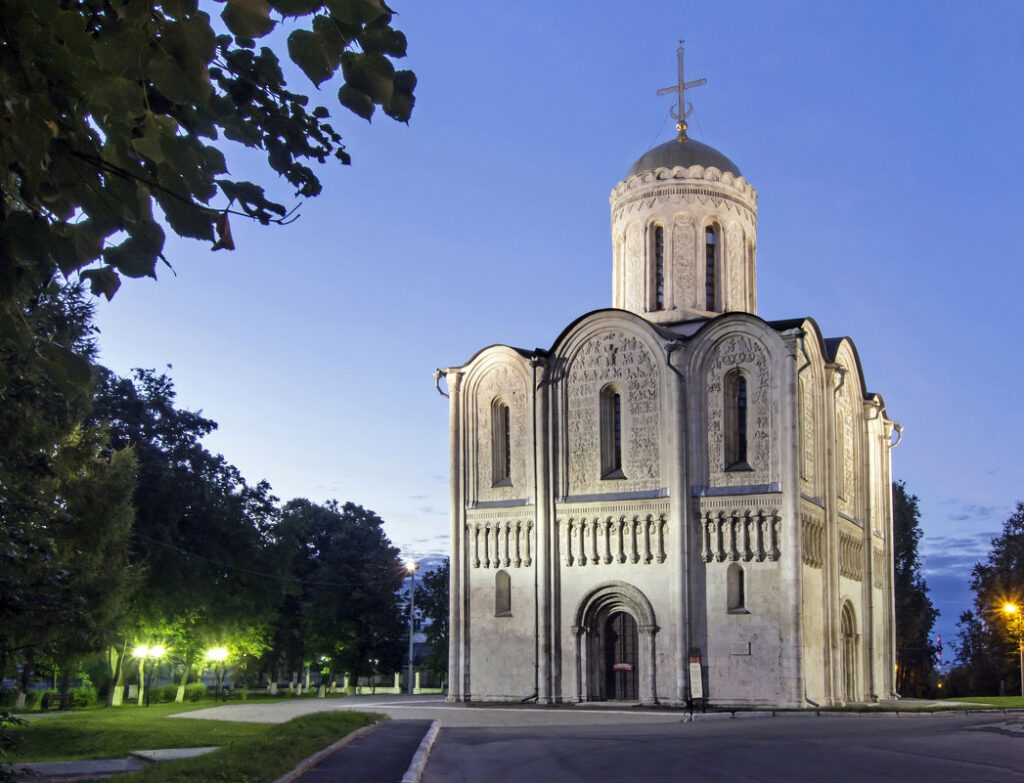
The church is small, for the princely family, so galleries and stairs connected it with the princely chambers. They were removed during the restoration in 1837, by personal order of Nicholas I. At the same time, they “renovated” the walls, destroying ancient frescoes. Only small fragments remain.
The icon and relic of Dmitry of Thessaloniki were the main relics of the temple. After the revolution, they were transferred to the museum in Moscow, and in our time returned in the form of exact copies.
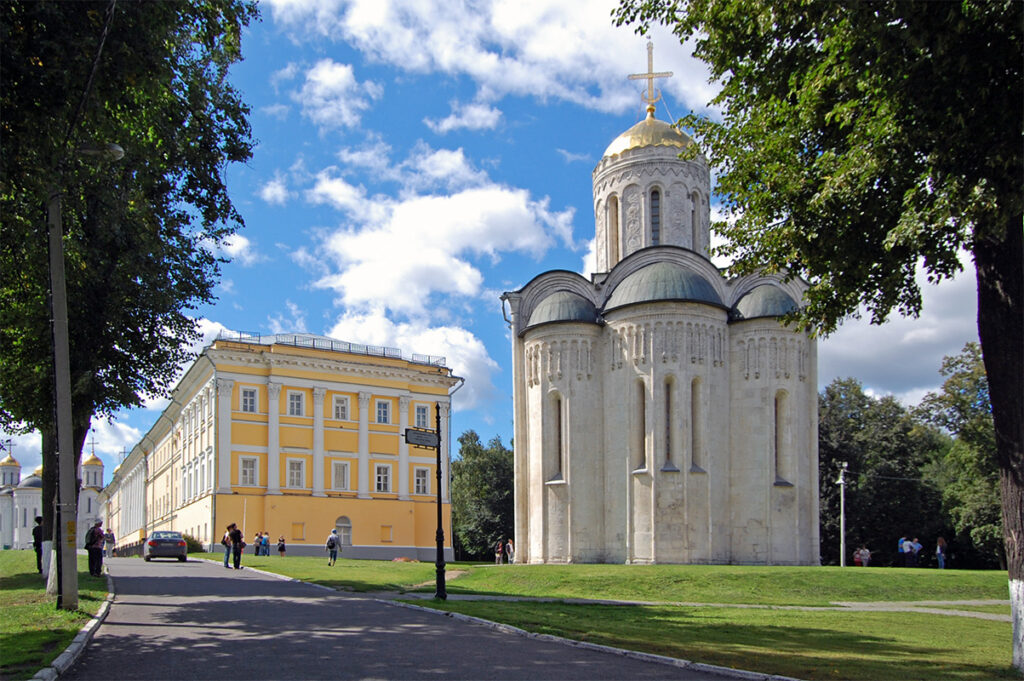
The temple burned several times and was looted, but under Soviet rule it immediately became a museum and was preserved quite well. During the last restoration, a microclimate was established in the building, a drainage system was made. The white stone thread was covered with a protective composition.
The building is part of the Vladimir-Suzdal Museum-Reserve, there are no services.
Charitable Foundation Holy Land
Russian Temples and Monasteries