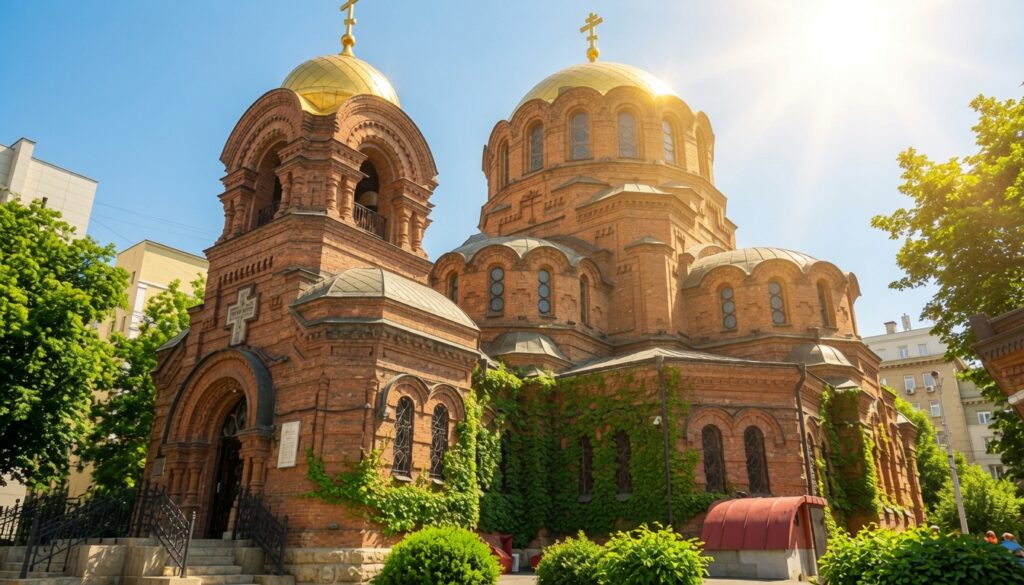
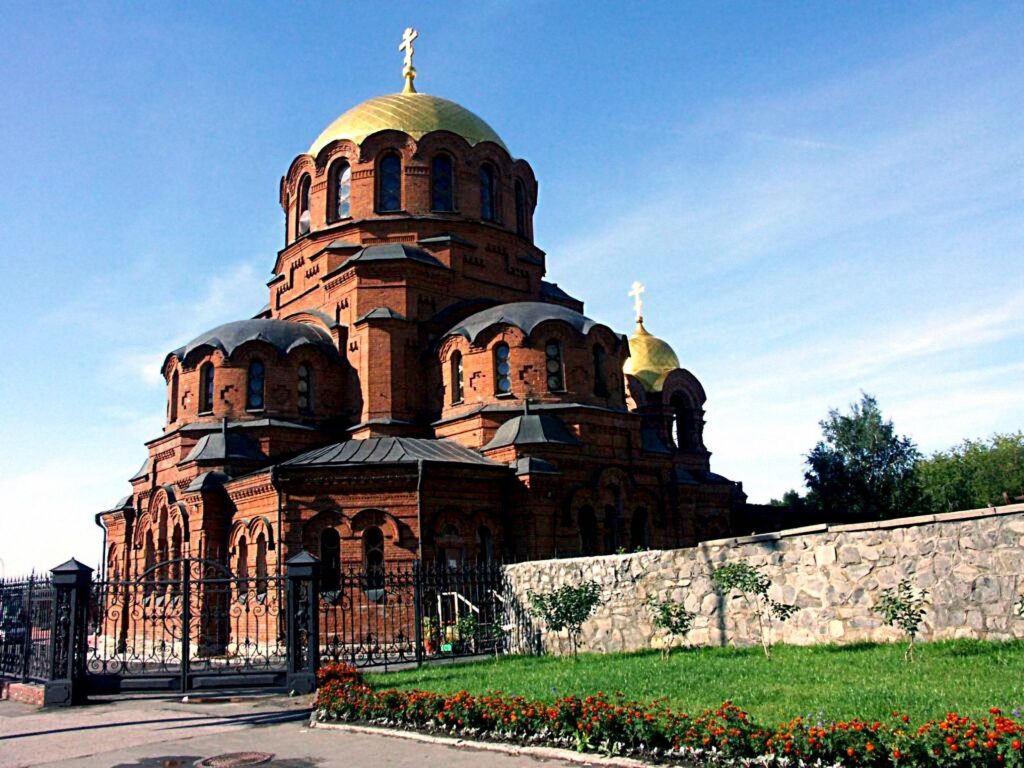
The history of many church buildings is connected with the history of the places where they are located. But the Cathedral of Alexander Nevsky is connected with the history of the city inextricably. It was the first stone building in the small village of Novonikolaevsk. About the city-millionaire, a major scientific center, no one dared to dream.
Orthodox people could not imagine their lives without a church, even if they lived in a new, tiny settlement.
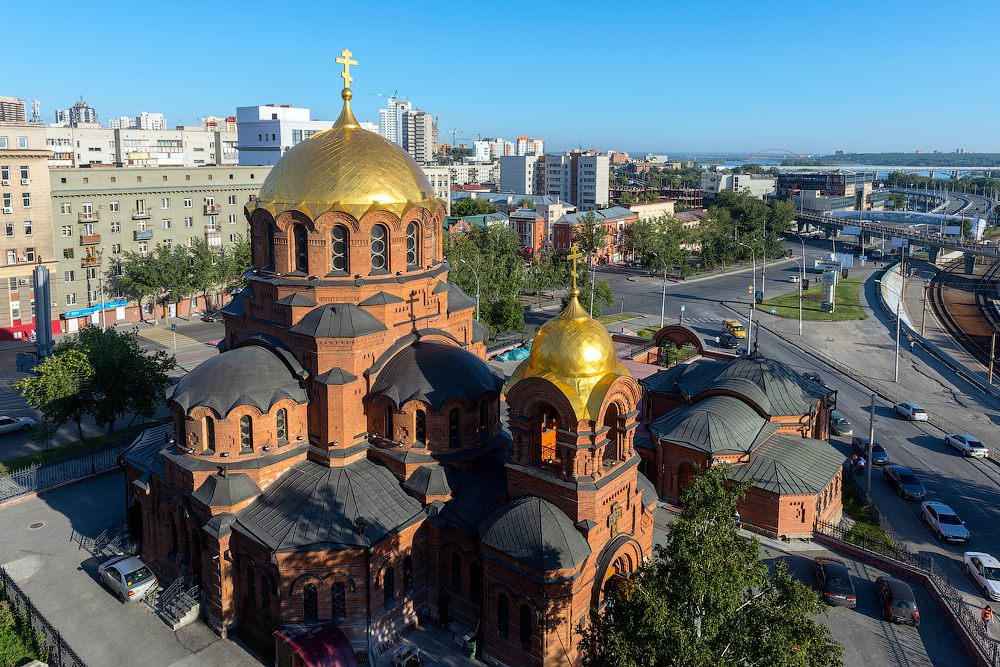
In 1895, residents of the village of Novonikolaevsk appealed to the Tomsk bishop with a request for permission to build a church. The place was chosen so that the temple was visible to passengers of passing trains and arriving on steamships along the river.
And in 1899 he was already consecrated. They were named in honor of Alexander Nevsky, the patron saint of Emperor Alexander III, in whose honor the construction was carried out. The royal family did not remain indifferent and generously endowed the church with land, money, utensils and even ceremonial clothes for the clergy.
From the very first day, the cathedral maintained the tradition of Russian Orthodoxy in chronicles. The history of the village and then the city was carefully recorded. These records are the main source of information for historians and anthropologists.
In 1937, the temple was closed. The bell tower was blown up, the utensils were taken out. The building was given to city needs. First there was a project institute, and then a newsreel studio.
In the mid-80s it was decided to give the building to the Philharmonic. But then the public intervened. It is not known how it would have ended, but against the background of preparations for the celebration of the 1000th anniversary of the baptism of Rus, the cathedral was transferred to the ROC. Restoration began immediately, the building literally barely stood. Citizens actively participated in the works: they dismantled debris, took out bricks, served building mixtures. It was literally renovated by the whole world. The walls of the temple were repainted, the iconostasis was restored, the bell tower was rebuilt. In 1991, the cathedral was consecrated for the second time. The service was conducted by Patriarch Alexy II.
Of the values of the original cathedral, only the icon of the Iverian Mother of God has been preserved. But gradually their shrines appeared in the temple. Not so long ago, Olympic champion Alexander Karelin donated the icon of St. Alexander Nevsky to the church. She spent more than a hundred years in a small Jerusalem church near Golgotha, and now attracts Orthodox believers to Novosibirsk.
The cathedral is a missionary department of the Novosibirsk diocese. His servants are doing a great missionary work. During navigation, the ship-church dedicated to St. Andrew the First-Called swims to the most remote villages. The Church conducts educational activities and provides material assistance to people who are separated from the Church.
«Big Land.»
And by land, a missionary railway and road train reach remote places. The mission includes priests, doctors, social workers and teachers. By bus you can get where neither the ship nor the train will go. There are no temples in such corners either, so there is a church car in the train, and priests are always present in the train.
Charitable Foundation Holy Land
Russian Temples and Monasteries