How were Orthodox churches built? What rules did you follow? No documents have reached us that would confirm that churches were built according to certain canons. However, the buildings themselves are evidence that has survived centuries that churches were built not according to necessity, but according to established traditions.
In Orthodox architecture, there are several types of church buildings.
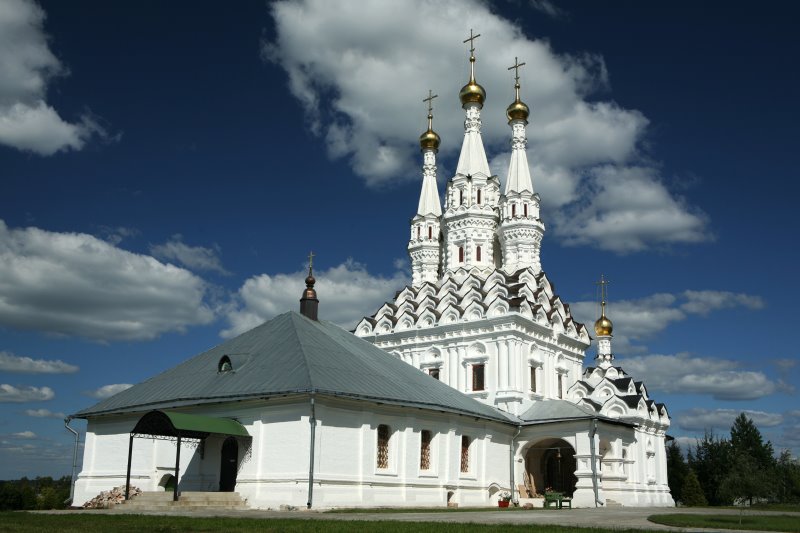
Tented churches
The Russian north abounded in churches of this type. Of course, the tent is ideally suited for long snowy winters. The pyramid-shaped covering prevented snow from accumulating on the roof.
Temple-shaped temples were built from wood and stone until the 17th century, when Patriarch Nikon, carrying out his reforms, ordered the transition to a dome system.
Examples of tented churches: Assumption Church , Spaso-Evfimiev Monastery , Assumption Church Alexander Kushtsky Monastery, Assumption Church in Varguze. The central aisle of St. Basil’s Cathedral is also tented.
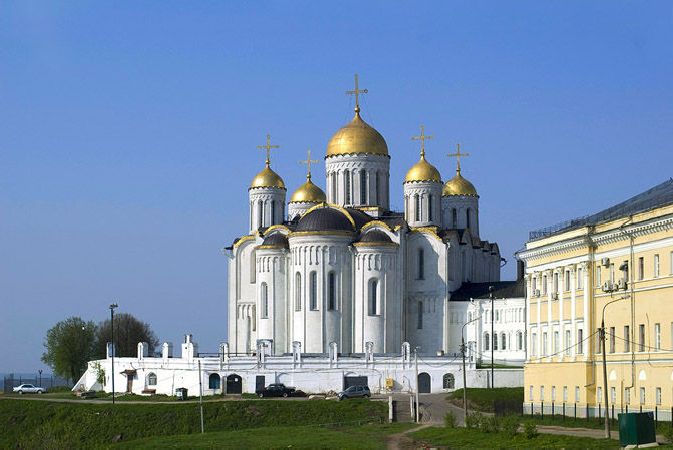
Cross-domed churches
Together with Christianity, the building shape in the form of a cross came to Rus’ from Byzantium. All ancient Russian churches were built according to this type, but enriched with a purely Russian flavor.
The dome in such a temple is installed on pillars in the center, and 4 rooms radiate from it to the cardinal points. As a result, a cross is formed. The cross is the basis of Orthodoxy. On the cross, death was defeated, on it a great sacrifice was made, which brought us Salvation.
Almost all stone buildings of the pre-Mongol era serve as examples of cross-domed churches. These include Hagia Sophia in Novgorod, John the Baptist in Kerch, Dmitry of Thessalonica in Vladimir and dozens of others.
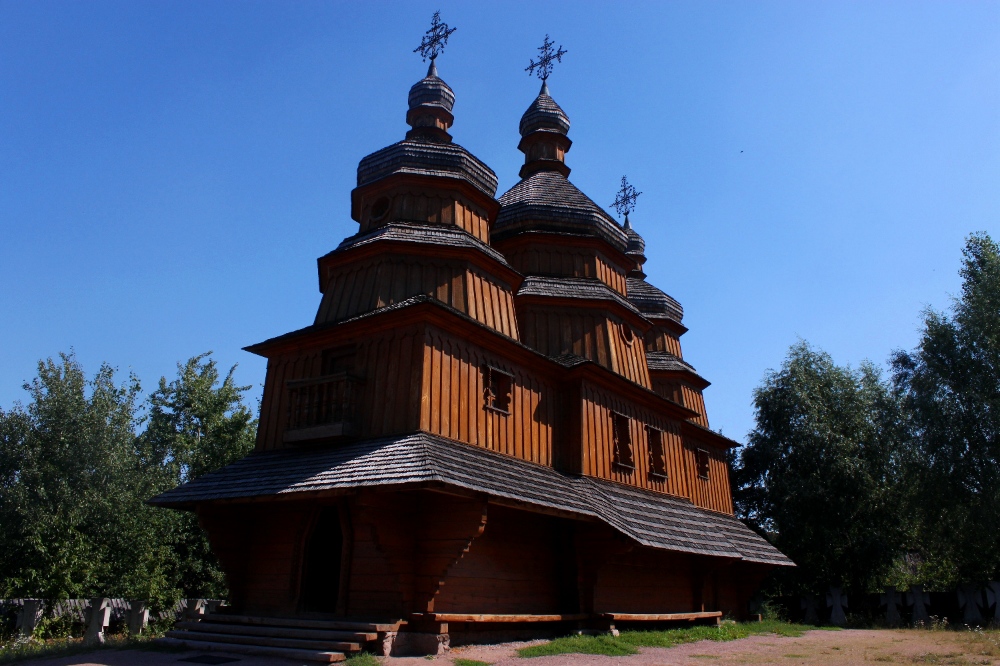
Ship temples
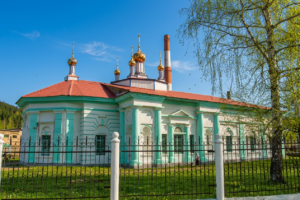
Although there is at least one ship-shaped temple in Russia, in architecture this name is used to denote a style in which the main parts of the building are built into one line. Usually this is a cuboid-shaped temple, a rectangular extension to it and a bell tower.
It all started with the fact that they began to add premises for suppers to the main part of the churches — refectories, and later — bell towers. This temple, stretched along an east-west axis, resembles a ship. It symbolizes the church, which helps us not to be lost in the ocean of everyday storms and to get into the Kingdom of God.
A typical example of such a building is Cathedral of the Epiphany in Elokhov.
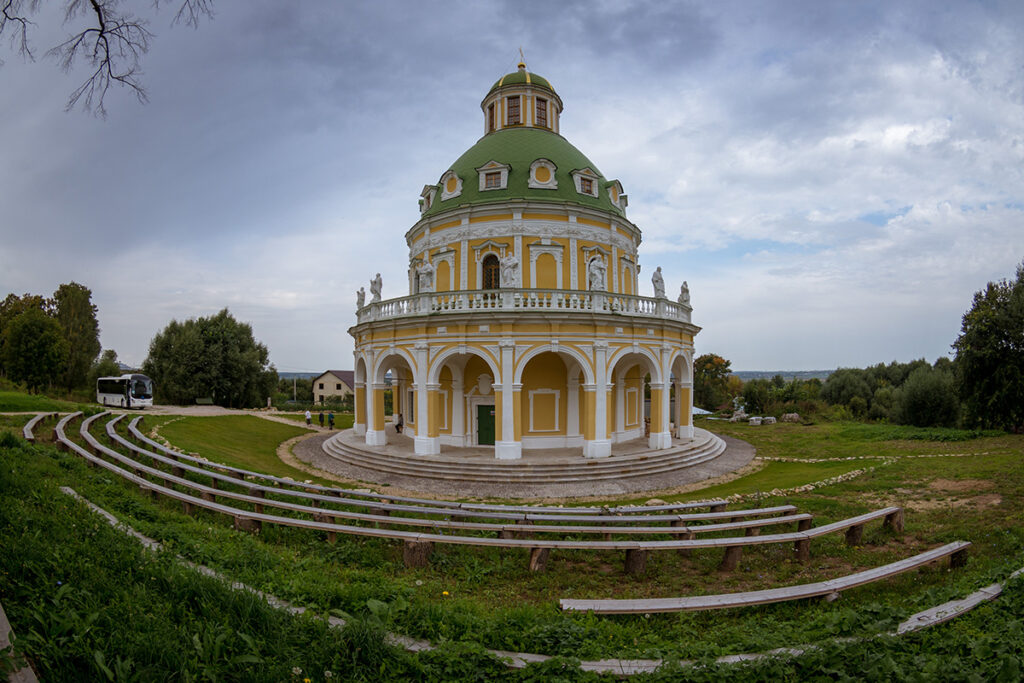
Round temple (rotunda)
A circle is an ideal figure, without beginning and end, used in church architecture as a symbol of the infinity of the church. She will always be, on earth and in the heavenly Jerusalem. The dome of the rotunda is reminiscent of the heavenly dome, smooth lines allow you to focus on prayer. Although round churches existed in ancient times, they became widespread in Russia in the 18th century. Often such temples were decorated with columns, even sculptures.
Smolensk Temple in the Trinity-Sergius Lavra was built in the form of a rotunda.
You can learn more about monasteries, temples and holy places here.
Holy Land Charitable Foundation
Investment in the Soul!