Elijah was a man like us
and he prayed that there would be no rain:
and there was no rain on the earth for three years and six months
James 5:17
Prayer for an Orthodox Christian is the basis religious life, communication with the Lord. But do we know how to pray and are there ways to strengthen our prayers?
- The most famous prayer is “Our Father”, it is like a guide to action for prayer practitioners. In it, Christ names the main condition for pure and effective prayer: “Forgive us our debts, as we also forgive our debtors” (Matt. 6:12)
In the modern translation, this sounds like a request to forgive our sins, therefore we have forgiven those who have done us harm
“And when you stand in prayer, forgive, if you have anything against anyone, so that your Heavenly Father may forgive you your sins.
But if you do not forgive, then your Heavenly Father will not forgive you your sins.” (Mark 11:25-26)
- Humility is another condition for effective prayer. John Climacus said: “Whoever does not pray like a sinner, his prayer is not pleasing to God. Even if he raised the dead”[i]. The publican’s prayer is strong and effective: “God, be merciful to me, a sinner!” (Luke 18:13). The Pharisee’s prayer is false, there is no benefit from it: “God, I thank you that I am not like that…” (Luke 18:11)
- The power of prayer increases if it is combined with fasting. Fasting does not necessarily mean restricting or refusing food. You can give up social networks, TV, everything that takes up time, but does not serve for spiritual growth.
- St. Ignatius Brianchaninov called attention “the soul of prayer.” It is difficult for a new Christian to concentrate; attention switches from one thought to another. A Christian with experience is hampered by automatism: everything is familiar, words are pronounced mechanically. There is only one piece of advice — start small and practice constantly. The best prayer for practice is considered to be the prayer to Jesus Christ: “Lord Jesus Christ, Son of God, have mercy on me, a sinner.” It can be made even shorter, but pronounced with full concentration. With practice, the ability to focus on the words that we pronounce in our conversation with the Lord will come.
When attention slips away, return it, and so on constantly. Otherwise, we will remain like a brand that smokes but does not give fire.
- Slow prayer will help us concentrate. By repeating familiar words slowly, we reflect on them, gain insight.
- Abandon all images during prayer. Meletius the Confessor wrote: “Those who do not see anything in their prayers see God.» If we allow some visions to enter our minds, then we begin to pray to our imagination.
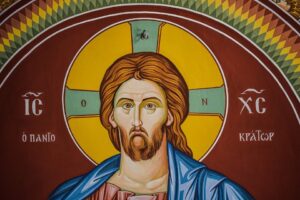
Therefore, in Orthodoxy they almost never pray with their eyes closed. It is better to look at the icon in order to have a correct vision of another reality.
- Archpriest Gleb Kaleda wrote that the power of personal prayer is enhanced by the presence of other worshipers in the temple of God. It is not for nothing that the word “Liturgy” means a common cause.
- The famous theologian Alexey Osipov warns against “transfer of authority.” Submitting a note of commemoration is not enough; you need to support your request with personal prayer, and not wait until the priest does everything. Personal participation is important in Christian life in general. in prayer in particular.
- Prayer is not intended to bring a person into a state of religious ecstasy.
In Orthodoxy, such a state is called prelest. Prelest is considered a temptation from the devil. It is often experienced by people who have not experienced true repentance when “repentance has not become the source, the soul, the goal of prayer,” wrote St. Ignatius. Brianchaninov.
Prayer is not only a state of mind, it is work, but those who are not afraid of difficulties will receive an incomparable reward.
In our section «Prayer Book»you will find prayers that will help you in various circumstances.
[i]John Climacus, “The Ladder”
Holy Land Charitable Foundation
Investment in the Soul!