A small town 26 kilometers from Vladimir has its official history since 1024. It was then that the chronicler first mentioned the settlement on the banks of Kamenka. In the XII century, Yuri Dolgoruky turned these lands into the core of the Rostov-Suzdal principality, giving impetus to the formation of a future unified state.
Ten centuries later, Suzdal preserved the appearance of an ancient spiritual center. Of the five surviving monastic complexes, a special place is occupied by the Spaso-Eufimiev monastery — a large-scale fortress built in 1352 at the behest of Prince Boris Konstantinovich. Initially, the monastery covered the city from the enemy. The name of the monastery was received from the first abbot — St. Euthymius, whose remains rest in the cathedral church.
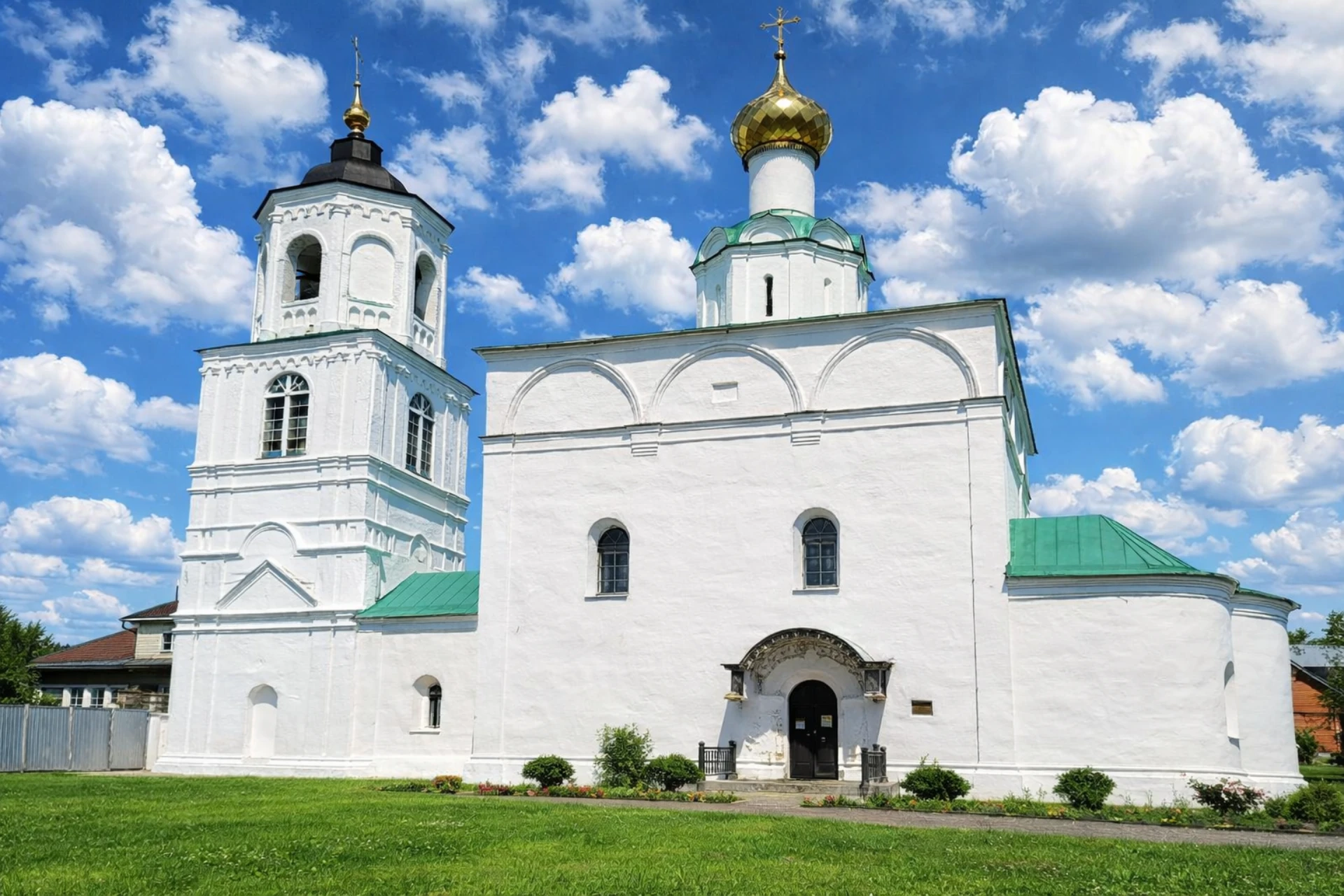
The center of architectural composition is the Transfiguration Cathedral. The severe monument of the end of the XVII century keeps on the walls fragments of painting of the XVI century and paintings of the XVII century. Nearby stands a belfry with a nine-sided pillar, conceived simultaneously and a bell tower, and a small church. Her silhouette was completed for two centuries. At the meal of pilgrims meets the Assumption tent church — a rare example of stone architecture of the XVI century. The entrance to the monastery is marked by the Annunciation Gate Church, which rose in 1510 over the arched openings by order of Grand Duke Vasily III.
The territory of the monastery is decorated with residential buildings: the Archimandrite house with galleries of wood and high roofs, as well as the hospital building at St. Nicholas Church — a monument of civil architecture of the XVII century. Nearly a hundred meters along the courtyard stretches the Brotherly Corps. To the right of the cathedral church is the tomb, where in 1642 Prince Dmitry Pozharsky found eternal rest. Pilgrims come here to worship the relics of St. Euthymius and the revered image of Our Lady of Korsun, feeling within the walls of the fortress the breath of Russian history.