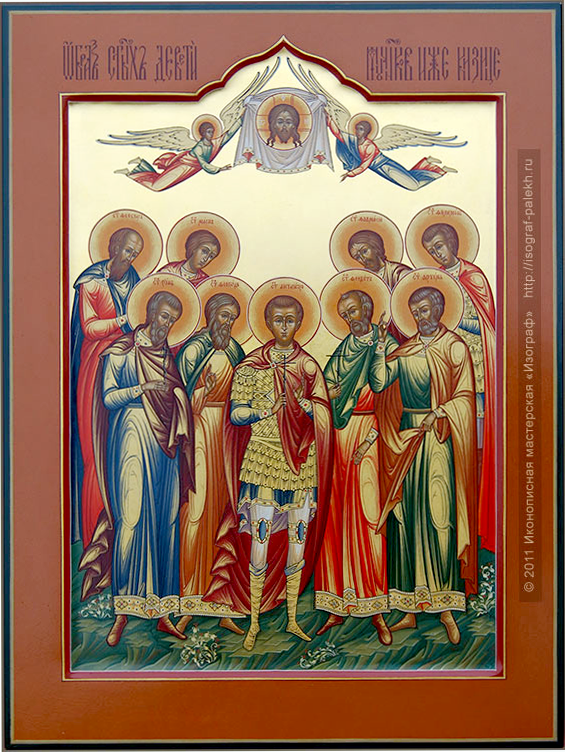
At the end of the third century, in the Asia Minor city of Kizik, on the shores of the Sea of Marmara, nine Christians openly confessed their faith in Christ under conditions of severe persecution. Their names were Theognides, Ruth, Antipater, Theostich, Artema, Magn, Theodotus, Faumasius and Philemon. People of different ages and ranks, they acted together, preached, denounced paganism, called the townspeople to repentance.
The authorities seized them and brought them to justice. Martyrs were tortured, held in prison, again taken for interrogation – everyone was promised freedom for renunciation of Christ. Nobody backed down. Around 284–292, all nine were executed by sword beheading. Their bodies were buried outside the city walls.
When the persecution ceased under the emperor Constantine the Great, the Christians of Cyzicus acquired the incorruptible relics of the martyrs and carried them to the temple. From the relics began to occur healing: the sick recovered, the possessed came to mind. Tradition connects them with the special grace of helping with fever and serious illnesses.
In Russia, the veneration of the Cyzic martyrs is deeply rooted. In 1687, a monastery was founded near Kazan in their honor — after the brought particle of relics coincided with the retreat of the epidemic. In Moscow, Patriarch Hadrian, who received healing from paralysis after praying at the relics, built a temple in their name.
Remembrance Day is May 12 (April 29, old style). The martyrs are addressed with prayers for healing, strengthening in the faith and help in life’s difficulties.
Memorial Days
May 12
Lives of Saints