Pontiff exiled to Chersonese: for what Pope Martin I paid with life in the VII century
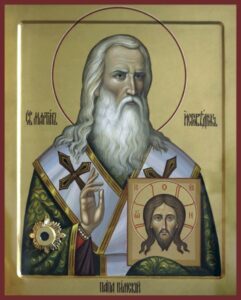
On September 16, 655, the head of the Roman Church, Martin I, died in Chersonesos. His death was the result of a long confrontation with Emperor Constantus II, who imposed Monothelitian doctrine and brutally persecuted dissenters.
The future pontiff was born in Tuscany, educated and became a cleric in Rome. In 649, after the death of Pope Theodore I, he was elected head of the Western Church. This was a period of acute religious crisis: Monothelitism spread widely in Byzantium, which recognized one will in Christ. The doctrine was supported by the emperor himself and the Patriarch of Constantinople Paul II. In order to extinguish theological quarrels, Constant II issued the Tipos, an edict that categorically prohibited any discussion of the natures and wills of the Savior.
The document arrived in Rome in 649, and it was then that the pope took a decisive step. He convened the Lateran Council, whose participants anathematized Monothelitism, and sent a personal letter to Patriarch Paul calling for the rejection of heresy. It was a direct challenge to imperial power. The emperor ordered the exarch Olympia to arrest Martin. However, in Rome, the military leader faced strong resistance from the clergy and flock. Then he tried to organize a secret murder. When the mercenary approached the pontiff, he suddenly lost his sight. The frightened exarch fled to Sicily, where he soon died in battle.
Failure did not stop Constantinople. In 654, a new exarch, Theodore, was sent to Rome. He brought political charges against Martin: secret collusion with the Saracens, blasphemy against the Virgin and uncanonical occupation of the throne. Ignoring the evidence of innocence presented by the Roman clergy and believers, Theodore organized the night kidnapping. The pontiff was taken to the island of Naxos in the Aegean Sea, where he spent almost a year in isolation under close surveillance. Later, the tortured prisoner was transported to Constantinople for trial.
The process was biased. Due to a serious illness, the pope was brought to the hall on a stretcher, but the judges demanded that he stand, and the guards held him under his arms. False testimonies about connections with enemies of the empire were read out, the excuses were not taken into account. Martin replied that he would accept death as a blessing. The sentence turned out to be cruel: the pontiff was stripped of his vestments, chained and exposed to universal outrage, forcing the crowd to shout anathema. He was then thrown into a cell with the robbers.
Initially, Martin was threatened with execution, but the dying Patriarch Paul intervened. Hearing about the trial, he was horrified to ask the emperor to stop the torture, considering what had happened a new sin for himself. The authorities conceded: the death sentence was replaced by a reference to the remote Chersonese of Tauride. There, exhausted by hunger, disease and deprivation, Pope Martin died. He was buried outside the city walls in the Vlacherna Church, dedicated to the Virgin. 25 years later, in 680, the Sixth Ecumenical Council officially condemned Monothelitism. His remains were later transferred to Constantinople and then returned to Rome.
Memorial Days
27 April
December 28 —Cathedral of Crimean Saints
The Holy Land Charitable Foundation
Lives of Saints