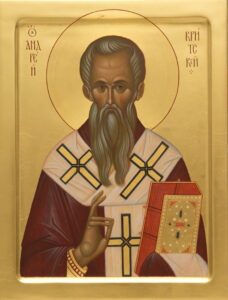
Thoughtful, intelligent son of Christian parents, Andrew could not speak. He watched and thought a lot, but was unable to express his thoughts until one day, at the age of seven, he took Communion. He immediately gained the ability to talk. Wealthy parents did not spare money for training. Andrei studied rhetoric, mathematics, and spiritual literature. At the age of 15, he went to Jerusalem, where he became a monk at the Ascension Temple. Due to his spiritual qualities and literacy, the young man was soon appointed notary (secretary) of the monastery. In 685, Andrew was commissioned to deliver the documents of the 6th Ecumenical Council to Constantinople. There the young man was noticed and left to serve at the church of St. Sophia, consecrated to deacons.
After 20 years of honest service, Andrew was appointed Bishop of Crete. During his ministry in Crete, Saint Andrew built several temples, opened almshouses and shelters in various parts of the island. The worshipers lined up for a blessing from the bishop, because many miracles were performed with his blessing and prayers.
He died of illness, quite unexpectedly. The bishop was returning from Constantinople when he became very ill. He stayed on the island of Lesbos, where he died. His body was placed in a temple now consecrated in his honor.
Andrew of Crete did many good deeds, but he entered the history of the church as a famous compiler of church canons. He either invented or first introduced the very concept of the canon into church practice and wrote about 70, including the Great Penitential Canon.
In Russian manuscript sources, the name of Andrew of Crete was first mentioned in the early 12th century (months Mstislav Gospel).
Memory
July 4
The Holy Land Charitable Foundation
Lives of Saints