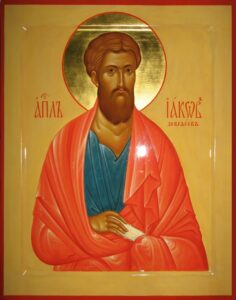
In 536, the capital of the Eastern Roman Empire became the place of the death of the primate of the Western Church. Agapit I, who had occupied the Roman See only a year before, arrived on the shores of the Bosphorus on a diplomatic mission, but he entered history primarily as an uncompromising fighter for the purity of Christian teaching and a miracle worker.
The High Priest’s journey from the Eternal City to Constantinople was paved not only by political necessity. The Ostrogothic ruler Theodoric the Great gave the pontiff the task of negotiating peace. But even before arriving at the imperial court, the Pope had events that turned his trip into a spiritual journey. On the road, he met a man suffering from two serious ailments at once — lack of speech and the ability to move. First the ability to walk returned to the patient, and then when the Pope gave him the Holy Gifts, the muteness disappeared. Rumors of the case spread quickly. Already in the city itself, shortly before the opening of the church cathedral, Agapit granted sight to a beggar who was deprived of the opportunity to see.
The coincidence of the time with the convocation of the local council gave the visit a different dimension. The Bishops’ Forum met to examine the teachings promoted by the theologian Sever. The physical shell of Christ obeyed the laws of corruption to the same extent as the flesh of an ordinary man. The pontiff did not stand aside. His intervention in the discussion was distinguished both by theological rigor and decisiveness. Those present noted that the Roman guest defended the Orthodox position, not allowing compromises, calling such views destructive to the faith.
The election of Agapitos to the papacy in 535 was a consequence of his many years of asceticism and reputation as a zealous advocate of orthodoxy. Respect for him among the clergy and laity was so great that it was him Theodoric entrusted to conduct complex negotiations — a figure both spiritually important and politically prepared.
The mission ended ahead of schedule. Peter’s successor never crossed the sea again. His death overtook him in the eastern capital in 536, ending a brief but intense pontificate. Witnesses remembered this period as an example of how a diplomatic trip turned into a defense of dogmas and a phenomenon of mercy.
Memorial Days
April 30
The Holy Land Charitable Foundation
Lives of Saints