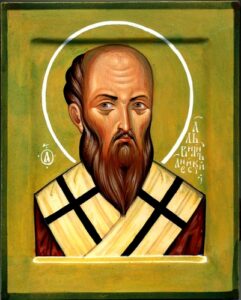
The Orthodox Church honors the memory of St. Nikita the Confessor, a monk and abbot, who openly opposed the iconoclastic policy of the Byzantine emperors in the early ninth century. His life was spent between Bithynia, Constantinople and the monastery walls.
Nikita was born in Caesarea of Bithynia. His mother died on the eighth day after his birth, his father took tonsure, and the boy was raised by his grandmother. From an early age he carried obedience in the church under the guidance of the hermit Stephen, who sent him to the Midician monastery. Seven years of life in the monastery, known for its strict rules, led Nikita first to ordination to the presbyter, and then to the post of abbot — first on behalf of the sick abbot Nikephoros, and after his death — by the decision of the brethren.
Under Nikita’s leadership, the number of monks grew to one hundred. He was credited with the gift of healing: contemporaries reported the cure of the deaf-mute, demonic and mentally ill.
In 815, under Emperor Leo the Armenian, iconoclasm again became state policy. Patriarch Nikephoros was overthrown, his place was taken by the lay heretic Theodotus. Nikita, along with other abbots, was imprisoned. Later, the prisoners were offered freedom in exchange for communion from a false patriarch. Nikita agreed, but making sure that the persecution did not stop, repented and again publicly condemned the heretics. A new arrest followed. He spent six years in prison.
Saint Nikita died in 824 under the emperor Michael. The body was transported to the Midician monastery and buried next to his mentor Nicephorus.
Memorial Days
April 16
The Holy Land Charitable Foundation
Lives of Saints