

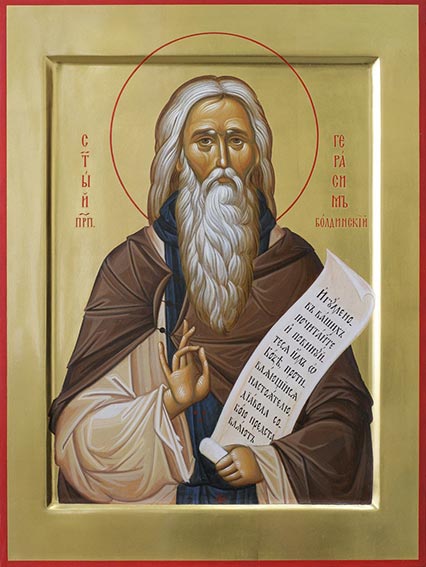
Gregory was born in 1489 in Pereslavl-Zalessky. The family was pious, but not rich. The boy grew up quiet, avoided children’s games, loved the temple. When he was thirteen, he came to St. Daniel Pereyaslavsky, the man who founded the Goritsky Monastery and was famous for his rigor and wisdom. Daniel did not immediately accept the boy. But Gregory didn’t leave. Eventually the old man relented.
Obedience was defined immediately: shoemaking. Make shoes for monks and beggars who came to the monastery. For twenty-six years, Gregory sat at work — cutting, sewing, dragging. He was even called in the monastery “kozheshvetsev” – not offensively, but with respect: he knew how to do things that served people.
He didn’t stand out over the years. He did not preach, did not teach, did not seek positions. Just working and praying. But inside, there is a mature solution: go where there are no people at all.
Smolensk forests
Having received the blessing of Daniel, Gregory took tonsure with the name Gerasim and went west to the Smolensk forests, to Boldin, not far from Dorogobuzh. In those days it was deafness: animal paths, snake nests, robber gangs. That’s where he went.
I cut it down. He hung a small basket on a tree by the road. Those who passed by put bread there, who had what. That’s what he lived for. Sometimes the bodywork was empty for days. Sometimes he was devastated by robbers – they did not understand why the monk needed food if he did not have gold.
Robbers have come many times. Threatened, tortured, demanded money. Gerasim did not hide or defend himself. One day, when he was attacked with a knife, he said: “Do what you want, but I do not wish to harm you.” They’re gone. Maybe out of surprise, maybe out of something else, but they never went back to that forest.
Monastery for nothing
People started coming to see him. First one at a time, listen, pray next to each other. Then in groups. Someone wanted to stay. Gerasim did not drive away, but he did not call. He said, “If you want to work, live.”
In 1528 he founded the Troitsky Boldin Monastery. There was no stone — chopped from wood. The charter wrote himself: no drunken drinks, a meal in silence, disputes are forbidden, property is common. Beggars to feed, sick to treat, strangers not to refuse.
He worked the most. Chop wood, wear logs, grind grain, bake bread. I never rode a horse, only on foot, even when I had to walk forty miles. His cell was cramped and poorer than that of any monk. Food is rough, simple. He wore boots for the rest of his life, for the brethren and the poor.
Three monasteries after the first
The Boldin monastery grew: by the end of Gerasim’s life there were more than one hundred and twenty monks in it. But he didn’t stop there. Following the first monastery, three more appeared: the Zhizdrinsky Trinity Monastery, the monastery of Sverkova Luke and the Ioanno-Predechensky Monastery near Vyazma.
Four monasteries — from one person who started with a tree body. But the principle was the same: labor, common property, charity, the absence of separation into elders and juniors. The abbot ate the same as everyone else. Worked just as hard. He was the first to be obedient. Gerasim repeated: “Everything must be common, in love, without enmity and murmur.”
He was strict, but not cruel. If the monk was wrong, Gerasimus did not shame him before the brethren — he summoned him alone and spoke quietly. He knew that shame hardens and a quiet word heals.
Death and legacy
Gerasim knew of his death in advance. Gathered the students, taught them. He said simply: Keep love, do not seek glory, work, pray, do not hurt the weak. “If you live in love, God will be with you.” If not, the walls will not help.”
He died on May 1, 1554. Buried in the Trinity Cathedral of the Boldinsky Monastery.
He was revered locally for a long time. The Church-wide glorification took place only in 2016 – at the Bishops’ Council of the Russian Orthodox Church. In 2001, relics were found in the monastery: a wooden deck hollowed out of a single trunk and the remains of leather shoes were found in the ground. The shoes he made himself.
Memorial Days
May 14
June 5 — Cathedral of Rostov-Yaroslavl Saints
July 20 — Finding the Relics
August 8(transient)— Cathedral of Smolensk Saints
Lives of Saints


