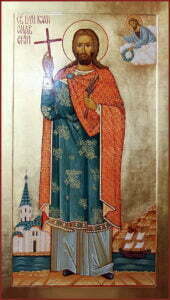
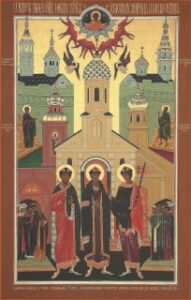
With the onset of darkness, the townspeople were struck by an unusual phenomenon. Above the body of John they saw 3 figures that sang psalms. One of the townspeople decided that it was the Christians who came for the body of the merchant and decided to shoot them with a bow. He was immobilized by an unknown force and stood with a bow in his hand until the morning, until he told passers-by about the miracle.
Christians were allowed to bury the body of the saint. To protect the body from abuse, John was buried in the altar of the Belgorod temple. There were many miraculous healings immediately after.
Hearing about the miracles, the Moldavian ruler bought the body of the saint and transported it to the Moldavian principality, to the city of Sochava. In 1402, on June 2, the relics were solemnly laid in the Cathedral Church of Sochava. There were many healings and wonderful visions that day.
When in 1622, the Tatars attacked Sochava and threatened to take the city, the townspeople held a procession with the relics of the saint. They wanted to hide them in the fortress, but the cart did not move. Then the cancer was returned to the temple. At night, a storm broke out, the river overflowed. The Tatar army could not cross and left home.
But in 1686, the cart with the relics moved from the place and for the next 97 years the relics stayed in Poland, doing miracles and healings there. Only in 1783, after a solemn march through the cities and villages, the saint’s cancer was returned to Sochava.
Remembrance days
June 15
The Holy Land Charitable Foundation
Lives of Saints