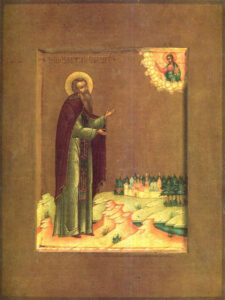
The story of St. Jeremiah shows that the Good News can awaken faith in a person, regardless of his social status. Christianity began as a religion of the common people, but more and more noble people began to share faith in Christ.
Jeremiah was a pagan, belonged to a well-known family. She became the wife of a Roman senator. It was there that she first heard about Christianity. When her husband died shortly after the wedding, Jeria returned to her parents. They had extensive possessions in Mesopotamia. Learning that Fevronia, a follower of Christ, lives nearby in the desert, Jeria decided to visit her. After a long conversation, the young woman believed in the Savior, renounced false gods, and persuaded her parents to do the same. At the time, Christianity in the empire enjoyed the same rights as other religions.
But things soon changed. To power in Rome came the emperor-persecutor of Christians, Diocletian. He ordered Christians to take part in the sacrifices. If they refused, they would die.
Thousands of followers of Christ were martyred but did not renounce their faith. Among them was Jeremiah’s mentor, Fevronia. Upon learning of her painful death, Jeremiah bravely turned to the ruler, accusing him of senseless cruelty. Her background and wealth saved Jeria from execution, and her faith attracted the attention of other Mesopotamians. Giving away all her wealth, Jeremiah went to a monastery, where she peacefully withdrew to the Lord around 320.
Remembrance days
March 5 (transitional) – the Council of all the Reverend Fathers, in the feat of shining
The Holy Land Charitable Foundation
Lives of Saints