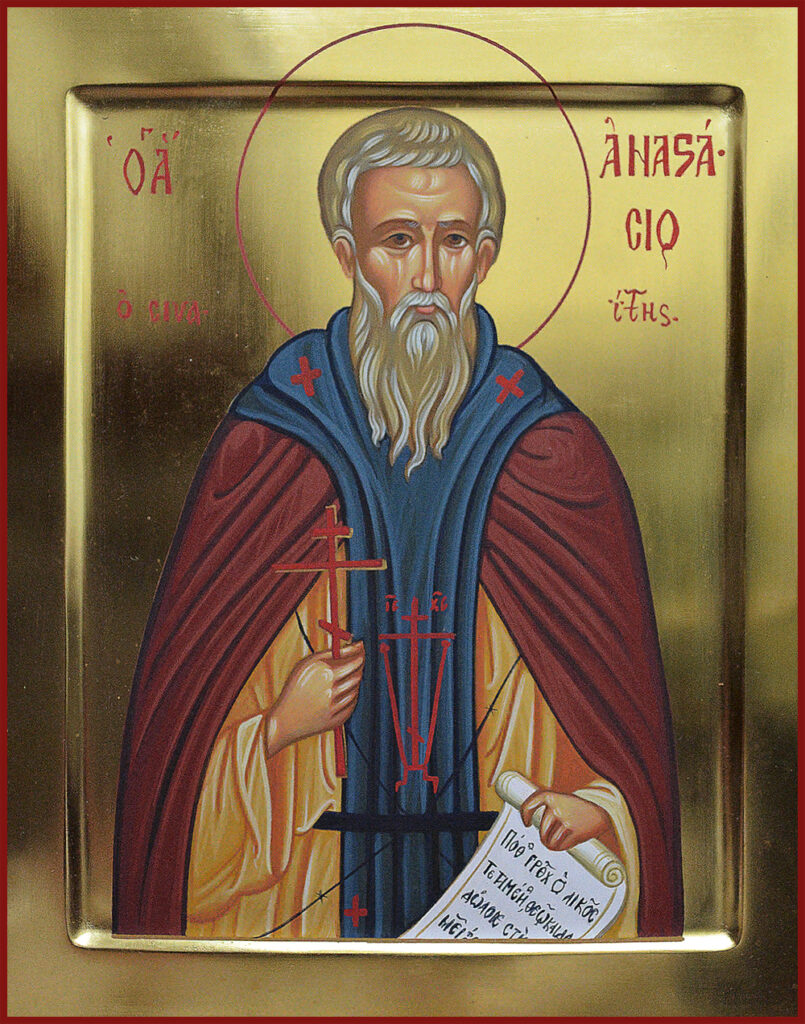
The path of one of the most adamant defenders of the Orthodox teachings of the VI century began in the harsh conditions of the Sinai Mountain. The monasticism adopted there gave the future head of the Church of Antioch the nickname Sinai, under which he went down in history.
In 562, during the reign of Emperor Justinian, Anastasius ascended to the See of Antioch. However, the quiet archpastoral service did not last long. When the imperial power was inclined to support Monophysitism, the bishop took an uncompromising position. He began active activities: he sent out district messages and daily addressed the flock in the temple, invariably defending the dogma of the two natures of Christ.
Such principledness aroused the anger of Justinian, who intended to remove the obstinate patriarch from the pulpit. But a sudden serious illness changed the plans of the monarch. According to church tradition, illness led the emperor to repentance, which resulted in the creation of the prayer “Only Begotten Son”, which later took a strong place in the liturgical rite.
However, the trials for Anastasia are not over. After the death of Justinian, his successor Justin the Younger renewed pressure on dissenters. In 572, the patriarch was exiled. The return to Antioch took place only twenty-one years later, in 593. The last period of his life was devoted to the management of the Church, which lasted six years.
Years of forced removal from the department Anastasia used for literary works. From under his pen came dogmatic and moralistic compositions. In addition, it was he who translated into Greek the works of St. Gregory Dvoeslov.
The Earth Path of Anastasia Sinaita ended on April 21, 599. Theological heritage and the example of the resilience of this saint still retain their importance in the Orthodox tradition.
Memorial Days
5 May(transient)— Reverend Sinai Cathedral
May 3
The Holy Land Charitable Foundation
Lives of Saints