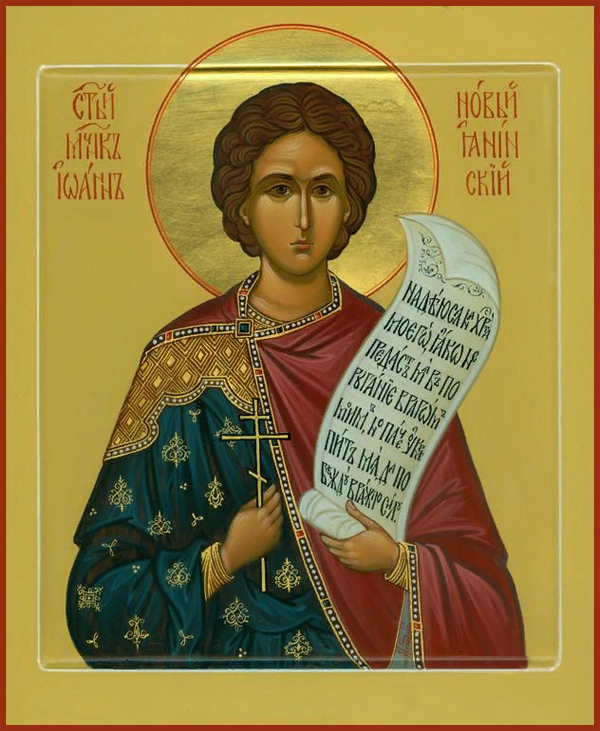
In the middle of the XVI century, the execution of the Greek artisan John took place in Ottoman Constantinople. A native of the small settlement of Terovon near Yanina was burned alive, and then deprived of his head by a sword strike. It happened on Easter 1546. The reason for the massacre was the public refusal to change religion.
John was born around 1522. His parents, who professed Christianity, had no income. When they died, the young man, left alone, moved to the capital. The city had been under Turkish control for almost a century. The road ran through Trikala, where local Muslims showed increased interest in the traveler. There were suspicions that he had previously converted to Islam, and now secretly adheres to the former faith. There is no documentary evidence of this, but this episode in the future seriously affected the fate of the young man.
Having settled in Constantinople, John bought a trading place in the market and began sewing. He performed the work in good faith, the orders went well. But his mind was different. Seeing how many familiar Christian merchants under the yoke of circumstances were converted to Mohammedanism, the tailor openly supported the unshakeable and argued with those who had renounced. This caused hatred among apostates. When people from Trikala arrived in the city and resumed enquiries about John’s religion, the situation escalated.
The craftsman himself by that time had long harbored the idea of martyrdom. The priest, to whom the young man turned for blessing on Good Friday, advised not to rush and test the spirit with fasting. The night vision on the eve of Holy Saturday was decisive: John dreamed that he was standing in a hot furnace and chanting God. Considering the dream as a direct indication, he took communion and asked permission to go to the feat.
The denouement came at Easter. Coming to the market ranks, the tailor publicly declared his Christian affiliation. Then, not satisfied with this, he climbed the minaret and loudly sang the festive troparion “Christ is Risen.” The voice went all over the block. The impudent act immediately stopped the patrol: the preacher was captured, thrown behind bars and interrogated. The judge, appreciating the professional qualities of the defendant, tried to persuade him to change his religion by persuasion, but faced a firm refusal. Days of beatings, hunger and thirst followed. The final verdict was the burning.
The execution was carried out immediately after the verdict was announced. The soldiers made a large fire and pushed the condemned into the fire. The owner of a nearby building was frightened by the risk of fire, and he demanded to put out the flames. The guards dragged the burnt but still alive John out of the fire and carried the execution a little further. According to eyewitnesses, the martyr, having gathered his last strength, threw himself into the second fire. After that, yielding to the requests of the local Greeks, the executioners cut off his head with a blade. The body and head were left to burn.
The remains were secretly removed from the ashes of the co-religionists. Later, the shrine was divided. The main relic — an honest chapter — is now kept in the Varlaam monastery of the famous Meteorsky rocks. A small particle is located in the monastery of Panagia Eleus on an island in the middle of Lake Janina. There, in the monastery of Philanthropos, you can see the iconic image of the saint.
Memorial Days
May 1
The Holy Land Charitable Foundation
Lives of Saints