

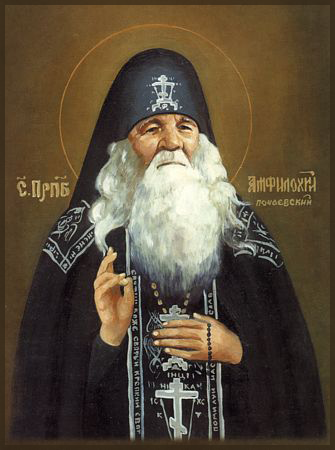
They tried to kill him more than once. Imprisoned, injected with psychotropic drugs, beaten to death, thrown into an icy swamp. And he would come back and take the sick again, straighten the bones, pray, drive no one away. When asked why he was doing this, he replied simply: “If people are coming, you should take it.”
Kostokorov from Little Ilovica
Yakov Golovatyuk was born in 1894 in the village of Malaya Ilovitsa in Volhynia, in a poor peasant family. His father was a bone-maker — not by education, but by vocation: he knew how to straighten joints, treat fractures. Jacob helped him from childhood and adopted this craft, although he did not immediately realize that it would become not a profession, but a form of service.
At the age of twenty he was called to the front, and there skills came in handy: he served as a paramedic in a military hospital. I saw hundreds of mutilated bodies, heard the groans of the wounded, got used to the pain of others as to my own. After the war, he returned home, married, but the marriage was short-lived — his wife died. Widowed, Jacob decided to go to a monastery. In 1925 he crossed the threshold of the Pochaev Lavra.
Five hundred people a day
In Lavra he was cut with the name Joseph. There were many obediences, but the main business of his life was healing. They came to him with broken bones, with sore joints, with diseases that the doctors refused. He didn’t set «reception hours» — he always did. Sometimes five hundred people came in a day.
To rest the brethren he was moved to a small house near the monastery cemetery. There he lived with Hieromonk Irinarchus, who helped him with the sick. Worked day and night. Joseph prayed, healed, corrected, and if he saw that a person needed not medicine, but comfort, he simply sat next to him and said quiet words. He did not like being called a saint or a miracle worker. “I do not heal,” he said, “the Lord heals, and I only apply my hands.”
Torture that didn’t break
After the war, the Soviet government again took over the Church. Father Joseph was arrested several times. They were held in a cell, led to be shot, and returned at the last minute. Then she was taken to a psychiatric hospital. Coke drugs, from which the body swelled, the skin cracked, the mind muddled. He took it.
The worst thing happened in the 1950s. His nephew lured him to a tractor, took him to the swamps, beat him and threw him into the icy water. For eight hours the elder lay in the swamp, unable to get out. He was found barely alive, brought to the Lavra. The doctors said he wouldn’t survive.
That same night, without tea to see him alive in the morning, he was tonsured in a great schema with the name Amphilochius, in honor of St. Amphilochius of Iconia. But he survived. And first of all, barely able to stay on his feet, he started accepting people again. Someone close to you could not stand: “They want to kill you here, and you treat people!” He replied, “If God has left us to live, then we must work.”
Intercessor for the offended
Father Amphilochius enjoyed such authority that he was addressed not only with diseases. Village women went to him as husbands drank and beat. Collective farmers came when the chairman unfairly deprived of rations. He was not afraid to speak the truth to the powerful, and they listened to him because they felt that this person did not seek profit and did not fear the consequences.
There were times when he came to the village council and demanded justice. Officials grinded their teeth, but retreated — his authority among the people was too great. He didn’t ascribe it to himself. “Prayer, fasting and work are all that is needed,” he said.
Another thing happened: through his prayers, the demons came to their senses, the blind saw their eyes, the childless women gave birth. Dozens of such cases have been recorded. He never made a spectacle out of it. He said, “Thank God, not me.”
Last year.
In 1970, the elder fell seriously ill. He was almost eighty, and his body, which had survived torture, beatings, and an icy swamp, finally surrendered. But he continued to receive people — no longer standing, but sitting or lying down.
Before his death, he asked to take him to the Lavra. On January 1, 1971, at dawn, he was taken to his cell. He took communion, apologised to all the brethren, and quietly departed.
He was buried in the monastery cemetery, next to the tomb of St. Job Pochaevsky. In 2002, when acquiring the relics, it was found that the body was preserved incorruptible. In 2004 he was glorified as a saint of the Ukrainian Orthodox Church. In 2022, the Council of Bishops of the Russian Orthodox Church decided to include his name in the months.
Remembrance Day is January 14 (January 1 old style).
That he was in charge.
Father Amphilochius did not write books, did not preach from the pulpit, did not teach theology. He just did: he healed, fed, listened, prayed. His feat was not in loud words, but in getting up every morning and going to the people, knowing that he could be arrested again, beaten again, thrown back into the swamp. I still did.
That’s its simplicity and grandeur. He lived in a terrible time, when faith could be paid with life, and chose not silence, not accommodation, but quiet, stubborn mercy.
Memorial Days
May 12
October 23 — Volyn Saints Cathedral
Lives of Saints


