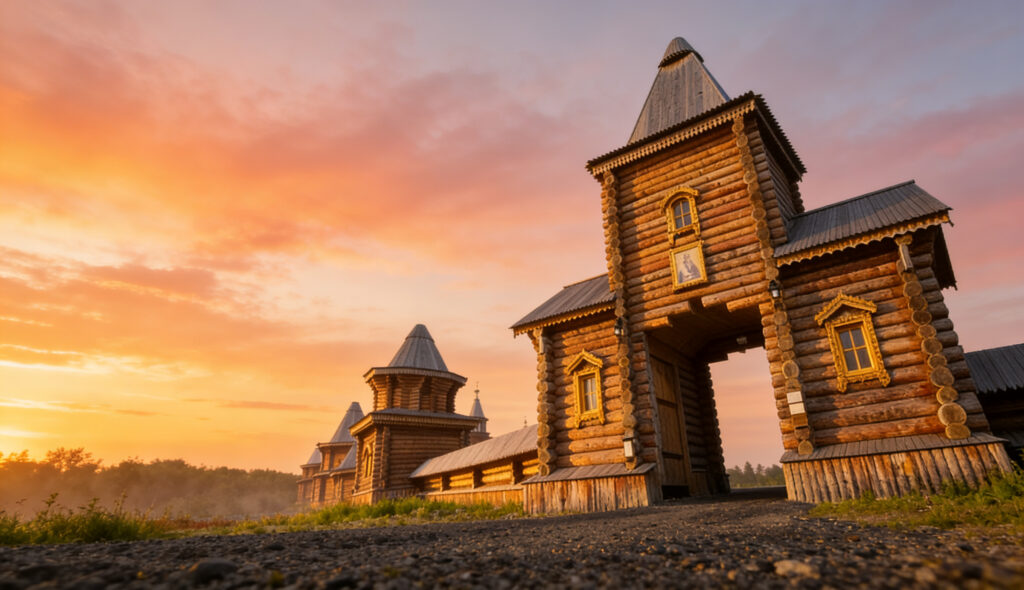
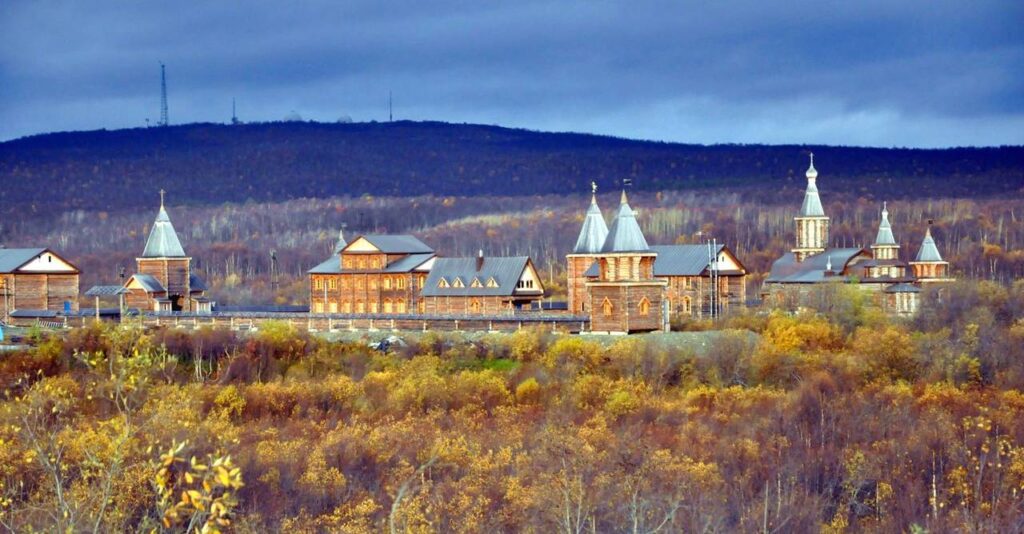
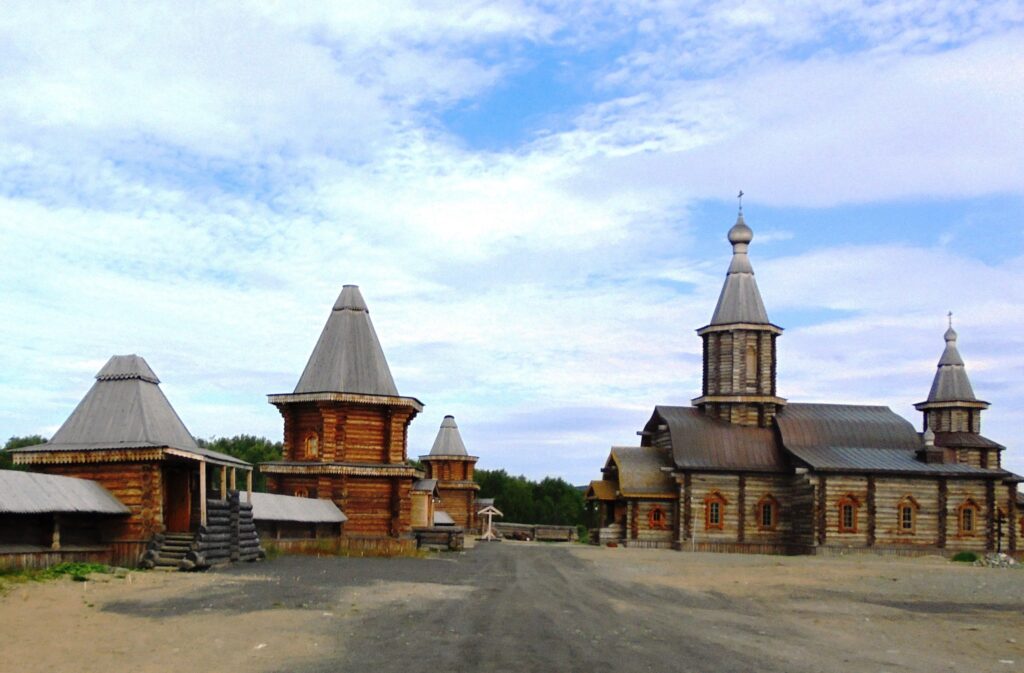
Everyone has heard about people — travelers, and in the village of Luostari there is a traveler — a monastery. The history of Holy Trifonov Monastery is very interesting. He is one of those who is called “the most powerful.” The northernmost monastery in the world, at the same time the oldest on the Kola Peninsula. And the most moving.
In 1533 Saint Tryphon of Pechenga founded a small monastery at the confluence of Mana and Pechenga. Before that, he lived alone in the forest for 5 years, begging for the sins of youth. Triphon (at that time Mitrophan) visited both a warrior and a robber. Shed a lot of blood, both innocent and enemy. He repented and tried to earn forgiveness with a righteous life, prayer and fasting.
I brought utensils and books to the monastery from Novgorod. The priest came with him. Tryphon, like blood shed, could not be a priest. The place for the monastery was secluded and, for the time being, quiet. Then came the brethren from another monastery. The brethren demanded the ease of the charter and wanted donations and lands. This was so different from Tryphon’s worldview that he chose to leave the monastery.
For 8 years Tryphon, with a small group of monks, wandered around, begged for alms and shared it with the brethren in the monastery. During his absence, the monks decided to move the monastery to a more lively place, where trade was conducted and there were more parishioners.
In 1590, the monastery was attacked by the Finns, the monks were killed, and the buildings were destroyed and burned. 116 people died for the Orthodox faith. For greater security, they decided to transfer the monastery to the territory of the Kola fortress. Neither the Finns nor the Swedes thought they would dare to go there. But where the enemy did not reach, another enemy penetrated — fire. In 1619, the monastery burned to the ground.
It was moved again. Now beyond the Cola River. Only the monks settled in a new place, as by decree of Catherine II, the monastery was closed. It resumed its activities only in the middle of the 19th century. Another place. This time the monastery was returned to Pechenga, where the monks-martyrs died. There was an old Sretensky temple. It was renovated and later built a new one. A hermitage was erected at the site of Tryphon’s grave.
After the revolution, the monastery was destroyed. The brethren moved to the Novo-Valaam monastery, which after the Finnish war was in Finland. In 1984, the last monk of Trifonov Monastery died there. He was 110 years old.
In 1997 it was decided to restore the monastery. In 2007, there was a new attack – the Christmas church of the monastery burned down. Then it was decided to move the monastery to the burial place of St. Tryphon, on the territory of the village of Lowstari. In 2012, the brothers moved to a new place. The monastery is still under construction.
The main shrines of the monastery:
- Icon of St. Tryphon with a particle of relics
- Particle of the Life-giving Cross
- Tombstone of 116 Martyrs
- Power Cross
There is a circle of worship in the monastery. The brethren continually pray for the living and departed to the Lord. A list of names can be left on the monastery website.
Charitable Foundation Holy Land
Russian Temples and Monasteries