On the steep bank of the quiet river Stanovka, in the heart of ancient Roslavl, a strict stone monastery whitens. If you stop here at dawn, you can hear the wind tangle in the branches of the oak planted by the patriarch and pull the low, velvet hum of new bells. This place remembers not only the prayerful whisper, but also the icy breath of destruction, so that today it will again be a beacon for those who seek their way.
It is not known exactly when the lamp of faith was heated here, but Metropolitan Philaret mentioned the monastery before 1560. Tradition also paints pictures of gray antiquity: the Smolensk prince Rostislav, the founder of the city, brought with him monks from the Kiev-Pechersk Lavra. These blacks, yearning for the Dnieper steeples, erected the first temple in honor of the prophet Elijah — the memory of him still lives in the name of the left aisle. The history of the monastery is a series of falls and revivals. In the Time of Troubles, it was pillaged to the ground by the Poles of Sigismund, and reborn from the ashes, it faced decline, and by the end of the XVIII century it was completely abolished. It seemed that silence settled here forever, but in 1864, at the request of the clergy, the monastic life was resumed.
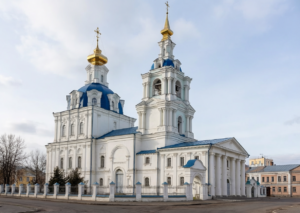
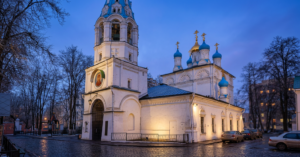
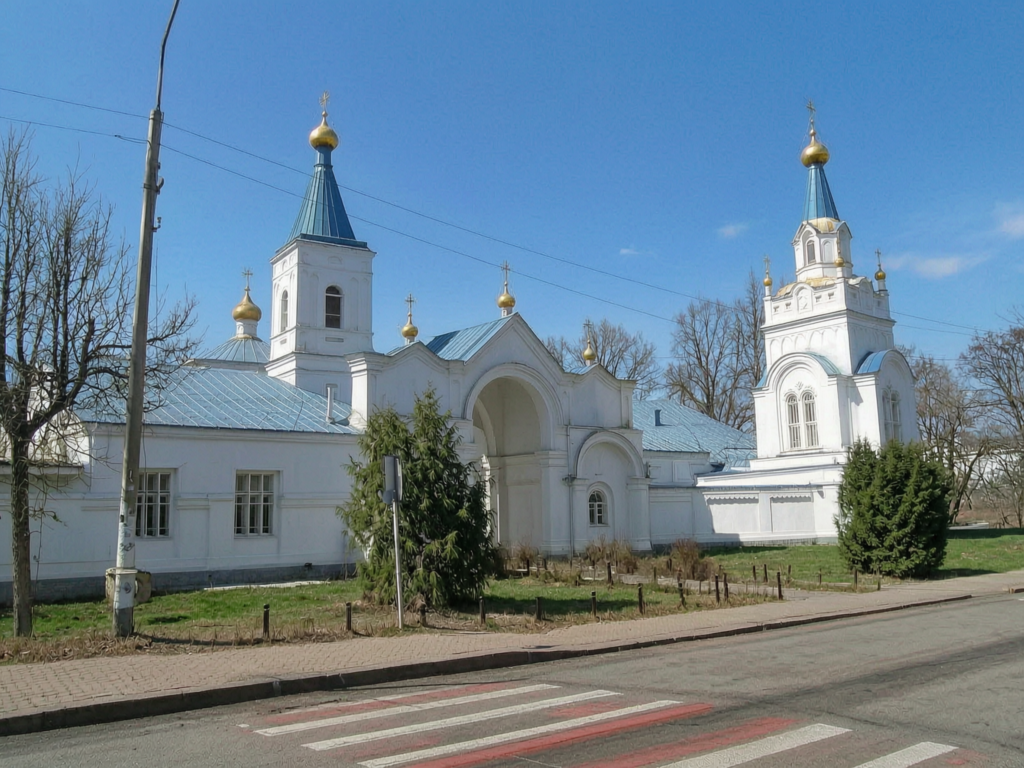
The heart of the monastery is the majestic Transfiguration Cathedral, built in 1819. It has grown into the Russian land with a heavy rock, absorbing all the sorrow and hope of the XIX century. The money for it was collected by the whole world; the war of 1812 interrupted construction, and only seven years after the expulsion of Napoleon, the walls were completed. Classicism here is strict and solemn, and inside, in the flickering of candles, hide two souls of the monastery — the images of the Tikhvin Mother of God and the Great Martyr Barbara. Tradition says that once an unknown fool brought them here for Christ’s sake, silently leaving them as a gift to the city. Later, in 1872, the ensemble was decorated with an elegant temple of Alexander Nevsky, and the once slender silhouette of the fence with towers in the pseudo-Russian style completed the image of the ancient fortress of the spirit.
The twentieth century struck these walls with extreme cruelty. After the revolution, the ringing of the bells ceased, and a granary was placed in the holy aisles. Only in 1996, shook off from oblivion, the Spaso-Transfiguration parish again became a male monastery. Today it is not just an architectural monument, but a living nerve of the city. There is an Orthodox gymnasium, where children’s laughter is mixed with church chants, and next to it there is a prison church, where monks serve in a strict regime colony, reminding that the path to the light is open to everyone.
There’s one punching note in this story. Near the monastery, in the Monk’s moat, lie the remains of schemonk Nikita — a severe hermit of the XVIII century, whose name before the revolution gathered thousands of pilgrims for prayer. They say that his grave still gives healing to the desperate. Now the brethren are bit by bit collecting information for his canonization, and, perhaps, soon the Roslavl land will find its saint. Standing under the shadow of a patriarchal oak tree, one unwittingly believes in this rebirth of memory, feeling how the imperishable beauty of eternity appears through visible decline..
Charity FundHoly Land.
Russian Temples and Monasteries