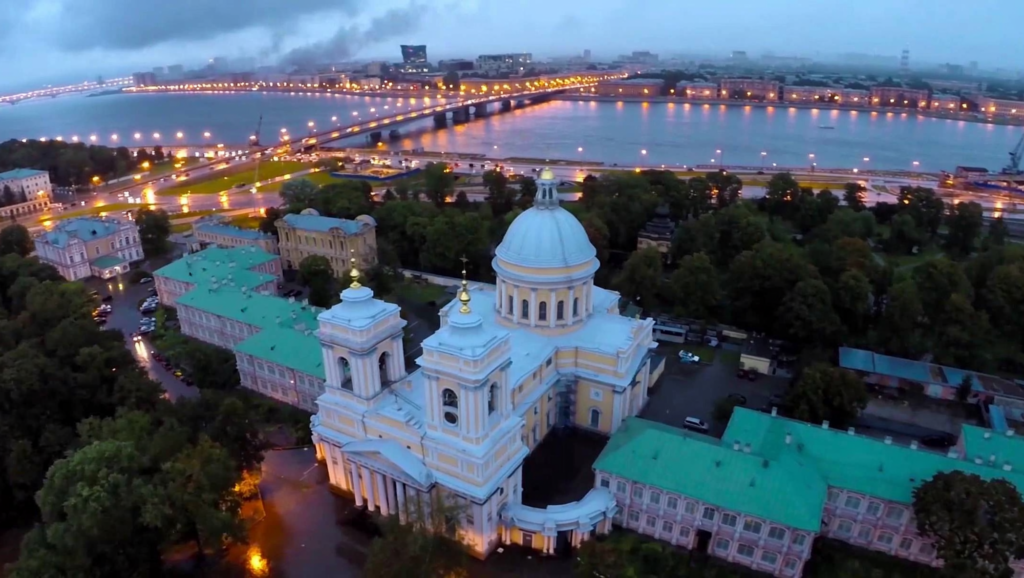
In 1704, a huge area is covered with scaffolding, trenches, drainage ditches. Tsar Peter builds a new city — St. Petersburg. But amid the worries and fuss, Peter did not forget that very near, on the Neva River, almost 400 years before Alexander Nevsky inflicted a crushing defeat on the Swedes. In honor of the victory, a small wooden church was erected there, and Peter ordered the foundation of a monastery. Later it turned out that the battle took place higher up the river, but the monastery already existed and dedicated it to Alexander Nevsky.
It took 6 years for the order of the king to begin to fulfill. In 1713, the first temple was consecrated — the wooden church of the Annunciation of the Most Holy Mother of God. Stone construction began in 1717. The lower floor of the two-tiered church was dedicated to the Virgin, and the upper one to Alexander Nevsky. Around this building formed the entire plan of subsequent development.

In 1720 a printing house was opened in the monastery. Mostly religious literature was printed here, but sometimes also educational, for example, Bookbar for a monastery school. Soon the school was transformed into a Slavic-Greek-Latin seminary, which later became an academy.
In 1724, the relics of St. Alexander Nevsky were transferred to the monastery.
Gradually, the monastery became the center of the spiritual life of the new capital. Graduates of the seminary were the color of the Russian clergy. Representatives of the royal family often came here, and therefore the decoration of the temples, the painting of the walls were magnificent. Rich gifts allowed the monastery to conduct extensive construction. Here began to bury outstanding people of Russia. In 1800, for example, Generalissimo Suvorov found the last refuge here.

The Soviet period was marked by the only, albeit short-lived, victory of the Church over the Bolsheviks: against the closure of the Lavra, a procession was organized in which 500,000 people took part. The new government left the Lavra alone until 1932, when all the monks were arrested in the city one night. The Descent of the Holy Spirit was held in the church until 1936. The values of the Lavra were transferred to museums, in 1957 services began again in the Trinity Cathedral, and monasticism began to revive in 1996.
On the territory of the monastery there are 22 historical sites, including 2 cemeteries. All of them are of historical value and are under state protection. The monastery has an icon-painting and jewelry workshop, masters of tin miniatures, cabinetmakers work.
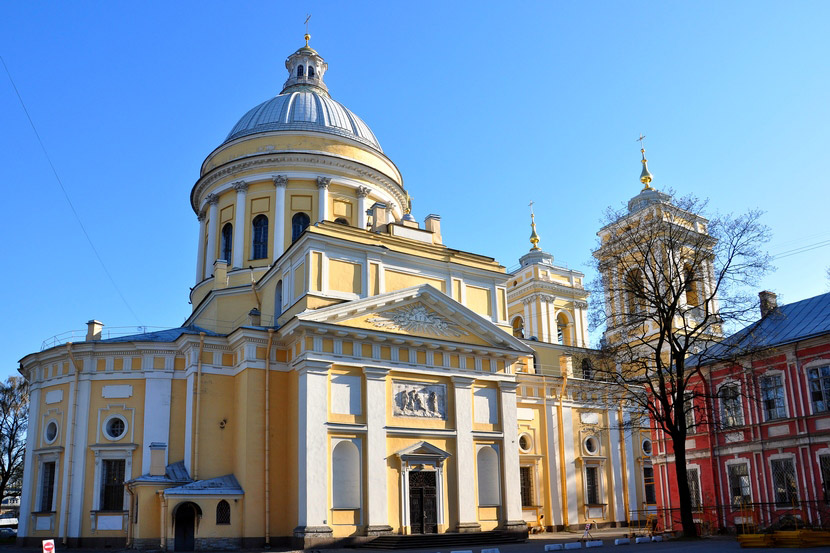
The Pilgrimage Center organizes trips to holy places, excursions of Orthodox pilgrims to St. Petersburg.
For the convenience of pilgrims and tourists in the monastery work «Trapeznaya» and «Tea». Monastery pastries are famous throughout the city, for it come from all over the northern capital.
The most famous icon of the Lavra is the icon of the Mother of God “Nevskaya”.
Sheer-hearing. It was written on Mount Athos, and delivered to Russia in 1877. The faithful pray with reverence before the icon of Paraskeva Friday, which was transferred to the monastery from the Russian Museum.
Many pilgrims come to the Lavra to venerate the relics of Alexander Nevsky.
Charitable Foundation Holy Land
Russian Temples and Monasteries