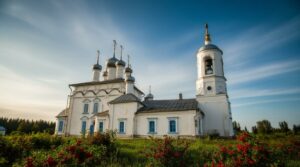
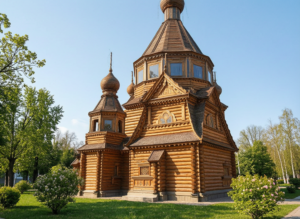
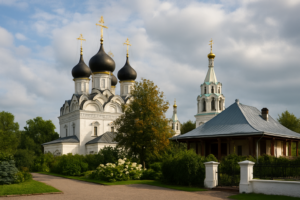
At the source of the Volga, Tsar Alexei Mikhailovich ordered the construction of a monastery. This happened in 1649. The Transfiguration Monastery existed for less than a hundred years. In the twenties of the 18th century, all the buildings in it burned down. The monastery was unable to recover and for a long time there was only a wasteland in that place.
Only at the end of the 19th century were funds raised for the restoration of the Transfiguration Church. And soon a convent opened with it, dedicated to Grand Duchess Olga Nikolaevna.
The monastery was closed immediately after the revolution, but for some time the nuns still lived there, forming a labor artel. In 1924, the artel was dissolved, the buildings began to be used for one thing or another. For example, during the war, a stable was placed there.
In the late 70s, the buildings of the monastery were recognized as objects of cultural heritage and they began to restore it.
In the 90s, the monastery was transferred to the Russian Orthodox Church. In 1999, the Holy Synod adopted a resolution to open a nunnery in the Volgoverkhovskaya monastery. Since then, it has been possible to restore the Transfiguration Cathedral, the wooden St. Nicholas Church, the house church in honor of the Iveron Mother of God, and the Holy Cross Chapel.
Now the monastery operates a guest house for pilgrims, household workshops, and a shop with necessary goods.
Charity FundHoly Land
Temples and Monasteries of Russia