It was the end of the century before last. Almost two and a half thousand residents of the Lower village felt a vacuum: houses were built, families grew, and there was no spiritual center of their own. The idea of building matured in factory conversations and evening gatherings until it became a solid solution. The money for the ambitious project was not enough, and this determined the fate of architecture. We decided not to take the rough power of the walls, but a trembling, almost lace harmony.
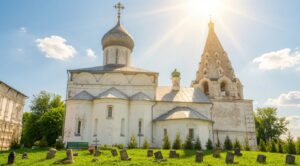
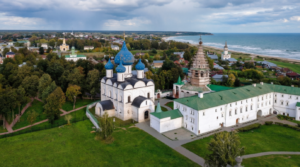
In the spring of 1896, exactly on Nikolin day, the new temple was consecrated. It came out like a carved casket: five stone heads, a slender silhouette in neo-Russian motifs and a bell tower directed upwards. However, the «highlight» was revealed when the rays touched the tops. The crowns of the domes were not just gold-plated copper. The craftsmen spliced a forged metal outline with a glass core. Imagine: an overcast Ural morning suddenly breaks through with light, and a scatter of spectral lights lights lights above the temple. The skilful door grille, forged by hand with the modest means of the parish and gifts of the Rastorguev dynasty, echoed this man-made magic.
The arrival of the Soviet era crossed out the airy appearance. In the mid-1930s, the building was beheaded, and the belfry was demolished at the root. Even a brief hope of a return to prayer life during the war years has faded — officials felt that a pair of existing churches in the modest Kyshtym would be cramped. Then a series of grimaces of history began. The beautiful acoustics of the former altar served everything in a row: athletes banged balls here, dance music of the working club buzzed and Mendelssohn marches from the registry office sounded. The vaults that remembered incense were imbued with the echo of secular fuss, until in the chaos of reforms the building was absorbed by devastation.
Repair forests appeared on the ruins through the efforts of a local plant. First, the architect A.G. Burov delicately healed the supporting structures and internal walls. But the real return of the soul began a little later. Based on archaeological research, the decoration of the facades was recreated, the cast-iron curls of stairs, gates and fences were cast with jewelry — the architect A.V. Dolgov took up this. The chapters were covered with natural gold, returning the same glow to them. A separate epic was the revival of the bell tower: it was built from scratch, collecting bits. The silence was destroyed by the voice of Blagovest — a seven hundred kilogram giant with the image of a saint — and six more brothers supplemented the fullness of the church sobriety. Now, looking at this landscape, it is easy to believe: the St. Nicholas Church did not “survive” the restoration, but took a full breath.
Charity FundHoly Land.
Russian Temples and Monasteries