Trinity Cathedral is the history of the exploits of the Russian army, its exploits and triumph. Not once in its history did the Izmailovsky Regiment know defeat.
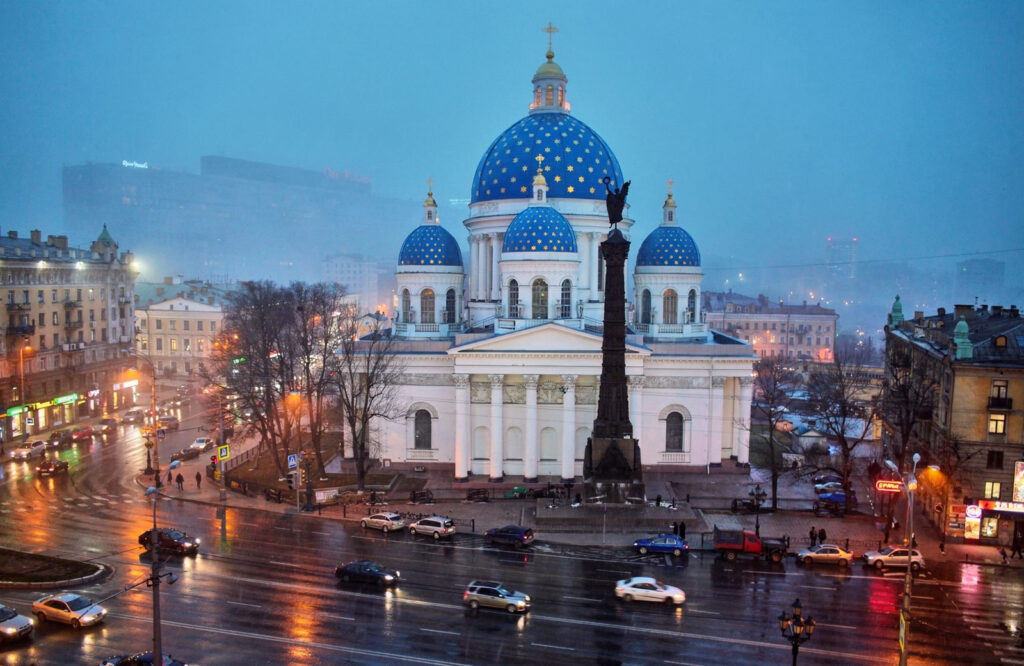
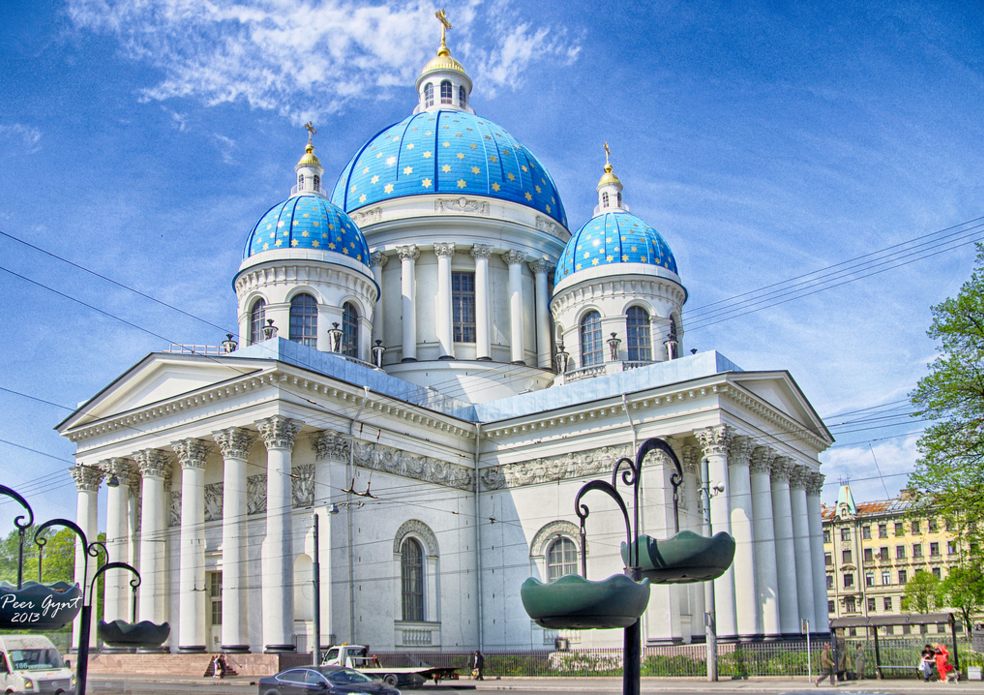
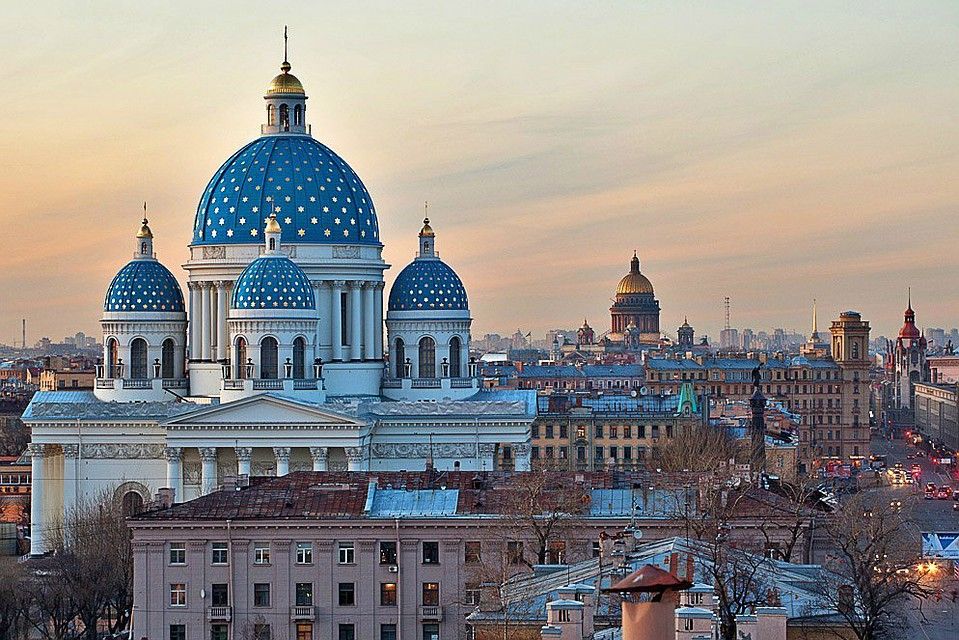
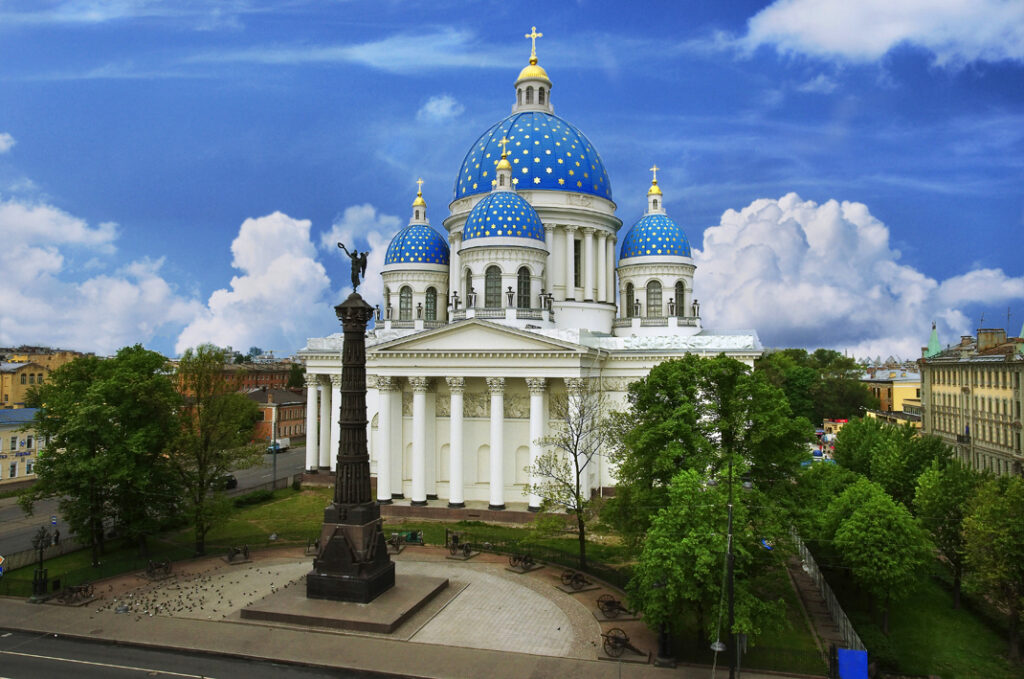
The temple of the Izmailovsky Regiment went from a tented church to a majestic snow-white cathedral with blue domes.
From the tented church at the beginning of the 18th century, services moved to the barracks, and then to the specially built wooden Trinity Church. In 1824, the flood on the Neva was so strong that the water broke the fence, broke all the windows, and damaged the utensils. It was decided to replace the wooden temple with a stone one. In 1835, the ringing of bells announced the illumination of the new temple. Construction lasted for 7 long years. No wonder, the cathedral was only slightly smaller than St. Isaac’s, and very unusual engineering solutions were used. Although the plan of the cathedral is typical, cross-shaped, the domes are located along the axes of the cross. This has never been done before. There was a lot of trouble with the domes, especially the central one. At first the columns that held it failed. It took more than a year to fix the problem. They had just completed construction and decorated the dome with gilded stars when a storm tore it down. Falling, the dome damaged the small dome and brickwork. All that was left of the cross and gilded stars were scraps of iron and brick. It took 4 months to recover. But now the domes shine with heavenly color and golden trim.
The bells rang in Yaroslavl. 4 huge ones and a dozen smaller ones. The cathedral was painted by serf artist Timofey Medvedev and his son Peter. The icons were painted by eminent masters from the Academy of Arts. But the emperor was dissatisfied with their work, ordered it to be remade, and ordered the academicians to return their payment.
Although the emperor liked the iconostasis, it made a powerful impression. It was crowned with the inscription “With this banner we will conquer.” With these words, Emperor Constantine went to the battle, which began the victory of Christianity.
The regimental temple was open to civilians. The services were attended by residents of nearby areas. Anton Rubinstein was buried here and Fyodor Dostoevsky was married.
At the cathedral there was an orphanage, an infirmary, and a Society for Relief of the Poor.
The decree on the separation of church and state, issued in 1918, turned the regimental church into an ordinary parish church. The military clergy was abolished, as was the Izmailovsky regiment itself. The barracks were occupied by units of the Red Army.
In 1922, precious utensils were removed from the cathedral. In 1924 — banners of the Izmailovsky regiment, keys to captured cities and captured flags.
In 1938, the cathedral was finally closed, and the building was given over to a theater workshop.
During the war, the building was damaged by artillery shelling. After the war, the authorities finally realized the value of the cathedral as a historical monument. Restoration work was carried out in the 50-60s. But since the operating technique was not followed, the building deteriorated before our eyes.
A new page in the history of the temple began in 1990.
On September 8, 1990, for the first time in many years, services resumed in the temple. Some icons were returned from museums, some were donated by townspeople. In 1991, the Alexander Nevsky Chapel was transferred to the cathedral.
The end of the 20th century was the time of restoration of the building. The building was restored for almost 20 years, but in 2006, right during a service, scaffolding caught fire in several places at once. The central dome burned down, frescoes and the interior were damaged by water.
Firefighters were still watering the building when the next morning they celebrated the Divine Liturgy right on the porch.
After the fire, a fundraiser was announced, in which parishioners, dioceses and even atheists participated. Restoration work is still ongoing, but services have not stopped even for a day.
The temple contains the relics of:
Matronushka of Moscow
Peter and Fevronia
John Chrysostom
Gregory Theologian
Basil the Great
Charitable Foundation Holy Land
Temples and Monasteries of Russia