How it all began
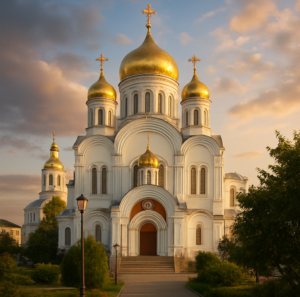
In 1527, a hermit monk settled on Stolobny Island, on Lake Seliger. Little is known about him and his family. We only know that he was born at the end of the 15th century, and after the death of his parents he accepted monastic obedience under the name Nile, in honor of St. Nile the Novice. Young Neil did not stay long in the monastery, went into the forests, built himself a hut, where he continuously fasted and prayed. Only then the rumor about the hermit spread throughout the area, people began to visit Nile. Through his prayers, many were healed, received peace of mind and joy in their hearts. More and more people turned to him for help. But Neil did not consider himself worthy of such attention and moved to Lake Seliger, to a lonely, uninhabited island. First he dug himself a cave, and then built a hut and a hermitage. After 27 years of strict solitude, prayer and worship of the Lord, Neil passed away. This happened in 1555, during the reign of Ivan the Terrible. According to legend, he knew the time of his death and prepared for it. After the burial, prayer monks began to settle on the island. This is how the monastery arose. The official date of foundation is 1594.
The monastery began to actively develop at the beginning of the 17th century, under the abbot Father Nektary (Telyashin). Under him, old churches were renovated and new ones were built, hospital and guest rooms were erected. Apple orchards were planted around the monastery, and two flour mills were built on the river.
The priority for the saint was caring for the souls of the inhabitants. Father Nektary collected a large library, and he himself wrote an exhortation for the monks, urging them to devote their lives to fasting, prayer and work.
During the existence of the monastery, many monks came out from there, distinguished by their holiness and asceticism. Quite a few of them became abbots of other Orthodox monasteries, some were awarded the highest church rank — bishop.

Trouble has come — open the gates
Troubles began with the Bolsheviks coming to power. These atheists plundered churches and opened graves. The last service in the monastery was held in 1927. And then there was a hospital, a prison for prisoners of war, a colony for juvenile delinquents, a nursing home and even a camp site. When the buildings completely fell into disrepair, the monastery was simply abandoned. Only in 1991 the territory of the monastery was returned to the Russian Orthodox Church. Almost immediately, restoration work began, which continues to this day.
Shrines that were lost
For hundreds of years, pilgrims have come to venerate the shrines of the Nilo-Stolobinsk desert. They came from near and far villages, many with entire families. After the revolution, traces of many shrines were lost. Were lost:
Icon of the Mother of God of Seliger-Vladimir
Icon of Nile Stolobensky
Icon of Smolensk Mother of God
Oak Shrine of St. Neil
“The Faith of Christ cannot be exterminated from the race human»[i]
Thanks to the work of monks, novices and those simply wanting to help, the monastery was revived. It has a cattle yard and a dairy farm. There is candle production, a fishery, and an apiary.
But the main goal of the monastery is spiritual care. Liturgies, all-night vigils, fraternal prayers are the basis of the life of the monastery.
Monastic relics
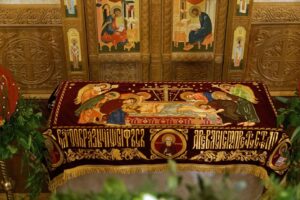
The main shrine of the monastery is the relics of its patron Saint Nile of Stolobensky. The head of St. Nektarios is also kept in the Epiphany Church. People go to the monastery to venerate the icons of the Mother of God of Kazan, the Mother of God of Abalak, the icon of St. Spyridon of Trimifunt, the ark with particles of the holy relics of the venerable fathers of the Kiev Pechersk.
5 interesting facts about Nilova deserts
1
The incorrupt relics of St. Neil were discovered in 1667, during the foundation of the Epiphany Cathedral. After construction was completed, the relics were placed in the temple. In the 20s of the last century, the shrine with relics was transported to the local history museum in Ostashkov, where it remained for a long time. In 1995, the relics were returned to the monastery.
2
Nile Hermitage before the 1917 revolution was the most visited shrine after the Holy Sepulcher. On the day of the discovery of the holy relics of Nile of Stolobnensky, the number of pilgrims reached tens of thousands. The royal family, wealthy representatives of the nobility and merchants generously endowed the monastery. Tsar Mikhail Fedorovich ordered that the monastery be provided with monetary benefits and food annually. Tsar Alexei Mikhailovich presented the bell. Fyodor Alekseevich granted the holy cup of water. Catherine the Great — cover embroidered with gold. Alexander I — golden cross and panagia.
3
When the Romanovs ascended the throne in Russia, the question of succession to the throne arose. The new dynasty needed to gain a foothold on the throne. Tsar Mikhail Fedorovich was worried that so far he only had daughters. He dreamed of an heir. The abbot of the Nilova Hermitage, Saint Nektary, predicted to Mikhail Fedorovich the birth of a son. The boy was born in the same 1629, they named him Alexei. Hegumen Nektariy became the godfather. We all know and are proud of the son of Alexei — Peter the Great.
4
From the Nilova Hermitage came the author of the first Russian mathematics textbook, Leonty Magnitsky (Telyashin). 50 years before Lomonosov, a young man came to Moscow with a cart of fish. Entered the Slavic-Greco-Roman Academy. He amazed his contemporaries with his knowledge of mathematics. He was a favorite of Peter the Great. The Russian Tsar changed his surname from Telyashin to Magnitsky, saying that he attracted knowledge like a magnet. The tsar granted the peasant son nobility and awarded him land. Magnitsky worked all his life at the Moscow Navigation School and was its director. He was buried in the church at the Nikolsky Gate, which was demolished in 1927. In 1932, the grave was discovered during the construction of the metro. The body was transported to Nilova Hermitage.
5
In 2011, a museum was opened at the monastery. It presents icons and wooden images of Nil Stolobensky, ancient lithographs, and books of religious content. Visitors can look at the priests’ vestments and details of church decorations.
Staying in the monastery serves to revive the soul. Therefore, the Holy Land Foundation organizes pilgrimage trips to the Nilo-Stolobinsk Hermitage. We want to help pilgrims venerate the holy relics, be inspired by the example of St. Nile of Stolobensky, and grow in faith. Earth
Investment in the Soul!