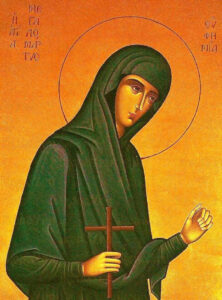
August 5, the Orthodox calendar devotes the day of memory of Feodor Ushakov. In church tradition, he is listed as a righteous warrior, but the scale of this figure goes far beyond one definition. A naval commander who never lost a ship in battle, a statesman who built the Republic of the Seven Islands, and a landowner who distributed what he had gained to wounded soldiers in 1812.
Its origin did not foreshadow a loud glory. Theodore Ignatievich, the father of the future admiral, served in the guard, participated in the war with the Turks, but after the birth of his third son left the Preobrazhensky regiment and returned to manage in the small village of Burnakovo. There, on February 13, 1745, a boy was born, named after a warrior-martyr. The Ushakov family was not rich, but was distinguished by antiquity and strong Orthodox foundations. The main spiritual landmark for the family was the boy’s uncle — Ivan Ushakov, in monasticism Theodore, who asceticized in the Sanaksar desert. The story of his departure from the Metropolitan Guard to the remote Dvinsky forests was retold in the house repeatedly.
In 1761, the young man was enrolled in the Marine Corps of St. Petersburg. The educational institution had not yet acquired a clear internal organization, but Cadet Ushakov stood out from the general background. Teachers noted his diligence in arithmetic and navigation, and his isolation and lack of interest in the loose fun of peers were explained by home education. Five years later he received the rank of midshipman and went to the Baltic.
The first maturity exam was not conducted in a sea battle, but on land. In 1783, the captain of the second rank arrived in Kherson, where then the construction of ships for the future of the Black Sea Fleet was being established. Plague broke out in the city. Ushakov, having received a command of people, applied his own system of fighting the infection. He broke the sailors into isolated artels, ordered the construction of reed tents, and ordered the laundry to be aired on goats. When a sick person appeared, his dwelling was burned, and contactees were transferred to quarantine. The officer entrusted no one with control, and as a result, his team got rid of the epidemic four months faster than others. For these actions he received the Order of Vladimir 4th degree.
Star hour Ushakov as a naval commander came in the war of 1787-1791. In July 1788, near the island of Fidonisi, its vanguard tied the lead ships of the Turks in battle and forced them to leave the line. Two years later, the defeat of the Ottoman squadron at the Kerch Strait followed, and then the battle at Cape Tendra. There, the flagship «Christmas Nativity» attacked and forced the surrender of the ship Said Bey. The decisive point in the campaign was set on July 31, 1791 at Kaliakria. The Admiral undertook an unexpected maneuver, passing between the coastal batteries and the enemy fleet anchored. Panic on Turkish ships led to clashes and total defeat. The Sultan, having received news of the incident, immediately agreed to negotiations.
The Mediterranean campaign of 1798-1800 revealed another facet of his talent. Commanding the combined forces of Russia and Turkey, Ushakov took the powerful fortress of Corfu, considered impregnable. After the victory, he organized a procession with the relics of St. Spyridon, which caused an unprecedented rise among the local Greek population. On the liberated Ionian Islands, with his direct participation, a provisional government was created and a constitution was approved. Residents presented him with a golden sword with the engraved «Island of Corfu — Admiral Ushakov».
Despite international recognition, his talents were soon considered excessive in St. Petersburg. Under Alexander I, the maritime department became an expensive burden for the country. In 1807, Ushakov submitted his resignation, and three years later settled in the village of Alekseevka, near the Sanaksar monastery, where his uncle once carried obedience. The former admiral spent the rest of his life in a temple or cell, donated funds for the restoration of the monastery and distributed money to the poor. When the war began in 1812, he was elected head of the Tambov militia in absentia, but due to illness he was unable to take this position. Instead, he transferred all his savings to the formation of an infantry regiment and the opening of hospitals.
Feodor Ushakov died in October 1817. He was buried at the walls of the monastery. In 2001, by the decision of the Bishops’ Council, the naval commander was canonized as a holy righteous warrior, establishing the day of his memory on August 5.
Memorial Day
June 5— Cathedral of Rostov-Yaroslavl Saints
5 August— Celebration.
August 10— Cathedral of Saints of Tambov Metropolia
October 15
28 December— Cathedral of Crimean Saints
Charity foundHoly Land.
Soul investment! News