

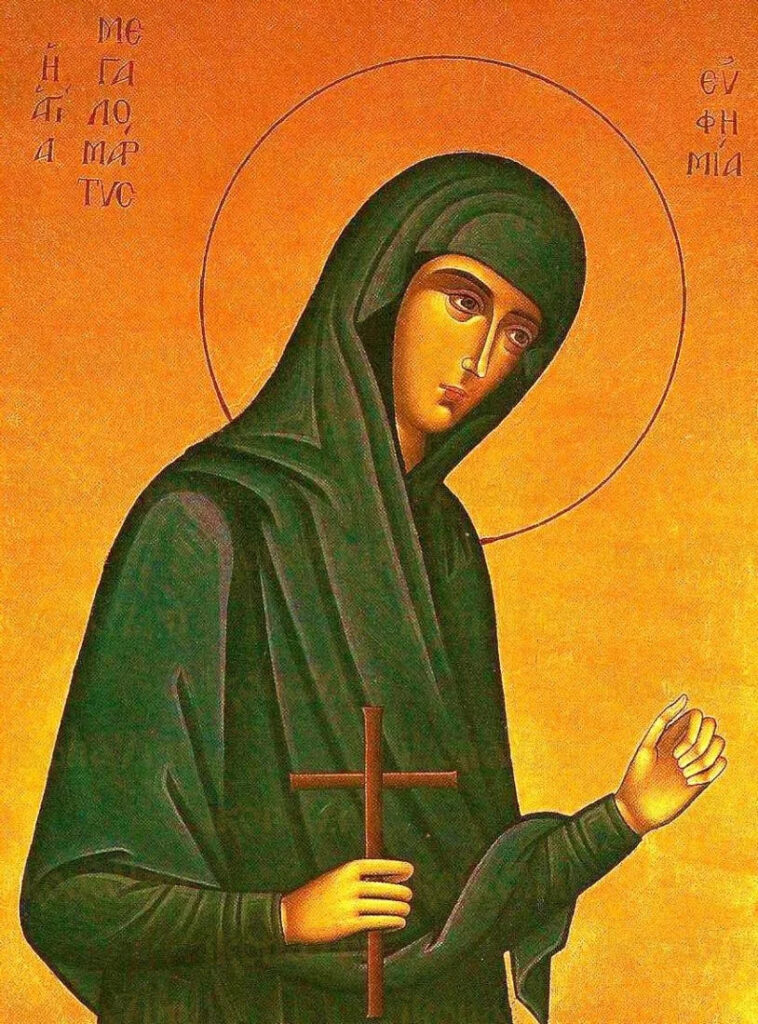
In the Orthodox world, an event occurred that sounds like a quiet but very important gesture of unity: the Holy Synod of the Russian Orthodox Church decided to include the name of the Serbian ascetic, St. Euthymia of Devic. Now it will be venerated in Russian churches, and the day of remembrance is set on February 28 (February 15 in the old style), as well as in the Serbian Orthodox Church.
The decision was made on October 22, 2026, and it feels not just formality, but deep human and church empathy. Back in May of this year, the Council of Bishops of the Serbian Church glorified Euphemia as a saint, and then Patriarch Porphyrius of Serbia appealed to Patriarch Kirill with a request to include her name in the Russian saints. And so the request was heard.
To understand why this saint is so important, it is worth taking a short trip to Kosovo and Metohija of the XIX century. In the world, her name was Stojana Zarich, she was born in 1815 and from her youth connected her fate with the Devic monastery. Life there was never calm: against the background of political storms and changes, the fate of Orthodox communities hung in the balance, and faith became almost the only support. It was in these conditions that Euphemia revealed itself as a spiritual force. She lived in strict austerity, undertook the feat of foolishness for the sake of Christ – that is, she consciously renounced external well-being in order to speak to people in the language of simplicity, truth and love.
For the Kosovo Serbs, she became the one who not only comforted in grief, but helped to resist. Euthymia instructed, called for repentance, strengthened the faith — and did so in an era when the very right to this faith had to defend not with words, but with all his life. Her quiet feat was stronger than time: even after her death in 1895, her memory did not fade, but only grew stronger, especially in difficult moments of history.
Dević Monastery itself deserves special attention, with which her whole life is connected. This place has repeatedly witnessed tragedies: in 2004 it was seriously damaged during anti-Serb pogroms, but later was revived, and monastic life in it resumed. The history of the monastery is like a reflection of the fate of a whole people: destruction, pain, but also an unyielding desire to preserve its own.
It is also important that the decision of the Synod is not limited to the inclusion of the name in the calendar. The resolution also stipulates that Russian churches will offer prayers for the preservation of ancient shrines and for the suffering flock of the Serbian Orthodox Church in the land of Kosovo and Metohija. These are not just words, they are an expression of solidarity, a sign that the pain of one Orthodox people echoes in the heart of another.
The appearance of the name of St. Euthymia in the Russian Monthly Word is not so much an extension of the list of saints as a strengthening of the spiritual bond between peoples. For believers, this is an opportunity to turn to a new intercessor, and for all who follow church life, it is a reminder of how much Orthodox people have in common, despite borders and distances.
Charity fund
Holy Land.
Soul investment!
News


