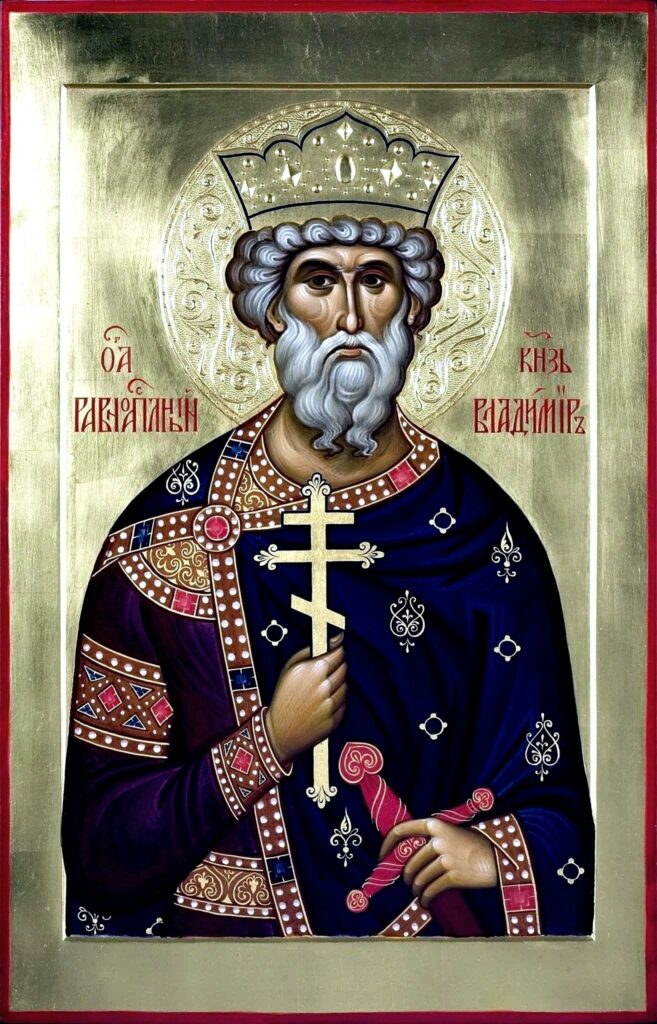
In 1015, near Kiev, in the princely residence of Berestovo, the earthly path of the Baptist of Russia, Prince Vladimir Svyatoslavich, ended. The ruler, who radically changed the vector of development of the ancient Russian state, died at the age of about 55 years, leaving the state Christian.
Vladimir took the throne of Kiev in 978, winning the internecine war with his brother Yaropolk. The first years of his reign were marked by the strengthening of the pagan cult: new idols appeared in the capital, and religious rites were accompanied by sacrifices.
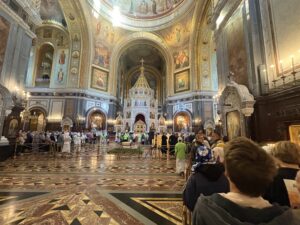
The turn to monotheism came after a careful choice of faith. The chronicles report that the prince consistently studied the proposals of Muslim, Jewish and Christian preachers. The decisive argument was the stories of their own envoys who visited Constantinople. The solemnity of the service in St. Sophia Cathedral impressed them so much that they, by their own admission, could not understand whether they were “on earth or in heaven.”
The baptism of the prince took place in the Byzantine Chersonese he captured in 988. This event was accompanied by a political agreement. Vladimir demanded the wife of the sister of Emperors Basil II and Constantine VIII Anna, providing in return a military contingent to suppress the rebellion of Varda Phocas. Immediately after the arrival of the princess, the prince, according to legend, was healed from blindness that struck him. In the sacrament he received the name Vasily, followed by a wedding with a Byzantine princess.
The mass conversion of Kievans to the new faith occurred in the same year. By order of the ruler, residents gathered near the Dnieper waters, where they entered to perform the ceremony. Pagan idols were waiting for a different fate: the statue of Perun was tied to a horse tail, dragged down Borichev descent and thrown into the river.
Later, Vladimir initiated a large-scale church construction. In Kiev, a stone temple of the Assumption of the Most Holy Mother of God was erected, for the maintenance of which the prince ordered to deduct a tenth of the income of the treasury. Hence came his popular nickname — the Tithe Church. Under the prince, the first schools for children were opened, and dioceses were established in the largest cities, including Novgorod, Rostov and Chernigov.
Vladimir’s domestic policy was aimed at consolidating the territories. He built fortified lines on the southern borders to protect against nomadic raids. By the end of his life, the ruler had to face the threat of the collapse of the state: the eldest son Yaroslav, prince in Novgorod, refused to send tribute to Kiev. The conflict did not have time to escalate into an open clash due to illness and the imminent death of Vladimir. The body of the prince was secretly taken from Berestov to Kiev and buried in the marble sarcophagus of the Tithe Church next to his wife Anna, who had died four years earlier.
Remembrance days
28 July
Charity foundHoly Land.
Soul investment! News