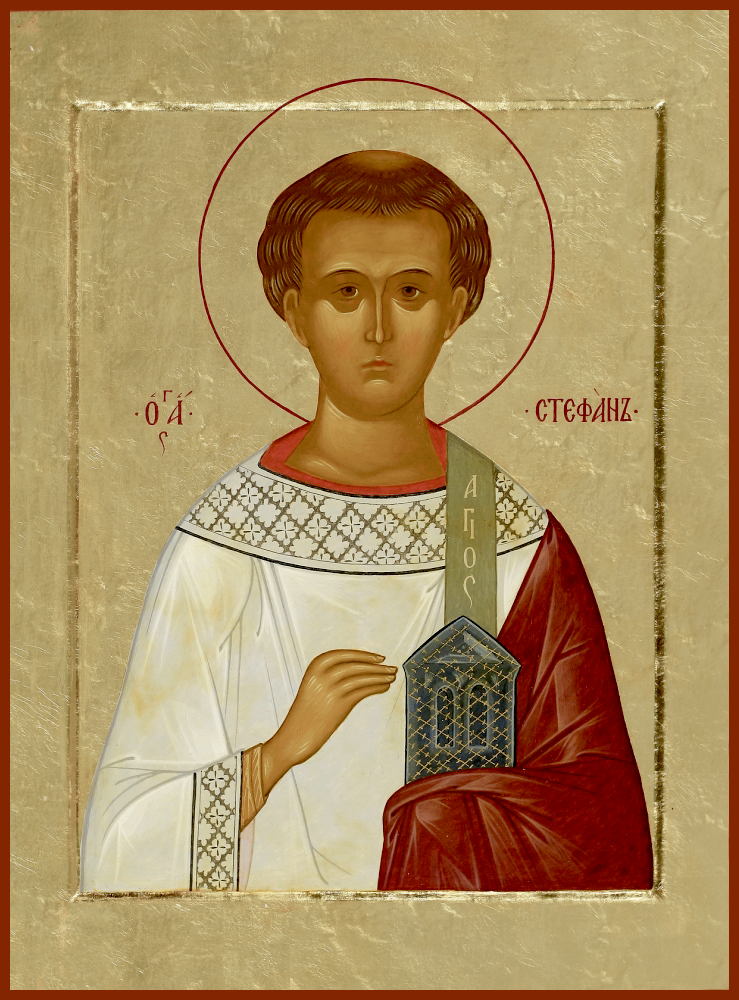
Stephen was the first Christian martyr to die by stoning for preaching about Christ. It happened about 34-35 years from the birth of Christ. The body was abandoned without burial, and its fate remained unknown for a long time.
However, even during the lifetime of the apostles, the famous Jewish teacher Gamaliel, the same one who once defended the apostles before the Sanhedrin, ordered to take the body of the first martyr and give it to a worthy burial. This happened the second night after the execution. Gamaliel buried Stephen in a cave on his own land near Jerusalem, in an area called Kafargamala. Later, there were buried the secret disciple of Christ Nicodemus, Gamaliel himself and his son Aviv — both baptized.
The tomb remained in obscurity for nearly four centuries.
Appearance of Gamaliel to Presbyter Lucian
In 415, Presbyter Lucian, who served in the area, appeared three times in a dream Gamaliel. He did not just indicate the place of burial, he named the names of all those buried in the cave and ordered the removal of the relics of Stephen to open them for worship by believers.
Lucian did not act immediately. He addressed Bishop John of Jerusalem, spoke of the vision, and received a blessing. And when they saw him, they saw him in the air. Lucian later described everything that happened in the “Message to All Churches on the Discovery of the Relics of the Martyr Stephen” – this is one of the oldest extant texts dedicated to the acquisition of the shrine.
According to the same message, seventy-three people were healed from bodily diseases and demonic possessions in the area after the tomb was opened.
The transfer of relics and the further fate of the shrine
The relics were solemnly transferred from Kafargamala to Jerusalem. Archbishop John led the procession, and with him were Bishops Eleutherius of Sebasti and Eleutherius of Jericho. From that moment, many healings began to be performed from the relics, and the fame of them spread throughout the Christian world.
Soon after the acquisition, under the emperor Theodosius II the Younger – around 428 – part of the relics were transported from Jerusalem to Constantinople. First, they were placed in the church of St. Deacon Lawrence, and when a temple was built in honor of the Protomartyr Stephen himself, they were moved there.
Centuries passed, and particles of relics diverged in different abodes. Today they can be found in the Athos monasteries: Vatopede, Constamoniti, Zograf, Stavronikit — as well as in the female monastery Meteor. In Russia, there are two particularly revered shrines associated with the Protomartyr: the right hand (right hand) of Stephen in the Serapionov Chamber of the Trinity-Sergius Lavra, and the finger in the Kiev-Pechersk Lavra.
Memory in the Church
In the temples of the Holy Land, the relics are commemorated on August 2. The Russian Orthodox Church has a separate date of September 28. Both days are reminiscent of the event that united the Old Testament righteous, who did not know Christ during his lifetime, and the first martyr, who gave his life for faith in Him, through sleep, fragrance and healing, almost four hundred years after his burial.
Remembrance days
January 9
January 17 — Council of the 70 Apostles
August 15 — Transfer of relics
September 28 — Finding Relics
Charity FundndHoly Land
Investments in Soul! News