

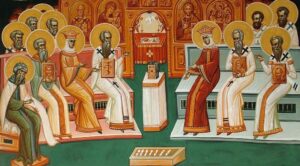
Ecumenical Councils are a gathering of representatives of local churches who discussed and made decisions on the most important aspects of the life of the Orthodox Church. In particular, at the 7th Council in Nicaea (787) were adopted dogmas about icons.
Icons are no longer perceived as a violation of the commandments. When the unseen Lord became the Son of flesh and blood, He became visible, determined. Jesus said, “He who has seen me has seen the Father.”
Iconography in Orthodoxy is strictly regulated by canons. It is invariable, as is the Gospel. Invariably, but not unequivocally. You can read the same lines of the gospel dozens of times, and each of them finds a new meaning. So does the icon. Its perception has unlimited depth. The icon makes it possible to establish a spiritual connection between the living and the departed. Orthodoxy perceives the icon as a portal to another world, not as an object of worship. Believers show respect to the one who is represented on the icon, and not to the image itself.
The council put an end to the controversy over the meaning of icons. His decisions were sent to all the local churches, the imperial court and the pope in Rome.
Since then, the church celebrates this day annually, on October 22 in a new style.
Remembrance days
22 October
Charity foundHoly Land.
Soul investment!


