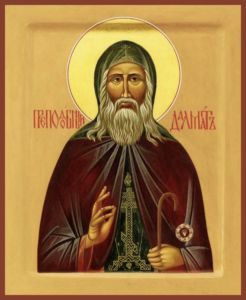
The Red Terror came immediately after the revolution on October 25, 1917. People with different status, education, and position fell under its plowshares. The Bolsheviks felt special hatred for representatives of the Orthodox Church and ordinary believers.
Already on October 31, the “fiery revolutionaries” shot Archpriest Ivan Kochurov. By the end of the civil war, the number of victims from the new government already numbered in the thousands. In the twenties, persecution subsided slightly, only to become large-scale again during the years of struggle against “enemies of the people.”
The country’s Constitution guaranteed freedom of religion, so clergy were arrested, tried and shot on political charges, as enemies of the people.
Before the revolution, about 50 thousand churches operated in Russia. After that — several hundred. In many churches that were formally operating, services were not held simply because there was no one to conduct them.
The Church responded to the terror in a way that only the Church could react. In April 1918, the Local Council decided to hold a commemoration of all those who suffered “in hard times.” The date was not chosen by chance. On January 25 (old style), Kiev Metropolitan Vladimir was shot.
After the Civil War, commemoration was not carried out everywhere, and if it was done, it was done in secret. The relationship between church and state did not allow the canonization of the new martyrs.
The Russian Orthodox Church Abroad (ROCOR) escaped persecution. It was not controlled by the Council of Religious Affairs. Therefore, it was there that they began to collect information and documentary evidence about the clergy who died during the terror.
After the unification of the churches, the Synod made an official decision to resume the commemoration of the martyrs, established by the Council of 1918.
Canonization began in 2000. Currently, there are more than 1,770 names on the list.
The canonization process is hampered by the lack of documents and ignorance of the places of executions.
However, work is underway and the list of church ministers who suffered for their faith is growing.
In 2013, a decision was made to rename the holiday. In its name, the word “Russian” was replaced with the combination “Russian Church.”
The New Martyrs are remembered on February 7 only if it falls on a Sunday. In other years, commemoration is performed on the Sunday closest to this date (before or after). On this day we also commemorate the dead whose names are unknown to us.
Days of Remembrance
February 4
Charity FondHoly Land
Investment in the Soul!