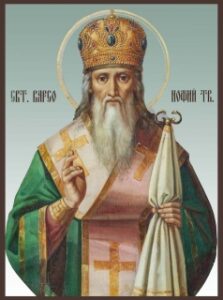
By origin, Saint Theodore was a Byzantine Greek. He came to Russia as part of the retinue of the first Kiev metropolitan, in 990. Christianity was just beginning its march through the Russian lands, idolatry was strong. To spread the teachings of Christ, Theodore was sent as a bishop to Rostov. First of all, the new bishop built a wooden Assumption Church. I started doing services there. But the population was hostile to him. The bishop was persecuted, vilified, stoned. Not wanting to inflame the enmity, Theodore retired from Rostov to the village, on the site of which Suzdal later arose. Everything changed when the Rostov prince became Boris (brother of Gleb and Svyatopolk). Under a Christian prince, the townspeople did not dare to show discontent with the new religion. Theodore returned to Rostov. However, after the murder of Prince Boris, he was expelled again.
In Suzdal, Theodore enjoyed reverence. Seeing his kindness and strength of faith, a large number of pagans accepted the faith of Christ. Theodore did not just tell people about Jesus, he destroyed temples, fought superstitions.
The bishop died peacefully around 1024. He was buried in Suzdal. They gained power before the Mongol invasion. Then the local worship began. At the end of the 18th century, the relics were enclosed in silver crayfish, placed in the Cathedral of the Nativity of the Virgin. In 1998, they were transferred to the Kazan Church.
Remembrance days
21 June
June 5 — Cathedral of Rostov-Yaroslavl Saints
July 6 – Council of Vladimir Saints
The Holy Land Charitable Foundation
Lives of Saints