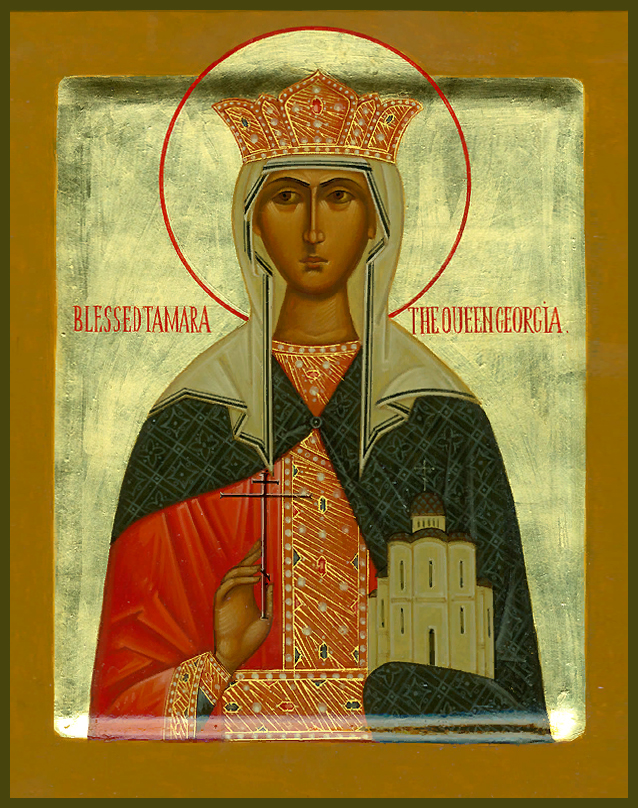
In thirty years there has been no execution on the throne. Not because there was no one to punish. And because she believed that if to maintain order it is necessary to kill subjects, then order has long collapsed.
Girl without brothers
Tamara was born around 1160, the only heiress to King George III of the Bagration family. There were no boys in the family, and the throne was to go to the girl. In the twelfth century, this was unheard of. Neighbors — Seljuks, Byzantines, mountain princes — expected that Georgia would weaken. And George did what was not expected of him: during his lifetime he crowned his daughter as a co-ruler. She was twenty years old when her father died and was left alone on the throne.
First test
Immediately after her reign, a rebellion arose against her. The great feudal lords, the Eristavas, decided that the young woman would not hold on to power. They demanded privileges, lands, exemption from duties. Tamara didn’t fight. She convened the council, listened to the claims and … conceded. Partly. She gave what she could not do without and kept what she could not give under any circumstances. The rebels calmed down. And after a few months, she gradually removed from the council those who started trouble. No executions, no blood. Just put it away. Quiet and methodical.
Two marriages.
The first husband is Yuri, a prince from Suzdal. The marriage was political: George III managed to negotiate before his death. Yuri turned out to be a talented man, but bad. Drinking, roughing, punching. The chroniclers describe him as «evil and cruel.» The court and the Church sided with the Queen. The divorce was an unprecedented step for a Christian country. Yuri was sent to Constantinople with money and honor. He came back with an army to take revenge. David Soslan, Tamara’s second husband, met him and broke his head.
David Soslan, the Ossetian prince, became not just a spouse, but also a commander. He was one of those warlords who led the army in front, not behind. The Battle of Basalet, the Battle of Shamkor — under it the Georgian army defeated large forces of the Seljuks. But all decisions about war and peace were made by Tamara. He carried the sword — she was responsible.
Night before the battle
Before each trip, Tamara prayed all night. Out of sight. The chronicles describe how she knelt before the icon of the Virgin and said: “If Your will is victory, give it.” If not, let it be yours.” In the morning she went to the army gathered and calm. The soldiers saw her face and marched for her.
It’s not a beautiful legend. This is the line that distinguishes Tamara from the ordinary ruler. She did not consider the victory her merit. And that’s why, when she won, she didn’t get excited, she gave thanks.
Vardzia
The cave town of Vardzia is its main architectural monument. It was cut down in the rock above the Kura River: thirteen levels, hundreds of rooms, temples, cells, storerooms, secret passages, a source pierced through the stone. It was at the same time a monastery, fortress and residence. Tamara went there to pray — and, according to legend, one of the frescoes in the temple of Vardzia — her lifetime portrait.
But Vardzia is not the only one. She built the Gelati Academy, translated books, taught children. The court spoke Georgian, Greek, Persian. The poet Shota Rustaveli — the author of «Stained glass in the skin of a tiger» — is associated with her courtyard. The poem is full of what Tamara valued: honor, loyalty, respect for a woman.
A tithe for the poor
Every tenth collection from the royal treasury went to the poor, widows, orphans. If on any given day she failed to help anyone in need, Tamara thought that day was lost. She checked the lists in person. I knew names. The courts were forbidden to take bribes, and this was monitored. Officials robbing villages were removed without talking.
She exempted the monasteries from unnecessary taxes, but demanded decency from the clergy. Lazy and self-serving bishops were dismissed. Honest people, she supported. The Church became what it should be: not a department, but the conscience of the country.
The mystery of the funeral
Tamara died in 1213. Where she is buried is still unknown. According to one legend, ten funeral processions in different directions simultaneously left the capital. Only one was real. Others were afraid that enemies would desecrate the grave. People say that she did not want to fight for her after death.
The Georgian Church listed her as a saint. Memory — May 14 (May 1 in the old style) and the Week of myrrh-bearing wives.
What’s left
After Tamara, Georgia did not last long. Twenty years later, the Mongols came. Then it gets worse. But the golden age is not forgotten. He became not just a memory, but a measure: this is how it can be if the ruler does not rob, but serves; if strength does not mean cruelty; if charity is not weakness, but the hardest form of power.
Thirty years without a single execution. Four monasteries. Tithe for the poor. Victories won by prayer and sword. The husband she chose and the husband she left. A poet who wrote in her court about love and honor. A cave city in a rock. And the secret of the grave that no one has ever found.
Memorial Days
May 16(transient)— St. Myrrh-Bearing Wives Week
May 14
22 November(transient)— The Cathedral of Alan Saints
The Holy Land Charitable Foundation
Lives of Saints