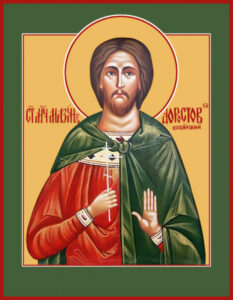
The monastery went extinct overnight. The brothers left the cells, grabbed what they could and scattered around the surrounding villages – some to relatives, some to the mountains, who just went away. In the morning the soldiers came into the empty walls. And they found one man. He didn’t go anywhere. He waited.
Ordinary man
Vata was born in Persia in the early fourth century. The family is Christian, the faith is old, even from grandfathers. He grew up like everyone else: he helped his father, worked, married, had children. Nothing unusual. Home, family, bread on the table.
Persia in those years professed Zoroastrianism — the religion of fire and sun. Christians endured while they were few. But by the beginning of the reign of Sapor II patience ran out. The tsar was at war with Rome, and he considered Christians to be the Roman fifth column—enemies within. The persecution began. Monasteries were closed, monks were seized, forced to worship fire or killed.
At thirty, Vata left everything. Wife, children, house, property, everything. I gave it to the poor, I left. I got my hair cut in a monastery. Not out of grief or quarrel, he sought a life where faith did not come to terms with circumstances.
Thirty years of silence, and then the solution.
In the monastery he lived like everyone else: he prayed, fasted, worked. Thirty years. A long, quiet life without events. But something grew within him that he might not have understood at first: the desire to confess Christ before the torturer. Not to show off, but to say out loud what you believe when you get killed for it.
It’s hard to understand now. In the Christian East, martyrdom was not exotic, but a reality. People saw neighbors being taken away and not returned. Confession is not a phrase, but the last step. Vata has been preparing for him for years.
The night everyone left
The persecution reached the monastery. The local ruler — his name has not survived — sent soldiers. The brothers found out beforehand and left. Someone hid the utensils. Someone buried the books. Someone just ran. By dawn, there was no one left except Vata.
He could have left. The roads were open, the forests were nearby, relatives lived nearby. But he stayed. He sat in an empty refectory or in a cell and waited. Not because I didn’t. Because that’s why he came to the monastery thirty years ago.
nisibia
He was captured and taken to Nisibia, the border city between Persia and Rome, where Saint Ephraim the Syrian would later teach. The ruler suggested the usual: worship the sun and fire, deny Christ and live. Just a gesture, a formality. No humiliation, everyone did.
Vata refused. Not careful, not evasive. Christ is God, and your sun is a creature, no more. Words after which there was no going back.
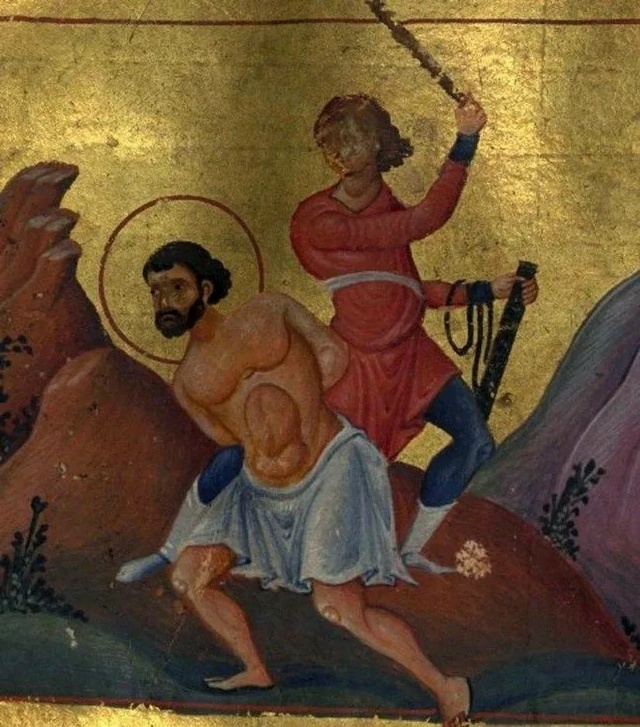
His hands were tied behind his back and pulled so tightly that his shoulders popped out of his joints. Then they dragged him on the ground, beat him. He didn’t ask for mercy. No bargaining. I didn’t try to explain what I meant by anything else. After torture, a sword. Quickly. Around 364. He was in his thirties, the age he had left home.
What do we know about him?
Almost everything that came through the life tradition recorded by Saint Dimitri of Rostov. There are few details: he was born in Persia, was a Christian, went to a monastery, accepted martyrdom in Nizibia. Behind this brevity is a life that fits in a few lines, but all consists of one choice.
Everyone ran — he stayed. Everyone denied — he confessed. He was offered life, he chose loyalty. No theater. Just a man who decided there was something more important than his own existence. And I took that decision to the end.
Memory
The Orthodox Church honors the memory of the Monk Martyr Vata Persianin on May 14 – May 1 in the old style. He is venerated as one of the many Christian martyrs of Persia, a country that has given the Church hundreds of witnesses of the faith, whose names are largely unknown.
Vata is one of those whose name has survived. Not because he was famous or famous. Because in the empty monastery, when everyone left, he stayed. One man in empty walls was enough to be remembered sixteen centuries later.
Memorial Days
May 14
Lives of Saints