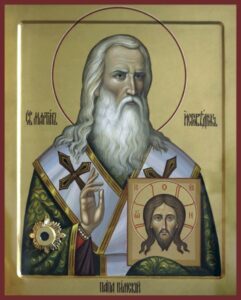
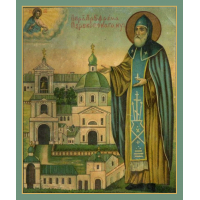
In the wilderness of Kostroma forests, where the river Tebza winds among the age-old fir trees, there is an ancient monastery. Here, in search of not dying antiquity and silence, pilgrims come to venerate the place, which was sanctified by the Monk Jacob Zheleznoborovsky almost six centuries ago. His way is the story of a young man who heard the call of Heaven and found in the forest silence a treasure of imperishable grace. Here, under the bushel of the Mother of God-Christmas Church, his holy relics, which survived fires, wars and decades of God-fighting fever are still hidden.
The future saint was born in the XIV century in the family of Galician nobles Amosov. His parents raised the child in piety, but a real revolution in his soul produced an acquaintance with the lives of the saints. Book lines about deserters and martyrs kindled in a young heart unchildish love for God. Growing up, he distributed his possessions to the needy and, orphaned in the world, voluntarily impoverished for the sake of Christ. The spiritual guide for him was the shining lamp of the Russian land at that time — St. Sergius of Radonezh. It was to him that the young ascetic rushed into the laurel, as if to a source of living water, absorbing the science of obedience and intelligent prayer.
Driven by love for his native lands, the monk left the noisy monastery and moved towards Galich. Forty versts from the city, near the village of Iron Borok, where the locals mined ore, he chose a secluded place for recreation. Tradition says that, barely crossing the eyelids, the weary traveler saw a bright unearthly radiance that illuminated the forest. In this miracle he recognized the finger of God. Without hesitation, the ascetic hoisted a cross in that place and cut down a small cell with his own hands. Thus began the hermit life, full of hard work: the faiths and the heavy cross exhausted the flesh, and from deep forest lakes and dug wells brother drew water.
The silence of the desert was soon broken by the thud of axes and the humble singing of prayers. The word about the spirit-bearing teacher spread far, and the disciples reached for him. Gathering a small brotherhood, St. James went to Moscow, where Metropolitan Cyprian blessed him for the construction of a church. Soon in the impassable often rose the wooden church of the Nativity of John the Forerunner. The prescient elder did not seek earthly glory, but she found it herself. In 1415, visiting the First See, he predicted to Grand Duke Vasily Dmitrievich the safe birth of an heir, when the ruler’s wife was at death. The word of the saint was fulfilled the same evening, and the grateful prince generously gifted the monastery with patrimonies.
A terrible test for the Kostroma land was a pestilence and famine. In the years of mass deaths, when the fields were uncompressed, the Zheleznoborovsky monastery became the ark of salvation. The monk did not lock the gates, distributing bread and instilling hope in the hearts of the desperate. Many troubles were brought by princely internecine strife, and raids of Kazan Tatars, who turned the monastery to ashes. But each time the saint returned to the ruins and rebuilt the walls, setting an example of unbreakable faith. Until the last day he remained a father to the brethren, bequeathing him to follow a narrow path, and peacefully departed to the Lord in the fifteenth century.
The relics of St. James were found incorruptible after years of ruin, becoming a consolation for all of Russia during the Time of Troubles. Tsar Mikhail Fedorovich Romanov especially honored the memory of the saint of God, who prayed for his crowned ancestors. But perhaps the most surprising fact is connected with the XX century. When the infidels opened the tomb, there was only emptiness inside. The monks managed to hide the shrine, hiding it from the authorities. Now, in the revived monastery, a lamp is warming above the new carved shade. Where exactly the incorruptible body is hidden in the earth is a mystery that is known only to a few, but to those who pray it is alive, and its intercession for us does not fail.
Memorial Days
April 11(day of death) and5 May(acquiring relics)
The Holy Land Charitable Foundation
Lives of Saints