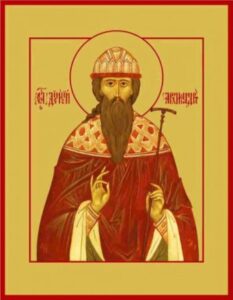
In the midst of the anti-Christian repressions unleashed by Emperor Diocletian, six people were publicly executed in Nicomedia. The convicts — Victor, Zotik, Akindin, Zinon, Severian and Caesarius — were beheaded by order of the city judge immediately after openly declaring themselves followers of Christ. The reason for such a rapid reprisal was a resonant judicial episode associated with the torture of military commander George.
According to information from early Christian sources, Diocletian initiated mass persecution of believers at the very beginning of the IV century. One of the first high-profile trials was the case of George, later glorified as a great martyr and victorious. The man was subjected to a series of cruel tortures, trying to force him to renounce religion. The culmination of the execution was to be the execution on the wheel, but the mechanism designed to crush the bones did not cause harm to the convict. Witnesses saw this as divine intervention.
Impressed by what they saw, several pagan city viewers immediately reconsidered their beliefs. Victor, Zotik, Akindin, Zinon, Severian and Caesarius publicly declared that they now profess Christianity. According to the chronicles, the act of the converts was spontaneous: they did not wait for the end of the trial of George and shouted a confession right in the crowd or in front of the judging platform.
The reaction of the authorities followed immediately. The men were taken into custody and sentenced to death in an accelerated manner. The sentence was carried out immediately, in Nicomedia, by beheading with the sword. The bodies of those executed, according to the tradition of the time, were probably left without burial, but later the community began to honor them as martyrs for their faith.
George himself survived that stage of the inquiry: the wheel was inconclusive. After several rounds of torture, he was executed in 303. But it was the miraculous salvation from the wheel that was the turning point that prompted the six pagans to accept the crown of martyrdom before him. Their names were added to the martyrologist of the early Church, and the date of execution became a day of joint memory. So a single judicial episode turned into a group case and added to the chronicle of the Diocletian persecutions with another bloody episode in the capital of Asia Minor.
Memorial Days
The Holy Land Charitable Foundation
Lives of Saints