Jerusalem, early second century. The Roman authorities received a denunciation of an elderly man who, according to them, was both a Christian bishop and a descendant of King David. Both circumstances were considered sufficient grounds for prosecution. Together they meant inevitable death.
This man was Simeon, the son of Cleopa, the younger brother of Joseph the Betrothal. By blood he was a relative of Jesus Christ. In adulthood, having witnessed the events of the Gospel, Simeon joined the 70 disciples whom the Lord sent to preach. After the execution of the first bishop of Jerusalem, Jacob, who died about 63 years, the community elected Simeon to the vacated pulpit.
He spent four decades in this position. All this time, the Jewish and Roman authorities did not abandon attempts to destroy the nascent church structure. Simeon kept the community from schisms, instructed converts and continued to preach. The situation escalated under Emperor Trajan, who ruled from 98 to 117. By that time, the bishop was well over a hundred. Different sources indicate 110, 115 and even 120 years.
The decisive denunciation came to the Roman governor Atticus. The wording of the accusation was based on two points: belonging to the family of David, all representatives of which the empire systematically exterminated, and confession of Christianity. Simeon was arrested. Age was not a mitigating circumstance. He was subjected to prolonged torture, and then sentenced to crucifixion. The execution took place in 107.
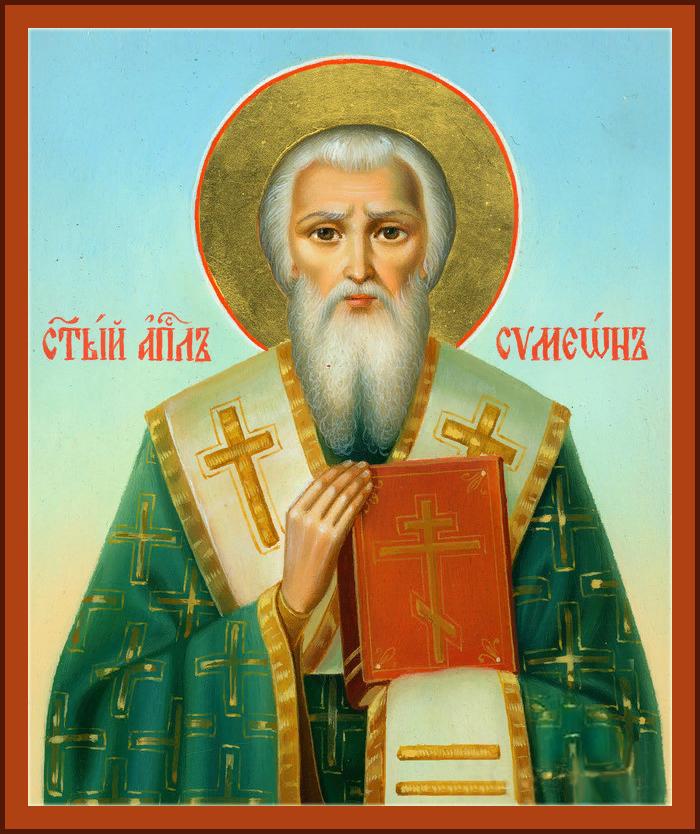
The Orthodox Church commemorates the Hieromartyr twice a year: on May 10, the day of his death, and on January 17, when the common feast of the Council of 70 Apostles is celebrated. On icons, Simeon is usually depicted in episcopal robe with the Gospel — a symbol of pastoral service, to which he gave forty years. Sometimes they add martyrdom attributes, reminding of the finale of his earthly path.
Simeon’s case is unique even in the early Christian era. He is the only apostle who personally knew Christ by kinship, led the first church community for decades, and died on the cross at an age rarely attained even in times of peace. His execution did not break the Christians of Jerusalem — the pulpit continued to exist after the departure of the elderly pastor.
Memorial Days
January 17— The Council of the 70 Apostles
May 10
Lives of Saints